









بِسْمِ اللّٰهِ الرَّحْمٰنِ الرَّحِيْمِ
Khatam-e-Khawajgan in the Naqshbandi Golden Chain
The Sacred Gathering of Zikr, Mercy, Spiritual Purification and Divine Presence
Introduction
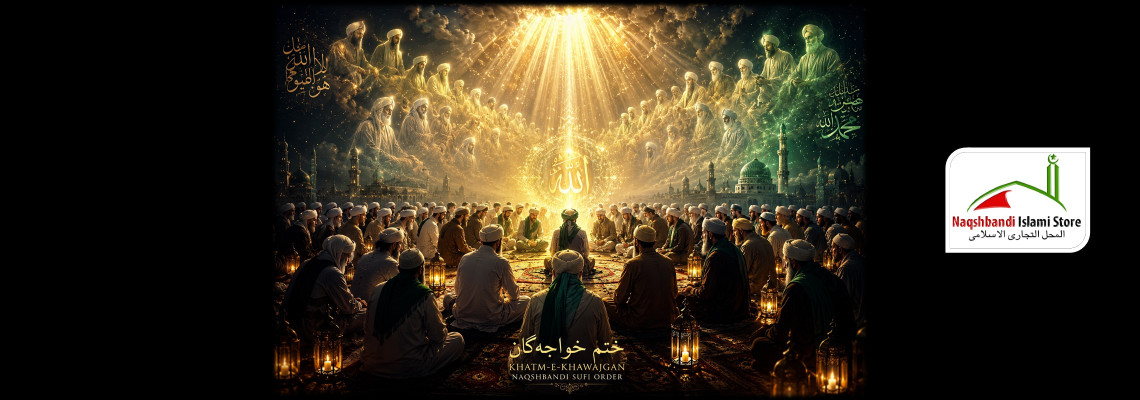
Among the most spiritually powerful gatherings preserved in the Naqshbandi Golden Chain is the sacred practice known as Khatam-e-Khawajgan. This blessed gathering of remembrance has traveled through centuries from the hearts of the great Awliya Allah, through Central Asia, Bukhara, Ottoman lands, Daghestan, Sham, Turkey and beyond until it reached seekers around the world through the blessed efforts of Shaykh Abdullah Faiz ad-Daghestani and Shaykh Muhammad Nazim Adil al-Haqqani.
The word “Khawajgan” refers to the great Masters of the Naqshbandi path. “Khatam” means completion, seal, or sacred collective recitation. Thus, Khatam-e-Khawajgan is the sacred collective spiritual recitation and gathering inherited from the great Naqshbandi Masters.
This gathering is not merely a ritual. It is a spiritual medicine for hearts, purification for souls, protection for homes, mercy for families, relief for the distressed, and illumination for the believers.
For centuries, millions of seekers have attended these blessed gatherings seeking:
- Forgiveness from Allah ﷻ
- Purification of the heart
- Relief from depression and anxiety
- Removal of spiritual darkness
- Protection from evil eye and negative energies
- Barakah in home, rizq and family
- Spiritual connection with Awliya Allah
- Nearness to Prophet Muhammad ﷺ
What is Khatam-e-Khawajgan?
Khatam-e-Khawajgan is a structured gathering of collective remembrance of Allah (Zikrullah), Salawat upon Prophet Muhammad ﷺ, Quranic recitations, supplications and spiritual invocations prescribed by the Naqshbandi Masters.
It combines:
- Silent Zikr (Dhikr Khafi)
- Loud Zikr (Dhikr Jahri)
- Collective recitations
- Quranic verses
- Salawat Sharifah
- Spiritual meditation (Muraqaba)
- Dua for humanity
The gathering usually begins calmly and softly, but gradually enters deeper spiritual states where hearts become softened, tears flow, souls become tranquil, and many attendees feel an indescribable peace descending upon them.
Meaning of “Khawajgan”
| Language | Meaning |
|---|---|
| Arabic | خواجگان |
| English | The Masters / Spiritual Teachers |
| Urdu | روحانی بزرگ ہستیاں / مشائخ |
| Turkish | Evliyâ Efendiler / Manevî Üstadlar |
The title refers specifically to the great Naqshbandi Masters who preserved this sacred spiritual transmission generation after generation.
Historical Origins of Khatam-e-Khawajgan
The roots of Khatam-e-Khawajgan trace back to the earliest generations of Islamic spirituality.
The Naqshbandi Golden Chain connects spiritually from:
Prophet Muhammad ﷺ → Sayyidina Abu Bakr as-Siddiq رضي الله عنه → Salman al-Farsi رضي الله عنه → Imam جعفر الصادق → Bayazid Bistami → Khwaja Abdul Khaliq Ghujdawani → Shah Naqshband → Ahmad Sirhindi → Mawlana Khalid Baghdadi → Shaykh Abdullah Faiz ad-Daghestani → Shaykh Nazim al-Haqqani
The formal structure of Khatam-e-Khawajgan was especially organized and preserved by:
- Khwaja Abdul Khaliq Ghujdawani
- Khwaja Bahauddin Shah Naqshband
- The Central Asian Naqshbandi Masters
- Ottoman Naqshbandi Shaykhs
- Shaykh Abdullah Faiz ad-Daghestani
- Shaykh Nazim al-Haqqani
The gathering became widespread in:
- Turkey
- Cyprus
- Syria
- Daghestan
- Pakistan
- India
- Indonesia
- United Kingdom
- United States
- Africa
The Spiritual Philosophy Behind the Khatam
According to the Naqshbandi Masters, the human heart becomes rusted through:
- Sins
- Negativity
- Heedlessness
- Anger
- Greed
- Pride
- Jealousy
- Material obsession
Zikrullah polishes the heart.
As Prophet Muhammad ﷺ said:
“Everything has a polish, and the polish of hearts is the remembrance of Allah.”
The Khatam acts like a spiritual cleansing system. The atmosphere changes. Darkness decreases. Hearts soften. Homes receive mercy.
Virtues and Benefits of Khatam-e-Khawajgan
| Benefit | Description |
|---|---|
| Spiritual Purification | Cleanses the heart from spiritual diseases |
| Inner Peace | Calms anxiety, fear and sadness |
| Barakah | Brings blessings into home and livelihood |
| Protection | Protection from evil eye and harmful energies |
| Mercy | Angels descend upon gatherings of Zikr |
| Connection | Creates spiritual attachment to Awliya Allah |
| Healing | Many report emotional and spiritual healing |
| Unity | Creates brotherhood and love among believers |
Teachings of Shaykh Abdullah Faiz ad-Daghestani
Shaykh Abdullah Faiz ad-Daghestani emphasized that gatherings of Zikr are oceans of mercy.
He taught:
- Never underestimate collective Zikr
- Angels surround gatherings of remembrance
- The heart receives Divine openings through sincere Zikr
- Awliya spiritually attend sincere gatherings
- Even one sincere tear can erase mountains of sins
He encouraged disciples to establish Khatam gatherings regularly in homes, zawiyahs and masajid.
Teachings of Shaykh Nazim al-Haqqani
Shaykh Nazim al-Haqqani frequently emphasized:
“Run to gatherings of Zikr before darkness covers the world.”
He taught that:
- Zikr revives dead hearts
- The ego becomes weaker through remembrance
- Khatam gatherings attract Divine Mercy
- Homes where Zikr occurs become illuminated
- Children benefit spiritually from hearing Allah’s Name
Shaykh Nazim also encouraged people of all backgrounds to attend:
- Young
- Old
- Men
- Women
- Seekers
- New Muslims
- People suffering spiritually
Who Can Perform Khatam-e-Khawajgan?
Any sincere Muslim may attend and participate respectfully.
However, proper spiritual etiquette and correct intention are essential.
Usually the gathering is led by:
- A Naqshbandi Shaykh
- A Khalifah
- An authorized representative
- A senior murid familiar with the sequence
Yet in many homes, families conduct simplified Khatam gatherings together seeking Allah’s Mercy.
Adab (Manners) of Spiritual Gatherings
1. Purity
- Perform Wudu
- Wear clean clothes
- Use fragrance if possible
2. Intention
- Attend sincerely for Allah ﷻ
- Avoid showing off
- Seek purification
3. Silence and Respect
- Avoid unnecessary talking
- Do not use mobile phones
- Sit respectfully
4. Presence of Heart
- Focus on Allah ﷻ
- Imagine standing before Divine Presence
- Maintain humility
5. Respect for Participants
- Do not mock emotional reactions
- Do not judge others
- Maintain love and brotherhood
Reported Spiritual Experiences and Miracles
Across decades, many attendees of Khatam gatherings have reported:
- Feeling overwhelming peace
- Spiritual dreams of Awliya Allah
- Sudden emotional healing
- Relief from depression
- Protection during hardship
- Increase in rizq and blessings
- Homes becoming spiritually peaceful
Many videos and testimonies online mention remarkable spiritual experiences after attending gatherings led by Shaykh Nazim al-Haqqani and his representatives worldwide.
However, Naqshbandi teachers advise seekers not to chase miracles, but instead focus on sincerity, repentance and love of Allah and His Messenger ﷺ.
Removal of Negative Energy and Afflictions
Islam teaches that Quran, Zikr and Salawat bring نور (light).
Many Naqshbandi teachers explain that:
- Constant Zikr repels darkness
- Salawat removes heaviness from homes
- Quranic recitation calms spiritual disturbances
- Angels replace harmful atmospheres with mercy
Many families report:
- Better sleep
- Less tension at home
- Emotional calmness
- Reduced fear and anxiety
- Positive spiritual atmosphere
The Complete Traditional Method of Khatam-e-Khawajgan
The exact sequence may slightly vary by region or authorized teachers, but the following structure is among the commonly practiced forms in the Naqshbandi Haqqani tradition.
Listen to the Actual Khatam-e-Khawajgan Audio & Live Recitation
For readers, murids, seekers and newcomers who wish to understand the proper rhythm, pronunciation, collective response, breathing flow, spiritual atmosphere and traditional style of Naqshbandi Dhikr, it is highly recommended to listen to the original Khatam-e-Khawajgan audio recordings published by the Naqshbandi-Haqqani spiritual teachers.
The official Naqshbandi page contains:
- Complete Long Khatm and Short Khatm sequence
- Step-by-step sections of the Dhikr
- Real congregational recitations
- Audio guidance by Mawlana Shaykh Muhammad Hisham Kabbani
- Pronunciation and rhythm of loud Dhikr
- Traditional Naqshbandi style of collective remembrance
- Spiritual recitation atmosphere exactly as practiced in gatherings
The Dhikr is generally performed sitting respectfully in a circle facing the Qiblah while maintaining humility, concentration and spiritual connection (Rabitah) with the Shaykh and the Golden Chain of the Naqshbandi Masters. Certain portions are recited silently with deep contemplation, while the loud portions are performed collectively in rhythmic remembrance, creating a powerful spiritual atmosphere of mercy, peace and Divine remembrance.
Readers are strongly encouraged to listen directly from the official Naqshbandi source below to experience the authentic sound, pronunciation and spiritual style of Khatam-e-Khawajgan:
The page also includes downloadable audio sections and detailed explanations for both the Long Khatm and Short Khatm as practiced in the Naqshbandi Golden Chain.
Preparation Before Starting
- Perform Wudu
- Sit facing Qiblah
- Use clean place
- Burn halal fragrance if possible
- Maintain silence
- Make intention for Allah’s Pleasure
Long Khatam-e-Khawajgan
| English | Times | العربية |
|---|---|---|
| Shahada | 3 | أَشْهَدُ أَنْ لَا إِلٰهَ إِلَّا اللّٰهُ، وَأَشْهَدُ أَنَّ سَيِّدَنَا مُحَمَّدًا عَبْدُهُ وَرَسُولُهُ ﷺ |
| Astaghfirullah | 70 | أَسْتَغْفِرُ اللّٰهَ |
| Allahumma Ya Musabbib al-Asbaab... | 1 | اللَّهُمَّ يَا مُسَبِّبَ الْأَسْبَابِ، يَا مُفَتِّحَ الْأَبْوَابِ، يَا مُقَلِّبَ الْقُلُوبِ وَالْأَبْصَارِ، يَا دَلِيلَ الْمُتَحَيِّرِينَ، يَا غِيَاثَ الْمُسْتَغِيثِينَ، يَا حَيُّ يَا قَيُّومُ يَا ذَا الْجَلَالِ وَالْإِكْرَامِ، وَأُفَوِّضُ أَمْرِي إِلَى اللّٰهِ إِنَّ اللّٰهَ بَصِيرٌ بِالْعِبَادِ |
| Rabitatu 'sh-Sharifa (Connect your heart with Shaykh, beloved Prophetﷺ and Allah) |
Meditation | الرَّابِطَةُ الشَّرِيفَةُ |
| Surat al-Fatiha | 7 | سُورَةُ الْفَاتِحَةِ |
| Salawat upon Prophet ﷺ | 100 | اللَّهُمَّ صَلِّ عَلَى سَيِّدِنَا مُحَمَّدٍ وَعَلَى آلِ سَيِّدِنَا مُحَمَّدٍ وَسَلِّمْ |
| Surat al-Inshirah | 79 | سُورَةُ الشَّرْحِ |
| Surat al-Ikhlas | 1001 | سُورَةُ الْإِخْلَاصِ |
| Surat al-Fatiha | 7 | سُورَةُ الْفَاتِحَةِ |
| Salawat | 100 | اللَّهُمَّ صَلِّ عَلَى مُحَمَّدٍ وَعَلَى آلِ مُحَمَّدٍ وَسَلِّمْ |
| Loud Zikr Section | ||
| La ilaha ill-Allah | 100 | لَا إِلٰهَ إِلَّا اللّٰهُ |
| Allah Allah | 100 | اللّٰهُ اللّٰهُ |
| Huwa Huwa | 33 | هُوَ هُوَ |
| Haqq Haqq | 33 | حَقّ حَقّ |
| Hayy Hayy | 33 | حَيّ حَيّ |
| Allahu Allah Haqq | 10 | اللّٰهُ اللّٰهُ حَقّ |
| Allahu Allah Hayy | 10 | اللّٰهُ اللّٰهُ حَيّ |
| Allah Hayy Ya Qayyum | 10 | اللّٰهُ حَيّ يَا قَيُّومُ |
| Ya Hu Ya Hu Ya Daa’im | 3 | يَا هُو يَا هُو يَا دَائِم |
| Allah Ya Hu Ya Daa’im | 1 | اللّٰهُ يَا هُو يَا دَائِم |
| Ya Daa’im Ya Allah | 2 | يَا دَائِم يَا دَائِم يَا دَائِم يَا اللّٰه |
| Ya Haleem Ya Allah | 2 | يَا حَلِيم يَا حَلِيم يَا حَلِيم يَا اللّٰه |
| Ya Hafeezh Ya Allah | 2 | يَا حَفِيظ يَا حَفِيظ يَا حَفِيظ يَا اللّٰه |
| Ya Lateef Ya Allah | 2 | يَا لَطِيف يَا لَطِيف يَا لَطِيف يَا اللّٰه |
| Ya Ghaffar Ya Allah | 2 | يَا غَفَّار يَا غَفَّار يَا غَفَّار يَا اللّٰه |
| Ya Sattar Ya Allah | 2 | يَا سَتَّار يَا سَتَّار يَا سَتَّار يَا اللّٰه |
| Ya Fattaah Ya Allah | 2 | يَا فَتَّاح يَا فَتَّاح يَا فَتَّاح يَا اللّٰه |
| Ya Mujeeb Ya Allah | 2 | يَا مُجِيب يَا مُجِيب يَا مُجِيب يَا اللّٰه |
| Ya Mu’izz Ya Allah | 2 | يَا مُعِزّ يَا مُعِزّ يَا مُعِزّ يَا اللّٰه |
| Ya Mu’een Ya Allah | 2 | يَا مُعِين يَا مُعِين يَا مُعِين يَا اللّٰه |
| Ya Wadud Ya Allah | 2 | يَا وَدُود يَا وَدُود يَا وَدُود يَا اللّٰه |
| Ya Rahman Ya Allah | 2 | يَا رَحْمٰن يَا رَحْمٰن يَا رَحْمٰن يَا اللّٰه |
| Ya Raheem Ya Allah | 2 | يَا رَحِيم يَا رَحِيم يَا رَحِيم يَا اللّٰه |
| Ya Hannaan Ya Allah | 2 | يَا حَنَّان يَا حَنَّان يَا حَنَّان يَا اللّٰه |
| Ya Mannaan Ya Allah | 2 | يَا مَنَّان يَا مَنَّان يَا مَنَّان يَا اللّٰه |
| Ya Dayyaan Ya Allah | 2 | يَا دَيَّان يَا دَيَّان يَا دَيَّان يَا اللّٰه |
| Ya Subhaan Ya Allah | 2 | يَا سُبْحَان يَا سُبْحَان يَا سُبْحَان يَا اللّٰه |
| Ya Sultaan Ya Allah | 2 | يَا سُلْطَان يَا سُلْطَان يَا سُلْطَان يَا اللّٰه |
| Ya Amaan Ya Allah | 2 | يَا أَمَان يَا أَمَان يَا أَمَان يَا اللّٰه |
| Ya Allah Ya Allah | 2 | يَا اللّٰه يَا اللّٰه يَا اللّٰه يَا اللّٰه |
| Hasbunallahu wa ni‘ma al-Wakeel... | 1 | حَسْبُنَا اللّٰهُ وَنِعْمَ الْوَكِيلُ، نِعْمَ الْمَوْلَى وَنِعْمَ النَّصِيرُ، لَا حَوْلَ وَلَا قُوَّةَ إِلَّا بِاللّٰهِ الْعَلِيِّ الْعَظِيمِ |
| Salawat | 10 | اللَّهُمَّ صَلِّ عَلَى مُحَمَّدٍ وَعَلَى آلِ مُحَمَّدٍ وَسَلِّمْ |
Short Khatam-e-Khawajgan
| English | Times | العربية |
|---|---|---|
| Shahada | 3 | أَشْهَدُ أَنْ لَا إِلٰهَ إِلَّا اللّٰهُ، وَأَشْهَدُ أَنَّ سَيِّدَنَا مُحَمَّدًا عَبْدُهُ وَرَسُولُهُ ﷺ |
| Astaghfirullah | 25 | أَسْتَغْفِرُ اللّٰهَ |
| Surat al-Fatiha | 7 | سُورَةُ الْفَاتِحَةِ |
| Salawat | 10 | اللَّهُمَّ صَلِّ عَلَى مُحَمَّدٍ وَعَلَى آلِ مُحَمَّدٍ وَسَلِّمْ |
| Surat al-Inshirah | 7 | سُورَةُ الشَّرْحِ |
| Surat al-Ikhlas | 11 | سُورَةُ الْإِخْلَاصِ |
| Surat al-Fatiha | 7 | سُورَةُ الْفَاتِحَةِ |
| Loud Zikr Section | ||
| La ilaha ill-Allah | 100 | لَا إِلٰهَ إِلَّا اللّٰهُ |
| La ilaha ill-Allah Muhammadur Rasulullah | 3 | لَا إِلٰهَ إِلَّا اللّٰهُ مُحَمَّدٌ رَسُولُ اللّٰهِ |
| La ilaha ill-Allah Muhammadun Habibullah | 3 | لَا إِلٰهَ إِلَّا اللّٰهُ مُحَمَّدٌ حَبِيبُ اللّٰهِ |
| La ilaha ill-Allah Muhammadun Khalilullah | 3 | لَا إِلٰهَ إِلَّا اللّٰهُ مُحَمَّدٌ خَلِيلُ اللّٰهِ |
| La ilaha ill-Allah Muhammadun Safiyyullah | 3 | لَا إِلٰهَ إِلَّا اللّٰهُ مُحَمَّدٌ صَفِيُّ اللّٰهِ |
| La ilaha ill-Allah Muhammadun Nabiyyullah | 3 | لَا إِلٰهَ إِلَّا اللّٰهُ مُحَمَّدٌ نَبِيُّ اللّٰهِ |
| La ilaha ill-Allah Muhammadun Shafi‘ullah | 3 | لَا إِلٰهَ إِلَّا اللّٰهُ مُحَمَّدٌ شَفِيعُ اللّٰهِ |
| Allah Allah | 100 | اللّٰهُ اللّٰهُ |
| Hu Hu | 33 | هُو هُو |
| Haqq Haqq | 33 | حَقّ حَقّ |
| Hayy Hayy | 33 | حَيّ حَيّ |
| Allahu Allah Haqq | 3 | اللّٰهُ اللّٰهُ حَقّ |
| Allahu Allah Hayy | 3 | اللّٰهُ اللّٰهُ حَيّ |
| Allah Hayy Ya Qayyum | 10 | اللّٰهُ حَيّ يَا قَيُّومُ |
| Ya Hu Ya Hu Ya Daa’im | 3 | يَا هُو يَا هُو يَا دَائِم |
| Allah Ya Hu Ya Daa’im | 1 | اللّٰهُ يَا هُو يَا دَائِم |
| Ya Allah Ya Allah | 11 | يَا اللّٰه يَا اللّٰه يَا اللّٰه يَا اللّٰه |
| Salawat | 10 | اللَّهُمَّ صَلِّ عَلَى مُحَمَّدٍ وَعَلَى آلِ مُحَمَّدٍ وَسَلِّمْ |
The Eleven Principles of the Naqshbandi Path
Many Khatam gatherings are spiritually connected with the Eleven Principles of the Naqshbandi path:
- Hosh dar Dam – Awareness in breathing
- Nazar bar Qadam – Watching the steps
- Safar dar Watan – Journey within oneself
- Khalwat dar Anjuman – Solitude within society
- Yad Kard – Remembrance
- Baz Gasht – Returning to Allah
- Nigah Dasht – Guarding thoughts
- Yad Dasht – Continuous Divine awareness
- Wuquf Zamani – Awareness of time
- Wuquf Adadi – Awareness of recitation count
- Wuquf Qalbi – Presence of the heart
The Atmosphere During the Gathering
Those who attend sincere gatherings often describe:
- Deep calmness
- Tears without explanation
- Strong spiritual emotion
- Lightness in chest and heart
- Feeling spiritually connected
- Relief from sadness
According to many teachers of Tasawwuf, collective remembrance creates a spiritual atmosphere unlike ordinary gatherings.
Women and Khatam Gatherings
Women may also participate respectfully according to proper Islamic guidelines.
Many women’s gatherings around the world hold:
- Salawat circles
- Khatam gatherings
- Quran recitations
- Dua assemblies
Shaykh Nazim encouraged women to raise spiritually strong children through remembrance of Allah.
Khatam in Homes
Many Naqshbandi families hold weekly Khatam gatherings at home.
Benefits often mentioned:
- Peaceful family atmosphere
- Reduced conflicts
- Barakah in sustenance
- Children hearing Allah’s Name regularly
- Strengthening family spirituality
Khatam and Modern Society
Modern society faces:
- Depression
- Loneliness
- Anxiety
- Materialism
- Spiritual emptiness
- Digital addiction
Khatam-e-Khawajgan reconnects human beings with:
- Silence
- Presence
- Spirituality
- Community
- Mercy
- Divine remembrance
Important Clarification
Khatam-e-Khawajgan is not magic, superstition or entertainment.
Its foundation is:
- Quran
- Zikrullah
- Salawat
- Dua
- Repentance
- Love of Allah and His Messenger ﷺ
Muslims must avoid exaggeration and remain within the boundaries of Ahl as-Sunnah wal-Jama‘ah.
How Often Should It Be Performed?
Different communities perform it:
- Weekly
- Thursday nights
- After Jumu‘ah
- Special occasions
- Before travel
- During hardships
- For deceased relatives
Recommended Spiritual Practices Alongside Khatam
- Daily Istighfar
- Daily Salawat
- Quran recitation
- Tahajjud prayer
- Charity
- Good manners
- Service to humanity
Advice for Beginners
- Start slowly
- Attend sincerely
- Do not force spiritual experiences
- Focus on humility
- Maintain regularity
- Keep company of righteous people
Pearls of Wisdom from the Naqshbandi Awliya about Khatam-e-Khawajgan
The great Masters of the Naqshbandi Golden Chain continuously emphasized that gatherings of Dhikr are not ordinary assemblies, but heavenly circles of mercy in which Divine Light descends upon hearts. Shaykh Abdullah Faiz ad-Daghestani taught that when believers gather sincerely for Khatam-e-Khawajgan, angels surround them, sins are forgiven, and spiritual darkness begins to disappear from hearts and homes. He explained that even a weak servant who sincerely sits in a gathering of remembrance receives blessings through the spiritual attention (tawajjuh) of the Awliya Allah. He advised murids never to abandon collective Dhikr because the ego weakens and the soul becomes polished through continuous remembrance of Allah ﷻ.
Shaykh Muhammad Nazim Adil al-Haqqani repeatedly described Khatam-e-Khawajgan as a spiritual lifeboat for humanity during times of confusion, depression and material darkness. He said that modern civilization has filled hearts with noise, fear and heedlessness, while gatherings of Dhikr reconnect human beings with heavenly peace and Divine Presence. Mawlana Shaykh Nazim often reminded seekers that the real purpose of Khatam is not performance or appearance, but humility, repentance and love for Allah and His Beloved Prophet ﷺ. He warned that a heart without remembrance becomes spiritually dry, while a heart engaged in Dhikr becomes alive with نور (Divine Light). He encouraged families to hold Khatam gatherings in their homes so children grow up hearing the Names of Allah and receiving unseen blessings from the righteous servants of Allah.
Among the great teachings of the Naqshbandi Masters is the principle that silent Dhikr transforms the inner world while collective Dhikr transforms the surrounding atmosphere. The Masters explained that continuous remembrance cleanses negative influences, weakens whispers of Shaytan, softens anger, removes heaviness from the chest and fills the environment with tranquility. The Naqshbandi Awliya also emphasized adab (spiritual manners) during Khatam gatherings: sincerity, humility, silence, respect for others, lowering the ego and maintaining concentration upon Allah ﷻ. According to the teachings preserved in the Naqshbandi tradition, every sincere recitation sends spiritual light into the heart, and every Salawat upon Prophet Muhammad ﷺ opens doors of mercy and acceptance.
Shaykh Hisham Kabbani explained in the teachings of the Naqshbandi-Haqqani Order that Khatam-e-Khawajgan is among the most important weekly practices of the path and should never be abandoned by seekers traveling toward spiritual purification. The Naqshbandi tradition describes these gatherings as a means of strengthening faith, disciplining the ego, increasing Divine remembrance and preserving spiritual connection with the Golden Chain of Awliya.
Many disciples and attendees across the world have shared spiritual experiences after participating in Khatam gatherings, describing overwhelming peace, emotional healing, relief from anxiety and a deep feeling of closeness to Allah ﷻ. Some describe their homes becoming spiritually lighter and calmer after regular Dhikr circles. However, the Naqshbandi Masters consistently advised seekers not to chase miracles or supernatural experiences, but instead to seek sincerity, repentance, good character and steadfastness upon the Sunnah of Prophet Muhammad ﷺ. In the teachings of the Awliya, the greatest karamah (miracle) is not extraordinary events, but the transformation of a darkened heart into a heart illuminated with remembrance of Allah.
Conclusion
Khatam-e-Khawajgan is among the great spiritual inheritances preserved within the Naqshbandi Golden Chain.
For centuries it has served as:
- A gathering of mercy
- A purification for hearts
- A protection for homes
- A source of unity
- A remembrance of Allah ﷻ
- A means of connection with Prophet Muhammad ﷺ
In an age overwhelmed by noise, stress and spiritual emptiness, gatherings of sincere remembrance continue to illuminate hearts across the world.
May Allah ﷻ fill our hearts with نور, forgive our sins, bless our homes, and keep us connected to the righteous servants of Allah.
الفاتحة