


Men's & Women's Clothing Size, Fit, Fabric & Style Guide
Understand your size, choose your fit, explore fabrics and available styles, and order with confidence.
Choose Your Clothing With Confidence
Measure → Understand → Choose → Order
Traditional clothing has its own proportions, construction and fit. This guide helps you understand the garment before ordering, from measurements and sizing to fabric, seasonal use and available design options.
Measure
Take your body measurements carefully using our measurement guide.
Understand
Compare your measurements with the correct garment family and size chart.
Choose & Order
Select your size, fabric, color and available design options before checkout.
Start With Your Measurements
Not sure how to measure yourself? Follow our complete Body Measurement Help guide before selecting a size.
How to Use This Size Guide
Clothing sizes are not completely standardized worldwide. A Medium in one brand or garment style may not have exactly the same measurements as a Medium somewhere else.
For this reason, the measurements shown for the applicable garment family and individual product should be treated as the primary reference. US, UK and EU size references can help with orientation, but actual measurements should take priority.
Men's Clothing Size & Style Guide
1. Shirts & Turkish Shirts
Our ready-size men's shirts use a common S–XXXL measurement system across the applicable shirt designs. Traditional shirts are generally intended to provide comfortable movement rather than an unnecessarily tight modern fit.
Ready-Size Shirt Measurements
S
Height: 5'3"–5'5"
Weight: 50–60 kg
Shoulder: 17"
Chest: 42"
Waist: 40"
Arm: 23"
Cuff: 8.5"
Length: 29"
M
Height: 5'5"–5'7"
Weight: 60–70 kg
Shoulder: 17.5"
Chest: 44"
Waist: 42"
Arm: 24"
Cuff: 9"
Length: 30"
L
Height: 5'7"–5'9"
Weight: 70–80 kg
Shoulder: 18"
Chest: 46"
Waist: 44"
Arm: 24.5"
Cuff: 9.5"
Length: 31"
XL
Height: 5'9"–5'11"
Weight: 80–90 kg
Shoulder: 18.5"
Chest: 48"
Waist: 46"
Arm: 25.5"
Cuff: 10"
Length: 32"
XXL
Height: 5'11"–6'1"
Weight: 90–100 kg
Shoulder: 19"
Chest: 50"
Waist: 48"
Arm: 26"
Cuff: 10.5"
Length: 33"
XXXL
Height: 6'1"–6'3"
Weight: 100–110 kg
Shoulder: 20"
Chest: 52"
Waist: 50"
Arm: 26.5"
Cuff: 11"
Length: 34"
Shirt Design Options
Depending on the individual product, available choices may include fabric, color, collar, cuffs, pockets, buttons and other tailoring details. Always review the individual product page for the exact options available.
Custom-Tailored Shirt
Some shirts are offered as custom-tailored products rather than standard S–XXXL sizing. These products may request measurements such as shirt length, shoulder, chest, waist or hip, biceps and arm length, together with fabric, color, collar and pocket selections.
2. Jubba & Thobe Size Chart
This is the central reference for our main Jubba and Thobe sizing. These garments are traditionally more generous in construction than fitted Western clothing. The measurements below represent the current standard chart used for the applicable traditional Jubba and Thobe designs.
S
Height: 5'3"–5'5"
Weight: 50–60 kg
Neck: 15"
Shoulder: 17"
Chest: 22.5"
Waist: 22.5"
Arm: 23"
Cuff: 6"
Length: 54"
Flare Bottom: 27"
M
Height: 5'5"–5'7"
Weight: 60–70 kg
Neck: 16"
Shoulder: 18"
Chest: 24.5"
Waist: 24.5"
Arm: 25"
Cuff: 6.5"
Length: 60"
Flare Bottom: 31"
L
Height: 5'7"–5'9"
Weight: 75–100 kg
Neck: 17"
Shoulder: 19"
Chest: 26"
Waist: 26"
Arm: 25"
Cuff: 7.5"
Length: 57"
Flare Bottom: 33"
XL
Height: 5'9"–5'11"
Weight: 90–105 kg
Neck: 18"
Shoulder: 19.5"
Chest: 28"
Waist: 28"
Arm: 25.5"
Cuff: 7.5"
Length: 58"
Flare Bottom: 35.5"
XXL
Height: 5'11"–6'1"
Weight: 100–120+ kg
Neck: 19"
Shoulder: 20.5"
Chest: 29.5"
Waist: 29.5"
Arm: 25.5"
Cuff: 7.5"
Length: 58"
Flare Bottom: 37"
How to Read the Jubba / Thobe Measurements
Traditional Jubba and Thobe measurements are different from a conventional Western shirt chart. Chest and waist figures may represent the garment's flat measurement rather than a circumference. Always follow the measurement method shown with the applicable product or our Body Measurement Help guide.
Arabic Royal Jubba / Bisht Numeric Sizes
Some Arabic Royal Jubba, Gown and Bisht styles use numeric sizes rather than S–XXL. Current ready-made styles may use sizes such as 52, 54, 56, 58 and 60. These should be selected according to the individual product's sizing information.
Jubba & Thobe Style Options
Collar construction varies by design and may include traditional or collarless styles.
Pocket quantity and position depend on the individual design.
Buttons, zipper or open construction may be available depending on the design.
Traditional garments can have generous length and flare for movement and modest styling.
Explore Jubba & Thobe Collection →
3. Turkish Trouser & Pajama Size Chart
Traditional Turkish trousers are intentionally different from modern slim trousers. Their generous construction provides freedom of movement and creates a distinctive traditional silhouette.
S
Height: 5'2"–5'6"
Weight: 50–60 kg
Length: 38–39"
Waist: 28–30"
Hip: 34–36"
Inseam: 28–29"
Bottom: 14–15"
M
Height: 5'5"–5'9"
Weight: 60–70 kg
Length: 39–40"
Waist: 31–33"
Hip: 37–39"
Inseam: 29–30"
Bottom: 15–16"
L
Height: 5'8"–6'0"
Weight: 70–80 kg
Length: 40–41"
Waist: 34–36"
Hip: 40–42"
Inseam: 30–31"
Bottom: 16–17"
XL
Height: 5'9"–6'2"
Weight: 80–90 kg
Length: 41–42"
Waist: 37–39"
Hip: 43–45"
Inseam: 31–32"
Bottom: 17–18"
XXL
Height: 5'10"–6'3"
Weight: 90–100 kg
Length: 42–43"
Waist: 40–42"
Hip: 46–48"
Inseam: 32–33"
Bottom: 18–19"
XXXL
Height: 5'10"–6'4"
Weight: 100–115 kg
Length: 43–44"
Waist: 43–46"
Hip: 49–52"
Inseam: 33–34"
Bottom: 19–20"
Turkish Trouser Options
Pocket options vary by product and may include no pockets, large side pockets or normal pockets.
Depending on the design, options may include belt loops, larger belt loops, drawstring or other specified construction.
The generous seat, rise and leg construction are part of the traditional style.
Custom-Tailored Trousers
Custom trousers may use waist, seat, inseam, length and bottom measurements rather than a standard S–XXXL size. Fabric, color, pockets and closing details may also be selected where offered.
Explore Trouser & Pajama Collection →
4. Vest Coat / Waistcoat Size Chart
Vest coats are designed for layering over traditional clothing. The correct size should provide comfortable movement without making the chest and waist excessively tight.
S
Height: 5'3"–5'5"
Weight: 50–60 kg
Shoulder: 16.5"
Chest: 39"
Waist: 37"
Length: 28.5"
M
Height: 5'5"–5'7"
Weight: 60–70 kg
Shoulder: 17.5"
Chest: 41"
Waist: 39"
Length: 29.5"
L
Height: 5'7"–5'9"
Weight: 70–80 kg
Shoulder: 18"
Chest: 43"
Waist: 40"
Length: 30"
XL
Height: 5'9"–5'11"
Weight: 80–90 kg
Shoulder: 18.5"
Chest: 44"
Waist: 42"
Length: 30.5"
XXL
Height: 5'11"–6'1"
Weight: 90–100 kg
Shoulder: 19.5"
Chest: 45.5"
Waist: 43.5"
Length: 31"
XXXL
Height: 6'1"–6'3"
Weight: 100–110 kg
Shoulder: 20.5"
Chest: 47"
Waist: 45"
Length: 32"
Vest Coat Style Options
Normal shoulder or Ottoman-inspired extended shoulder where offered.
Pocket configurations vary and may include external and internal pockets.
Collar style depends on the individual product.
Button materials and designs can vary by ready-made or custom product.
Explore Vest Coat Collection →
Women's Clothing Size Guide
Women's clothing uses a separate sizing system. The current women's clothing charts use height, bust, waist and hip measurements from XS through 3XL.
XS
Height: 5'0"–5'2"
Bust: 29–31"
Waist: 22–24"
Hips: 31–33"
S
Height: 5'0"–5'2"
Bust: 32–34"
Waist: 25–27"
Hips: 34–36"
M
Height: 5'3"–5'5"
Bust: 35–37"
Waist: 28–30"
Hips: 37–39"
L
Height: 5'6"–5'8"
Bust: 38–40"
Waist: 31–33"
Hips: 40–42"
XL
Height: 5'6"–5'8"
Bust: 41–43"
Waist: 34–36"
Hips: 43–45"
2XL
Height: 5'6"–5'8"
Bust: 44–46"
Waist: 37–39"
Hips: 46–48"
3XL
Height: 5'6"–5'8"
Bust: 47–49"
Waist: 40–42"
Hips: 49–51"
Choose Fabric According to Season & Purpose
We source and arrange fabrics according to the type of garment, season and customer requirements. Many commonly used fabrics and colors available in Pakistan can be arranged through our tailoring and sourcing network. Exact availability depends on the garment and current fabric supply.
☀ Warm Weather
Common choices include lightweight cotton, linen and suitable cotton blends where offered.
Mild Weather
Medium-weight cotton, blended fabrics and wash-and-wear materials can be practical choices.
Cold Weather
Wool, wool blends and heavier winter fabrics can be arranged for suitable garments where available.
Formal & Dress Wear
Wash-and-wear suiting, blended suiting, velvet and other dressier fabrics may be available for selected designs.
Common Fabrics We Can Usually Arrange
Depending on the garment and season, commonly requested fabric categories may include:
This is a general sourcing guide rather than a promise that every fabric is available for every garment. The individual product page remains the final reference for the fabric options currently offered.
Commonly Requested Clothing Colors
Many traditional clothing colors commonly used in Pakistan can be sourced or arranged, subject to current fabric availability. Popular choices include:
If a commonly used color is not shown on a particular product, contact us before ordering. We may be able to arrange a suitable fabric/color through our Pakistan sourcing network. Special, unusual or difficult-to-source fabrics and colors may not always be available.
What Can I Choose?
Depending on the individual product, your selection may include several of the following:
Ready size or custom measurements where offered.
Choose from the fabrics currently offered for that product.
Select from the listed colors or ask about other commonly sourced colors.
Traditional, relaxed or product-specific construction.
Available collar styles depend on the garment.
Choose from the pocket options listed for the product.
Button style or closure options vary by garment.
Custom measurements where the product supports tailoring.
Islamic Caps & Imama / Turban Guide
Islamic Cap Size Reference
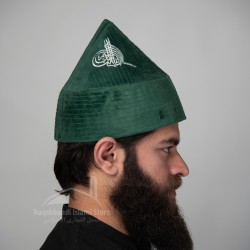
For caps and fitted headwear, the key measurement is your head circumference. Measure around your head where the cap normally sits and compare the result with the available size.
Approximately 55 cm
Approximately 56 cm
Approximately 57 cm
Approximately 58 cm
Approximately 60 cm
Approximately 61 cm
Imama / Turban Cloth Length
Imama lengths are cloth lengths, not head sizes. Your head circumference determines the size of the cap or headwear underneath, while the length of the Imama cloth determines how much fabric is available for wrapping.
5 m
Shorter traditional wrapping
7 m
Balanced traditional length
9 m
More layers and wrapping
11 m
Generous traditional wrapping
13 m
Longer, fuller wrapping
Leather Khuff Size Guide
Leather Khuff are available in sizes 5 to 13. If you are unsure of your regular shoe size, measure both feet and use the larger foot as your reference.
Smaller size range
Mid-size range
Larger size range
Fleece Lined
A practical warm lining for normal winter and everyday indoor use.
Wool / Fur Lined
A warmer option for very cold and extreme winter conditions.
Body Measurement vs. Garment Measurement
Body measurements are taken directly from your body. Garment measurements are taken from an existing garment.
Unless an individual product specifically asks for garment measurements, follow the product's instructions and provide the requested body measurements.
It can be useful as an additional reference, but do not substitute its measurements for body measurements unless the product specifically asks you to measure an existing garment.
US, UK, EU & International Size Comparison
International size labels are useful for orientation, but clothing sizes are not perfectly standardized between countries, brands or garment styles.
What If You Are Between Two Sizes?
If your measurements fall between two available sizes, consider the intended fit of the garment and read the product-specific instructions before choosing. Do not automatically assume that every product should be sized up or down.
For custom-tailored products, provide the measurements requested by the product instead of trying to convert yourself into a standard size.
How Custom Tailoring Works
Measurements
Provide the measurements requested by the product.
Your Choices
Select the available fabric, color and design options.
Tailoring
Your supplied specifications guide the tailoring process.
Order & Delivery
Review your selection, place the order and follow the delivery information.
Your Clothing Order Checklist
Confirm the garment and design.
Compare your measurements with the correct chart.
Choose according to season and purpose.
Confirm your selected color.
Review collar, pockets, buttons and closures.
Enter custom measurements accurately where required.
What Will I Actually Receive?
Your order consists of the product, size, color, fabric and other options that you select or provide according to the individual product listing.
Product photographs show the intended design and styling. The individual product description, selectable options and written specifications determine the actual configuration of your order.
For handmade, tailored or naturally varied materials, minor differences in texture, appearance or finish may occur.
Size & Fit Frequently Asked Questions
How do I choose the right size for Islamic clothing?
Take your measurements, identify the correct garment family, compare your measurements with the appropriate chart and review the intended fit before ordering.
Can I use my usual US or EU clothing size?
You can use it as a starting reference, but actual measurements are more reliable because international sizing is not completely standardized.
Are Turkish shirts supposed to fit like Western shirts?
Not necessarily. Traditional Turkish and Islamic shirts can have a more relaxed construction intended for comfort, modesty and movement.
How should a Jubba or Thobe fit?
Jubba and Thobe styles are generally designed with traditional proportions and comfortable room. Use the applicable chart and individual product description when selecting your size.
Why are some Jubba and Thobe measurements different?
Different garment constructions can use different sizing systems. Some traditional Jubba and Thobe styles use the standard chart shown above, while Arabic Royal Jubba and Bisht styles may use numeric sizes.
How do I choose a Turkish trouser size?
Compare your waist, hip, inseam, full length and bottom measurements with the Turkish Trouser chart. Traditional trousers can be considerably more generous than modern trousers.
How do I choose a vest coat size?
Compare your chest, waist, shoulder and desired length with the Vest Coat chart. Also review the shoulder construction and other available options.
How do I measure for an Islamic cap?
Measure the circumference of your head where the cap normally sits and compare it with the cap size reference.
Are Imama 5m, 7m, 9m, 11m and 13m head sizes?
No. These are cloth lengths. Head circumference determines the size of the cap or headwear underneath.
Can you arrange a fabric or color that is not listed?
For commonly used fabrics and colors that can normally be sourced in Pakistan, we may be able to arrange them. Special or difficult-to-source fabrics and colors may not always be available.
Where can I learn how to take my measurements?
Use our Body Measurement Help guide for detailed measurement instructions.
Ready to Choose Your Style?
Measure → Find Your Size → Choose Fabric → Select Options → Review → Add to Cart → Checkout
Take a little time to understand your measurements and product options before ordering. A well-informed choice makes traditional clothing shopping much simpler.
Body Measurement Help Shop Men's Clothing Shop Women's ClothingImportant: Individual product pages remain the final reference for product-specific sizing, fabric, available colors, customization options and tailoring requirements.