



Body Measurement Help – Clothing, Headwear & Khuff
A simple guide to taking accurate measurements for custom-tailored clothing, caps, Imama (turban) and leather Khuff.
Important: Please take your measurements carefully before placing an order. For custom-tailored products, accurate measurements help our tailoring team create a more comfortable and suitable fit.
Before You Start
Use a flexible measuring tape and, where possible, ask another person to help you. Wear light clothing while measuring and keep the tape comfortably against the body without pulling it too tight or leaving it excessively loose.
- Stand naturally in a relaxed position.
- Keep the measuring tape level and straight.
- Do not hold your breath or deliberately expand your chest or stomach.
- Take each measurement again to confirm it.
- Record measurements in centimeters or inches and use the same unit throughout your order.
- If another person is taking your measurements, stand naturally rather than changing your posture.
Body Measurement vs. Garment Measurement
Body measurements are measurements taken directly around or along your body. Garment measurements are measurements taken from an existing shirt, Jubba, pajama, vest coat or other garment.
Unless a product specifically asks for garment measurements, enter your body measurements. Always follow the measurement instructions shown on the individual product page because different garments may require different measurements.
For custom-tailored products: Do not simply copy the size of another garment unless the product specifically requests garment measurements. Your body measurements allow tailoring adjustments to be made for the intended fit.
1. Shirt & Turkish Shirt Measurements
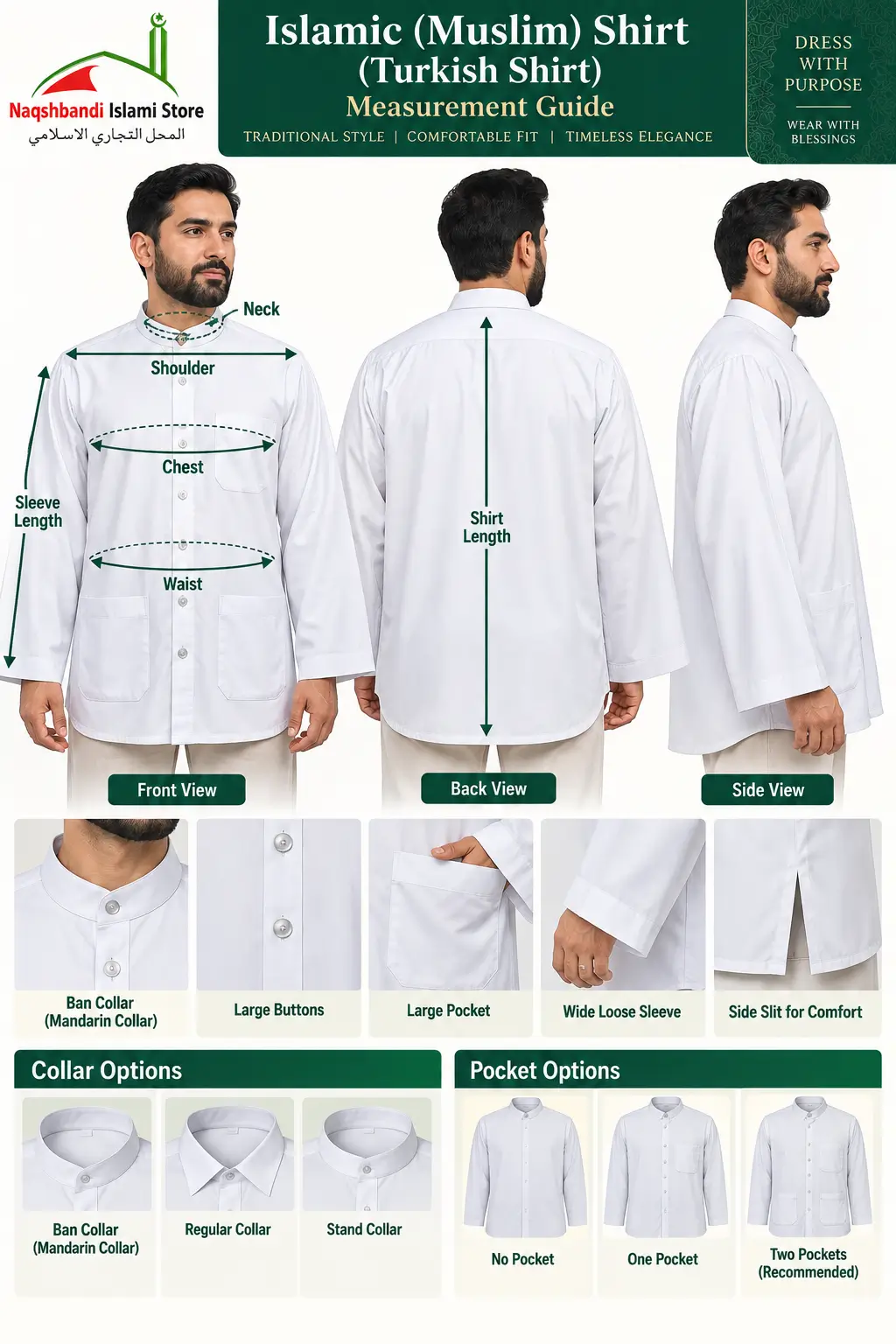 Recommended: Vertical Shirt Measurement Sketch |
Neck
Place the measuring tape around the base of your neck where the collar normally sits. Keep the tape comfortable rather than tight.
Shoulder Width
Measure from the outer edge of one shoulder across the upper back to the outer edge of the opposite shoulder. Keep the tape straight across your back.
Chest
Wrap the tape around the fullest part of your chest, passing under the arms and across the shoulder blades. Keep your arms relaxed.
Waist
Measure around your natural waist area. Keep your stomach relaxed and make sure the tape remains level all the way around your body.
Sleeve / Arm Length
Measure from the shoulder point down along the outside of the arm to the desired sleeve or wrist position.
Shirt Length
Measure from the shoulder area down the body to your desired finished shirt length.
For custom Turkish or Islamic shirts, always check the individual product page for the available collar, pocket, sleeve and fit options.
2. Pajama & Turkish Trouser Measurements
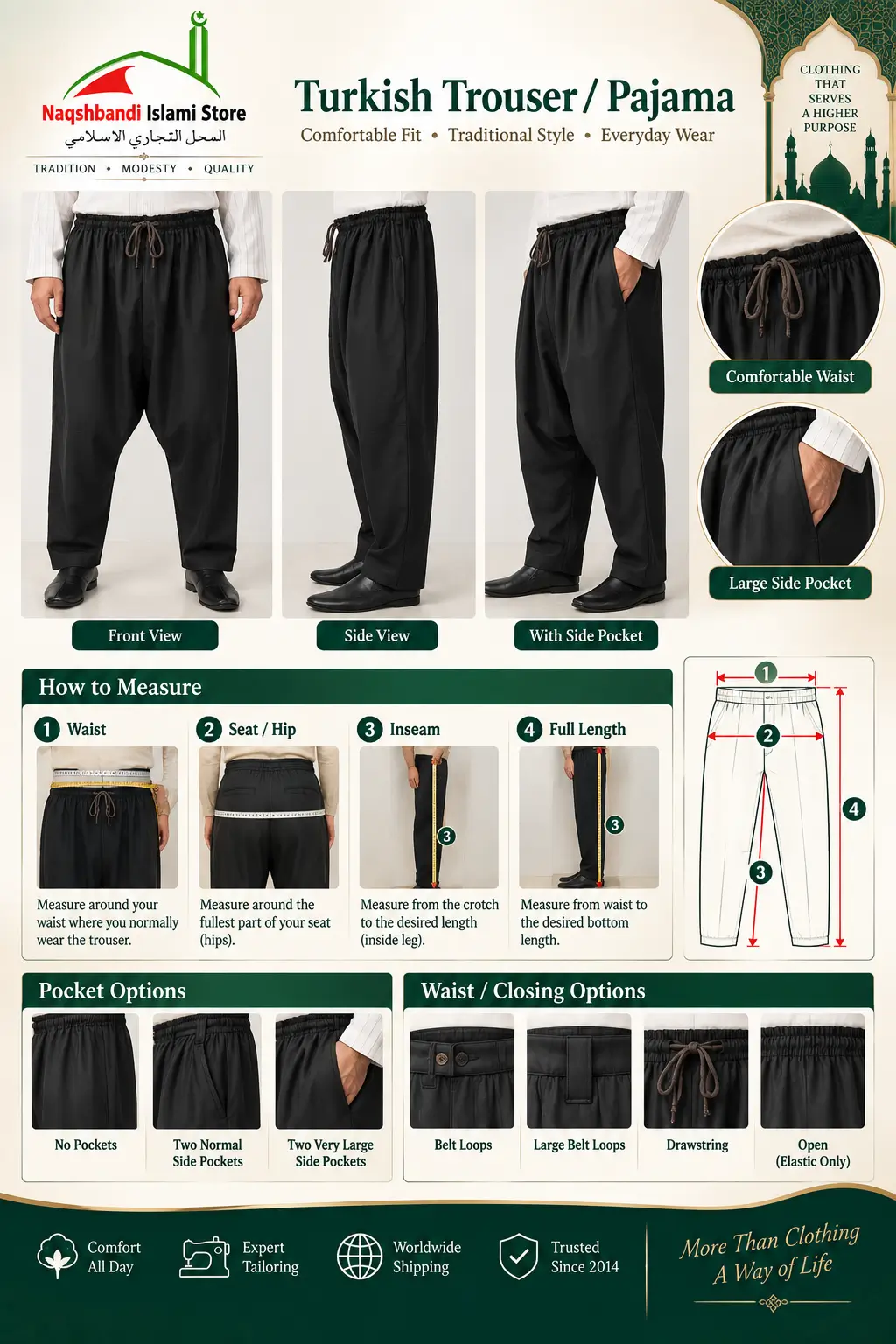 Recommended: Vertical Trouser Measurement Sketch |
Waist
Measure around the area where you normally wear the trouser or pajama waistband. Keep the tape comfortable.
Seat / Hip
Measure around the fullest part of the hips and seat while standing naturally.
Inseam
Measure from the crotch area down the inside of the leg to the desired bottom of the trouser.
Full Length / Outseam
Measure from the waistband area down the outside of the leg to the desired finished length.
Bottom / Leg Opening
Measure the preferred circumference of the trouser opening at the bottom of the leg.
Thigh
For styles where requested, measure around the fullest part of the upper thigh.
Rise / Crotch
For traditional wide Turkish trousers or Pajama styles, the rise and crotch construction can be important because these garments may have a deeper and more generous seat and crotch than modern slim trousers.
Always follow the individual product's measurement fields where available because traditional Turkish trousers, Pajama and custom-tailored trousers may use different construction and fit preferences.
3. Jubba & Gown Measurements
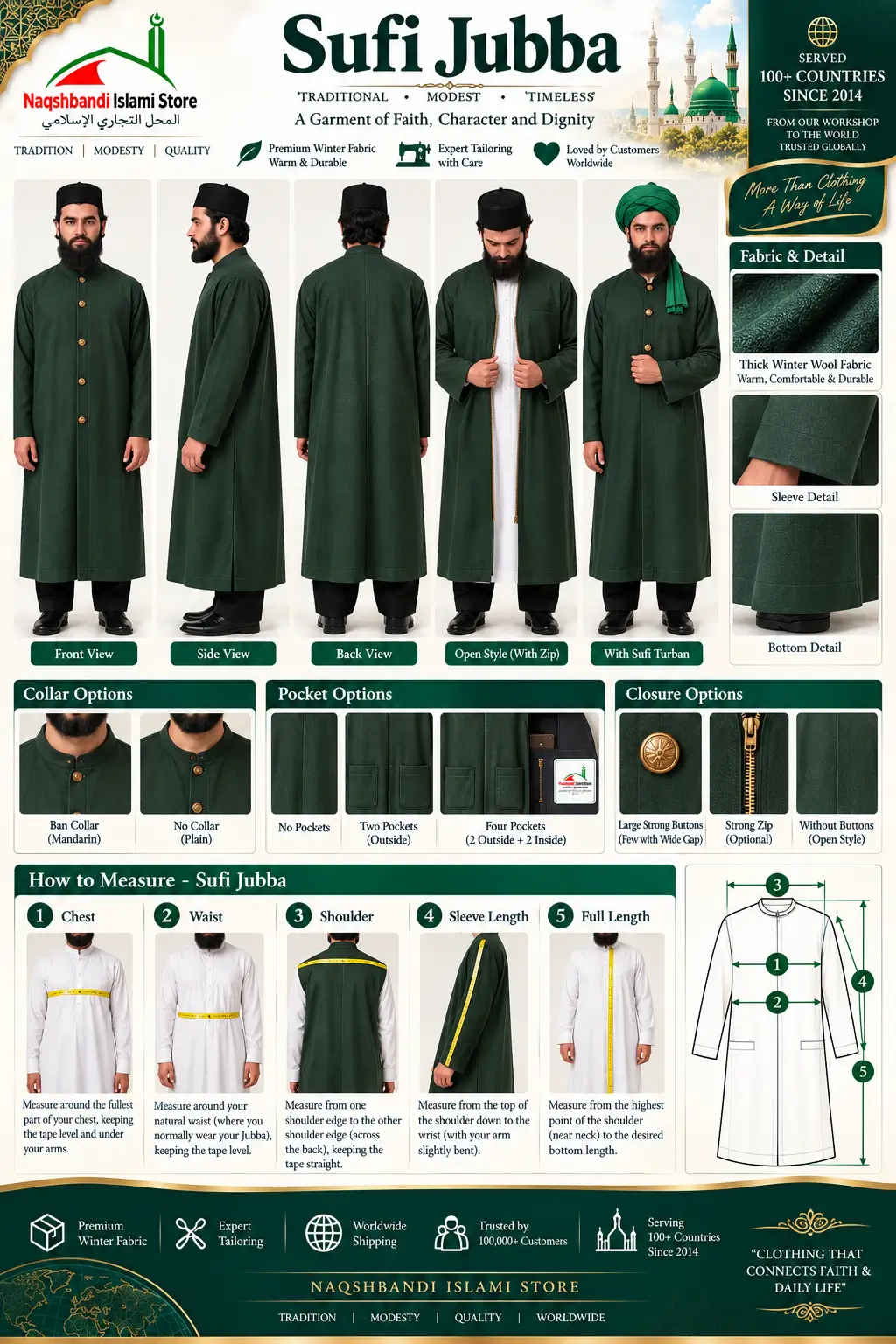 Recommended: Vertical Jubba Measurement Sketch |
Chest
Measure around the fullest part of your chest, keeping the tape level and comfortable.
Waist
Measure around the natural waist area without tightening the tape.
Shoulder Width
Measure from shoulder point to shoulder point across the back.
Sleeve Length
Measure from the shoulder point down the arm to the desired sleeve position.
Full Length
Measure from the shoulder area down to your desired finished Jubba length.
Consider the footwear you normally wear when deciding your preferred finished length.
4. Vest Coat / Waistcoat Measurements
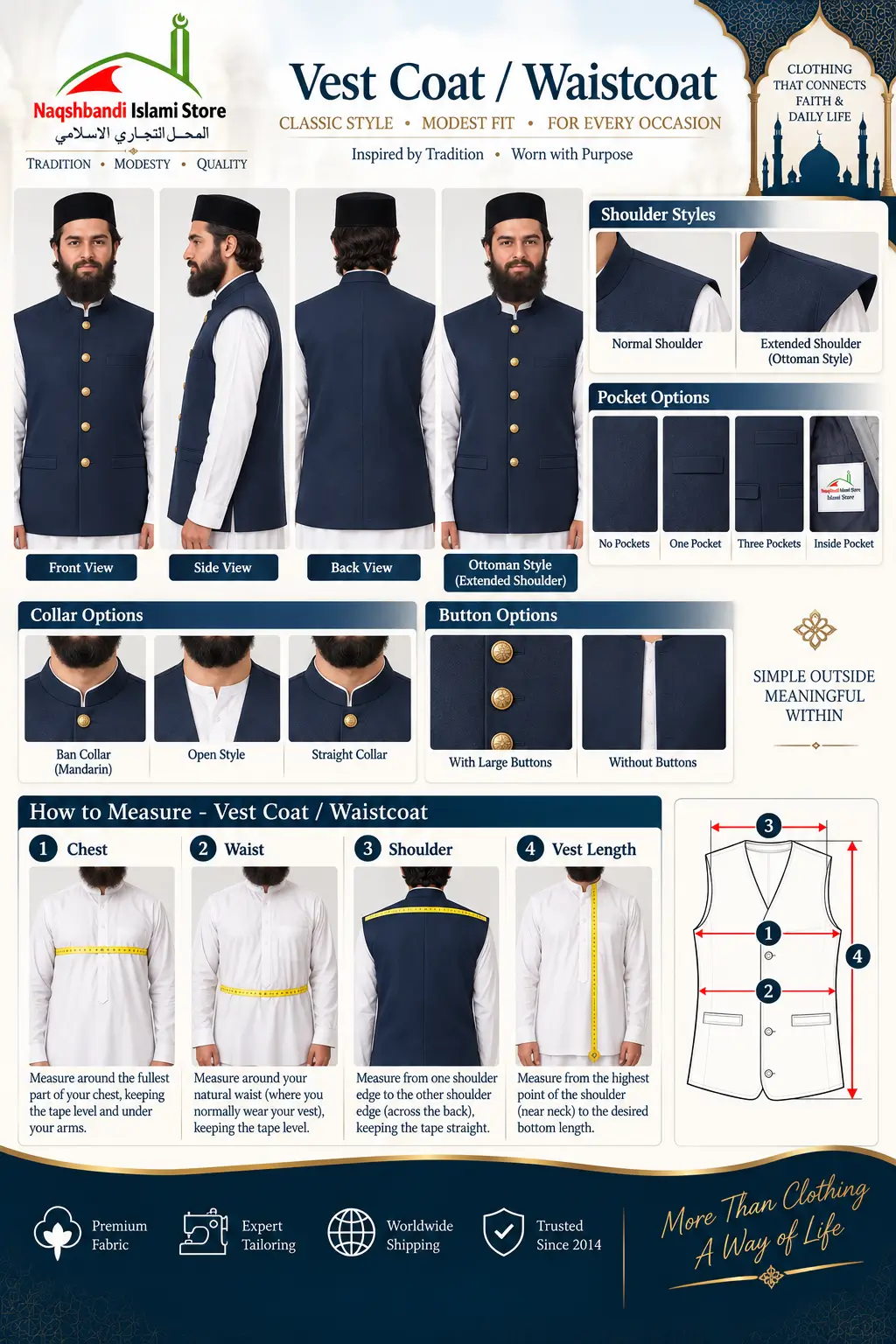 Recommended: Vertical Vest Coat Measurement Sketch |
Chest
Measure around the fullest part of the chest.
Waist
Measure around the intended waist area.
Shoulder
Measure from shoulder point to shoulder point across the back.
Length
Measure from the shoulder area down to your desired vest coat length.
For Ottoman or extended-shoulder styles, the shoulder construction can intentionally extend beyond the natural shoulder line. Follow the individual product's style instructions when selecting this option.
5. Leather Socks / Khuff Measurement
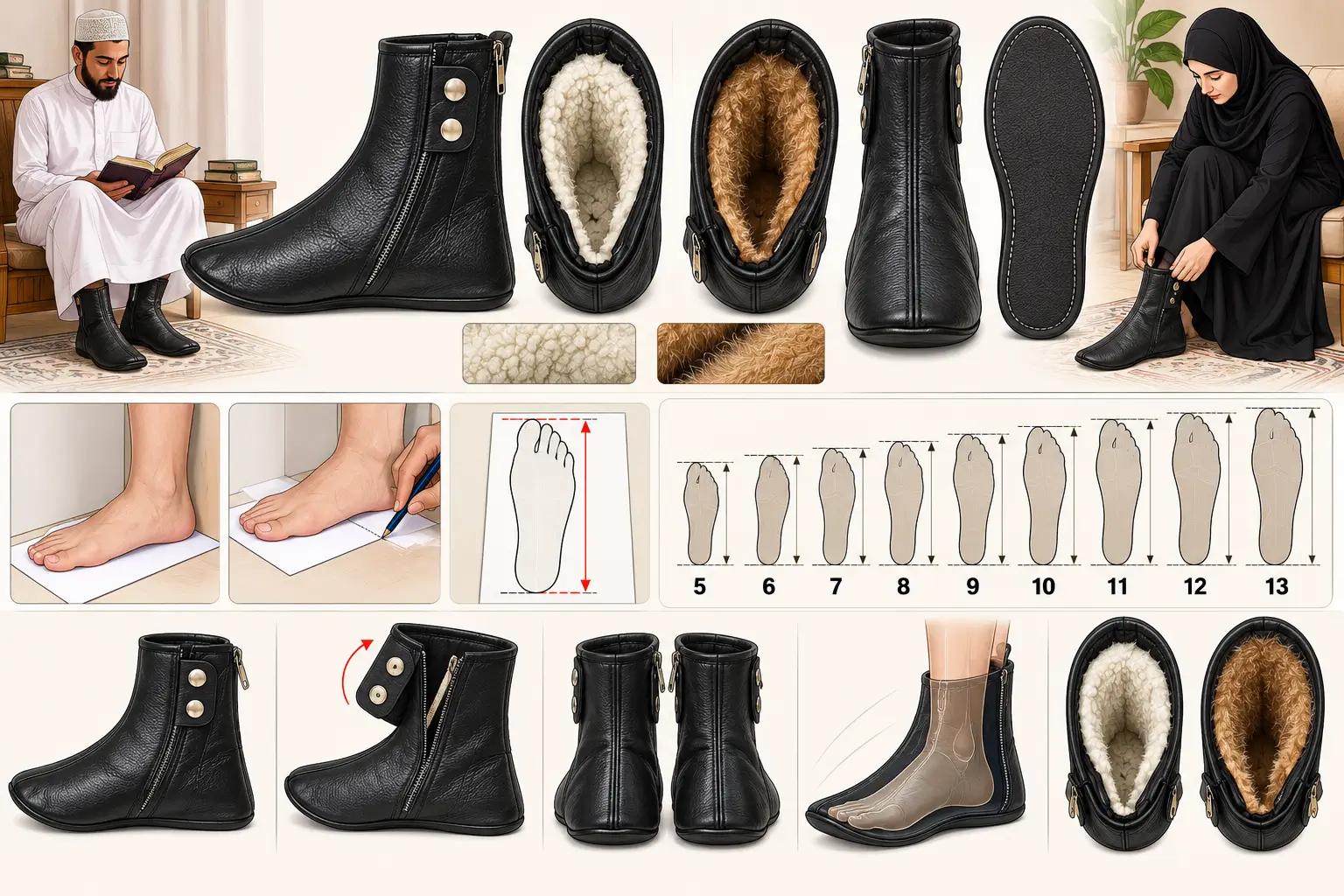 Recommended: Vertical Khuff Foot Measurement & Size Sketch |
For Leather Khuff, the most important measurement is your foot size. If you are unsure about your normal shoe size, measure your foot before ordering.
- Place your bare foot naturally on a flat sheet of paper.
- Keep your heel positioned normally and flat.
- Mark the point at the back of the heel and the end of your longest toe.
- Measure the distance from heel to the longest toe.
- Measure both feet and use the measurement of the larger foot when choosing your size.
- Compare the result with the Khuff size information provided on the relevant product page.
Our Leather Khuff is available in sizes 5 to 13. If you normally know your regular shoe size, use the product's size guidance before selecting your Khuff size, particularly if you are between sizes or have unusually wide feet.
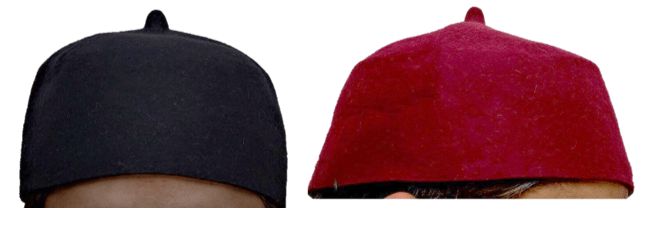
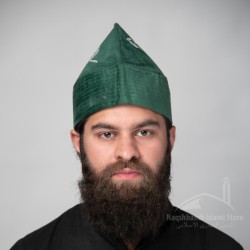
6. Islamic Caps – Head Measurement
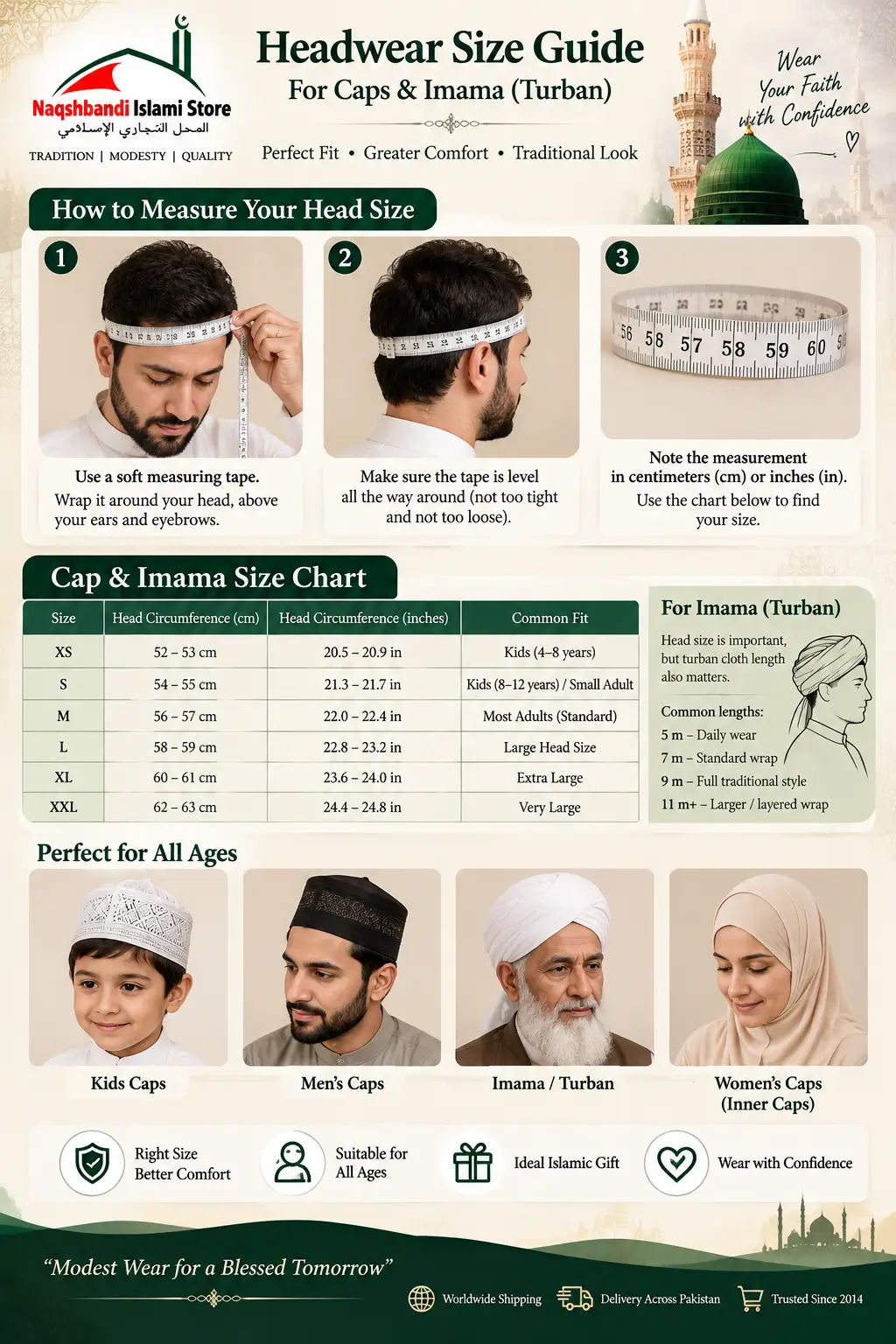 Recommended: Vertical Cap Head Measurement Sketch |
Head Circumference
Use a soft measuring tape and wrap it around your head at the position where the cap normally sits. Keep the tape approximately level around the head, passing above the ears and across the forehead.
- Place the tape around your head.
- Keep it level and comfortably fitted.
- Do not pull the tape excessively tight.
- Record the measurement in centimeters or inches.
- Compare your measurement with the relevant cap size chart.
The actual cap size and fit can vary according to the construction and style of the individual cap. Always check the product-specific size information where provided.
7. Imama / Turban Measurement & Length
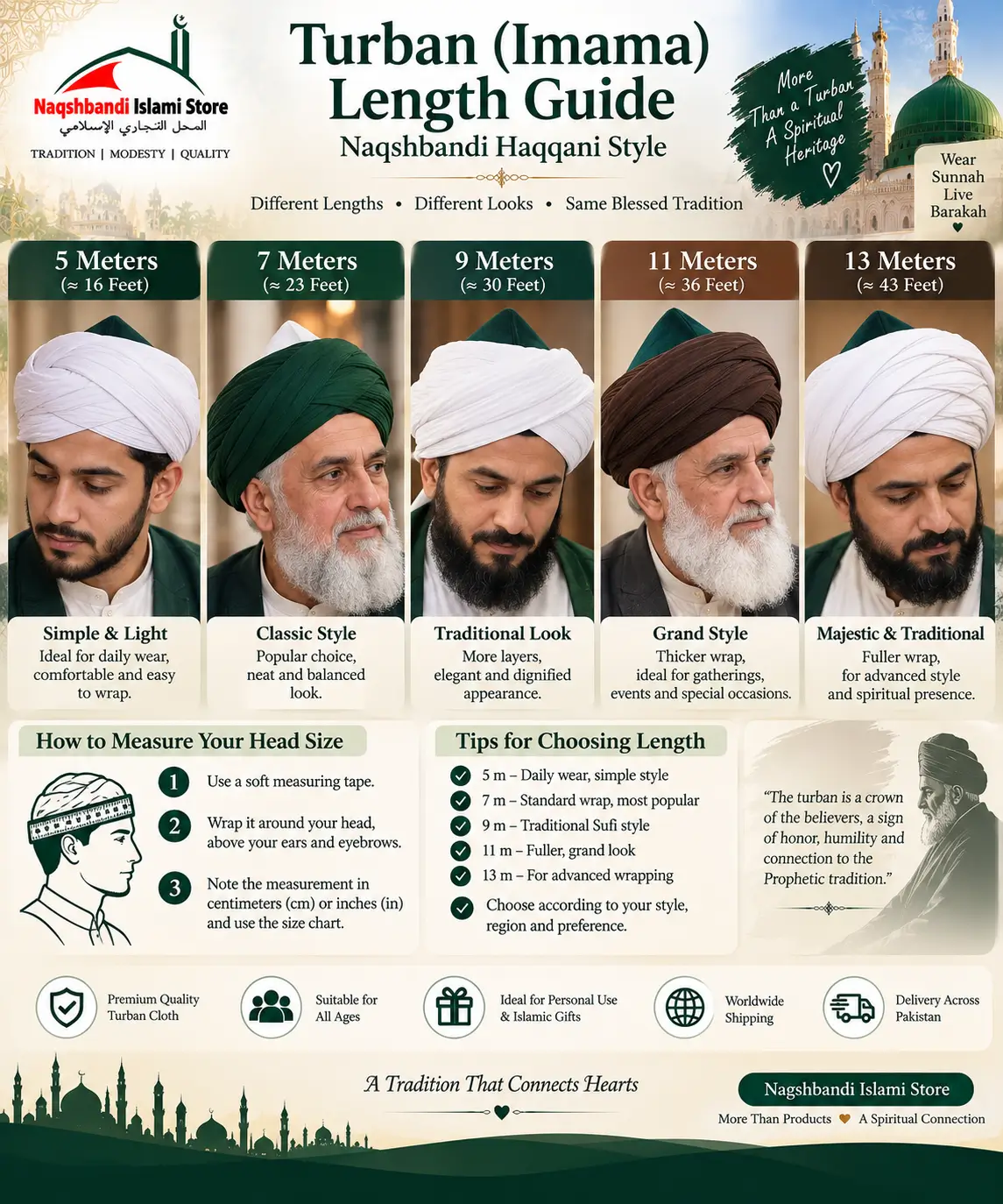 Recommended: Vertical 5, 7, 9, 11 & 13 Meter Turban Guide |
Head Circumference
Use a soft measuring tape and wrap it around your head at the position where the Imama base or cap normally sits. Keep the tape level and comfortably fitted.
Imama / Turban Cloth Length
For Imama, head circumference determines the underlying head size, while the length of the turban cloth affects the wrapping style, number of layers and overall appearance.
Our Imama cloth is available in different lengths such as 5, 7, 9, 11 and 13 meters, with longer lengths providing additional wrapping possibilities. Some products may offer additional custom lengths where specified.
Choose the cloth length according to your preferred wrapping style and the instructions provided on the individual Imama product page.
Measurement Guide by Product
| Product | Main Measurements |
|---|---|
| Shirt / Turkish Shirt | Neck, Chest, Waist, Shoulder, Sleeve Length, Shirt Length |
| Jubba / Gown | Chest, Waist, Shoulder, Sleeve Length, Full Length |
| Trousers / Pajama | Waist, Seat, Inseam, Full Length, Bottom; additional measurements where requested |
| Vest Coat / Waistcoat | Chest, Waist, Shoulder, Length |
| Islamic Caps | Head Circumference |
| Imama / Turban | Head Circumference + Turban Cloth Length |
| Leather Khuff | Foot Length / Regular Shoe Size |
Choosing Between Two Sizes
If your measurement falls between two available sizes, do not automatically choose a smaller size. Consider the garment's intended fit, the product's own size chart and whether you prefer a more relaxed or closer fit.
For custom-tailored products, provide the requested measurements exactly as taken. If you have a specific fitting preference, such as relaxed, regular or slightly loose, mention it in the product customization or order comments where available.
Your Custom Order – Simple Process
- Choose your product – Select the shirt, Pajama, Jubba, vest coat or other item.
- Choose the fabric – Select from the options available on that product.
- Choose the color and design – Select your preferred available options.
- Take your measurements – Follow the instructions on this page.
- Enter your measurements – Provide the measurements requested by the product.
- Review your information – Check every measurement before adding the product to your cart.
- Place your order – Complete checkout and keep your order information for reference.
Important: Product-Specific Instructions
This page provides general measurement guidance. The individual product page always takes priority when it provides specific measurement fields, size charts, tailoring instructions or fit requirements.
Common Measurement Mistakes to Avoid
- Using a rigid ruler instead of a flexible measuring tape.
- Pulling the tape too tightly.
- Allowing the tape to hang loosely.
- Measuring over bulky clothing.
- Holding the stomach or chest unnaturally.
- Measuring shoulders at an incorrect angle.
- Confusing body measurements with measurements of an existing garment.
- Using different measurement units in the same order.
- Guessing measurements from age or height alone.
- Ignoring the product-specific measurement instructions.
Need Help With Your Measurements?
If you are unsure how to take a particular measurement, review the measurement guide for the relevant product before placing your order. For custom-tailored items, providing accurate measurements is one of the most important steps toward achieving a comfortable fit.
Measure Carefully • Choose Confidently • Wear Comfortably