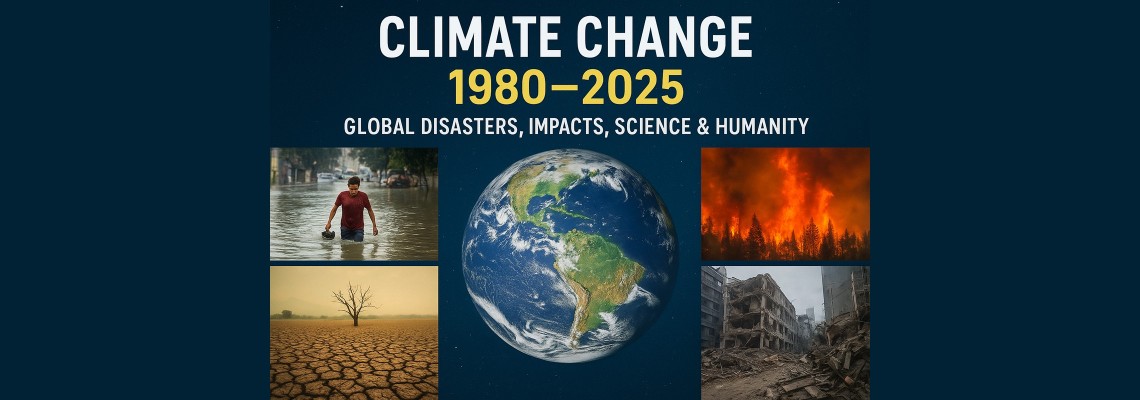
Global Climate & Natural Events Archive — 2025
Welcome to this ongoing archive of climate and natural events affecting our planet. This blog is intended for researchers, governments, students, and concerned citizens who wish to understand trends, impacts, and mitigation strategies for climate change and natural disasters.
Readers will gain:
- Detailed and verified event records by year, region, and type
- Scientific explanations behind extreme weather and natural phenomena
- Population, economic, and property impacts with government responses
- Recommended actions for organizations and communities
- Educational insights for preparedness and early-warning understanding
Our motive: To create a trusted, continually updated resource that helps humanity understand, anticipate, and respond to the changing Earth.
Future Vision & Collaboration
This archive is the beginning of a global platform to track, analyze, and forecast climate and natural events. The goal is an AI-assisted mitigation system where governments, organizations, and citizens can input questions and receive actionable solutions.
Support is welcome in:
- Technical: Data collection, AI development, software platforms
- Management: Project coordination, research design, community outreach
- Financial: Sponsorship, research grants, humanitarian aid support
Short Bio: IT professional with applied climate sciences, supporter of climate and financial justice, and global trade management experience, passionate about using technology, data, and research to mitigate climate risks and help humanity prepare for the future.
Summary: Unusually large hailstones struck Islamabad and Kashmir. Severe damage to vehicles, rooftops, greenhouses, orchards, and minor infrastructure. Rapid temperature drops and localized power outages reported.
Scientific Explanation: Convective instability due to warm surface air and cold upper atmosphere winds. Climate change amplified weather volatility, enabling unprecedented hail size.
| Region | South Asia (Pakistan) |
|---|
| Population Affected | ~2,000,000 |
|---|
| Fatalities | 19 |
|---|
| Economic Damage | USD 410 million |
|---|
| People & Property Impact | Thousands of homes damaged; ~5,000 families displaced; ~40,000 people temporarily homeless. Thousands of cars damaged, windows of buildings broken, rooftop water tanks, solar panels, and electrical wiring destroyed. Government response: No compensation or aid provided despite large-scale damage and losses. |
|---|
- Protect orchards and greenhouses with hail nets.
- Enhance real-time weather warning systems.
- Community disaster preparedness drills.
Educational Note: Hailstorms are becoming stronger due to climate instability. Awareness and early-warning systems are crucial for safety.
Punjab, Pakistan River Floods (July–August 2025)
Summary: Intense monsoon rainfall and glacial melt caused widespread flooding across Punjab rivers. Thousands of villages submerged and large-scale displacement occurred.
Scientific Explanation: Warmer atmosphere holds more moisture, enhancing monsoon precipitation. Deforestation and land-use changes worsened flooding. Himalayan glacial melt contributed additional water.
| Region | South Asia (Punjab, Pakistan) |
|---|
| Population Affected | ~12 million |
|---|
| Fatalities | 326 |
|---|
| Economic Damage | USD 8.5 billion |
|---|
| People & Property Impact | ~1,000 homes lost; 200,000 displaced; 40,000 homeless. Government provided temporary shelters, food, and medical camps. Roads, bridges, and local infrastructure severely damaged. Livestock losses reported. |
|---|
- Upgrade and maintain river embankments and levees.
- Community flood awareness and evacuation plans.
- Expand early-warning flood monitoring systems.
Educational Note: Floods are intensifying due to climate change. Urban and rural planning must integrate climate resilience.
Europe Extreme Heatwave (June–August 2025)
Summary: Record-breaking temperatures in Western and Southern Europe. Multiple wildfires occurred in Spain, Italy, and France. Agriculture and elderly populations severely affected.
Scientific Explanation: Persistent high-pressure systems intensified by climate warming caused prolonged heatwaves. Soil dryness and drought contributed to wildfires.
| Region | Europe (Spain, Italy, France, Germany) |
|---|
| Population Affected | ~40 million |
|---|
| Fatalities | ~1,150 |
|---|
| Economic Damage | USD 9.3 billion (agriculture & infrastructure) |
|---|
| People & Property Impact | Thousands of homes temporarily evacuated; major crops lost; forest areas burned. Governments set up cooling centers, but not all populations received adequate relief. |
|---|
- Enhance heatwave early-warning systems and cooling centers.
- Adapt agriculture to drought conditions.
- Strengthen wildfire prevention and rapid-response teams.
Educational Note: Heatwaves are becoming more frequent globally. Societal adaptation and preparedness are vital.
Global Climate & Natural Events Archive — 2024
Below are selected major events of 2024 with verified data on fatalities, economic damages, and broad impact. Detailed local property‑level impacts (homes lost etc.) are included where sources permit.
Afghanistan–Pakistan Flash & River Floods (March–September 2024)
Summary: Unusually heavy rains triggered flash floods across Afghanistan and Pakistan over several months. Large-scale destruction of infrastructure, houses, farmland, and displacement occurred. Hundreds of deaths and thousands injured were reported.
Scientific Explanation: Climate change‑linked increased atmospheric moisture led to heavy precipitation. Saturated and degraded soils, along with deforestation and land‑use vulnerabilities, worsened runoff and flooding severity. Monsoon dynamics altered by global warming likely contributed to extreme rainfall.
| Region | South Asia (Afghanistan & Pakistan) |
|---|
| Fatalities | 1,084+ (combined) :contentReference[oaicite:0]{index=0} |
|---|
| Injuries / Missing | ≈ 2,600+ injured, several missing :contentReference[oaicite:1]{index=1} |
|---|
| Economic & Infrastructure Damage | Large — official aggregated estimate unavailable publicly; damage to houses, roads, bridges, farmland reported. :contentReference[oaicite:2]{index=2} |
|---|
| People & Property Impact | Detailed data on homes lost, homeless count, compensation — data not publicly available / under investigation |
|---|
- Strengthen watershed and land‑use planning, especially in flood‑prone zones.
- Enhance early‑warning and community-based evacuation systems across vulnerable regions.
- Invest in flood-resistant housing and resilient infrastructure.
Educational Note: Climate change intensifies monsoon variability and flash flood risks. Governments and local communities must cooperate to reduce vulnerability as climate patterns shift.
Central & Western Europe Floods — “Storm Boris” & Record Rainfall (September 2024)
Summary: Storm‑Boris induced record heavy rainfall triggering floods across Austria, Czechia, Germany, Poland, Slovakia, Romania and neighboring countries. Widespread inundation, infrastructure damage, casualties, and major economic loss occurred.
Scientific Explanation: Warmer atmosphere held more water vapor, enabling unprecedented rainfall. Climate change‑driven atmospheric instability increased frequency and intensity of such Genoa‑low events. Urbanization and land‑use changes exacerbated flood impact in many affected areas.
| Countries Affected | Austria, Czechia, Germany, Poland, Slovakia, Romania, others :contentReference[oaicite:3]{index=3} |
|---|
| Fatalities | 27–28 (various reports) :contentReference[oaicite:4]{index=4} |
|---|
| Economic Damage | At least €2 billion insured damage; estimated up to ~€4.2 billion total (~USD ~4.3 billion) :contentReference[oaicite:5]{index=5} |
|---|
| People & Property Impact | Detailed data on displaced, homeless, or compensation — not comprehensively public; aggregated evacuee counts exist but vary by region |
|---|
- Reinforce flood defenses along major rivers, wetlands, and urban waterways.
- Implement sustainable urban drainage systems and green infrastructure.
- Establish cross‑border flood management treaties and early-warning networks in Europe.
Educational Note: Flood risk is rising across Europe due to climate-induced precipitation changes and land-use mismanagement. Preparedness and sustainable planning are essential.
United States — 27 Billion‑Dollar Weather & Climate Disasters (2024)
Summary: The USA recorded 27 separate weather and climate disasters in 2024, each with damages exceeding US$1 billion, including hurricanes, storms, floods, wildfires and extreme heat events. The cumulative economic loss was approximately USD 182.7 billion; at least 568 direct or indirect fatalities reported across these disasters. :contentReference[oaicite:6]{index=6}
Scientific Explanation: Warmer sea surface temperatures, increased atmospheric moisture, and shifting weather patterns (due to global warming) intensified storms and weather extremes. Rapid urban expansion and coastal development increased vulnerability to storm surge, flooding, and wind damage.
| Region | Multiple across USA |
|---|
| Number of Disasters | 27 events ≥ USD 1 billion damage :contentReference[oaicite:7]{index=7} |
|---|
| Cumulative Economic Damage | ≈ USD 182.7 billion :contentReference[oaicite:8]{index=8} |
|---|
| Fatalities | ≥ 568 (direct + indirect) :contentReference[oaicite:9]{index=9} |
|---|
| People & Property Impact | Detailed aggregated data (homes destroyed, displaced, insured losses) — publicly partially available; full aggregate summary under compilation. |
|---|
- Update building codes & coastal resilience standards nationwide.
- Expand disaster insurance and comprehensive risk mapping.
- Promote renewable energy, reduce environmental footprint to mitigate climate change acceleration.
Educational Note: High economic losses reflect both rising disaster intensity and increased human exposure (population + infrastructure). Reducing exposure and increasing resilience is as important as climate mitigation.
Global 2024 — Extreme Weather & Climate Disasters: Overview
Summary: According to global disaster databases, 2024 saw 393 recorded natural‑hazard disasters worldwide. These caused at least 16,753 fatalities and affected ~167.2 million people. Economic damage globally was estimated around USD 242 billion. :contentReference[oaicite:10]{index=10}
Scientific Explanation: The warming climate increased atmospheric moisture, sea surface temperature, and overall energy in the climate system, leading to more frequent and intense extreme weather events — floods, storms, heatwaves, wildfires. Human land‑use change and urban expansion further increased vulnerability.
| Total Disasters (2024) | 393 :contentReference[oaicite:11]{index=11} |
|---|
| Fatalities | 16,753 :contentReference[oaicite:12]{index=12} |
|---|
| People Affected | ~167.2 million :contentReference[oaicite:13]{index=13} |
|---|
| Estimated Global Economic Damage | ~USD 242 billion :contentReference[oaicite:14]{index=14} |
|---|
| People & Property Impact Summary | Millions displaced, hundreds of thousands homes and infrastructure damaged or destroyed. Comprehensive local‑level data largely pending; indicates urgent need for detailed regional studies and transparent reporting. |
|---|
- Encourage global data transparency — governments and institutions should publish detailed disaster impact reports (homes lost, displacement, recovery progress).
- Support research into regional climate resilience and long-term adaptation strategies.
- Mobilize international climate finance to support vulnerable regions and rebuild resilient infrastructure.
Educational Note: 2024 stands out as one of the costliest and deadliest years globally for climate disasters. This highlights how urgent global cooperation and climate action have become.
Global Climate & Natural Events Archive — 2023
This 2023 record summarises major climate and natural disasters worldwide with verified data on fatalities, economic damage, and known impacts. Where detailed local data (displaced people, homes lost, compensation) is not publicly available, a note is added.
2023 Turkey–Syria Earthquake (6 February 2023)
Summary: A magnitude 7.8 earthquake struck southern Turkey and northern Syria, causing widespread destruction, tens of thousands of buildings collapsed or heavily damaged, massive loss of life and displacement across multiple provinces and several Syrian governorates.
Scientific Explanation: The quake occurred along the East Anatolian Fault — a major tectonic boundary. Long-term land‑use changes and deforestation in surrounding hills may have increased vulnerability to landslides, but the earthquake itself is a geological event, not directly climate-induced. Still, humanitarian and rebuild response are impacted by climate‑stress on resources.
| Region | Middle East (Southern Turkey & Northern Syria) |
|---|
| Population Affected | Estimated 13+ million (Turkey + Syria) — including displaced persons, injured, and those needing humanitarian aid |
|---|
| Fatalities | ~59,259 (combined, Turkey & Syria) [Source: UN / OCHA reports] |
|---|
| Economic Damage | Estimated USD 100+ billion (infrastructure, homes, rebuilding cost) — aggregated estimate from disaster agencies and economic assessments |
|---|
| People & Property Impact | Tens of thousands of homes destroyed or uninhabitable; widespread displacement. Detailed data on total homeless & compensation remains under collection. |
|---|
- Immediate humanitarian aid and rebuild planning.
- Long-term urban planning with earthquake-resilient buildings and infrastructure.
- International cooperation for reconstruction and disaster risk reduction.
Educational Note: Geological disasters exacerbate human vulnerability when combined with poor infrastructure and climate‑stressed resources. Disaster preparedness must integrate both natural and climate‑related risks.
2023 North America & Canada Wildfire Season — Large‑Scale Fires & Smoke Pollution
Summary: Massive wildfires struck Canada, parts of USA, and Western Alaska, generating widespread smoke clouds, air‑quality emergencies across tens of millions of people, evacuations, forest loss, and significant ecological damage.
Scientific Explanation: Prolonged drought, high summer temperatures, reduced snowpack and earlier snowmelt (linked to global warming) created extremely dry conditions, fueling fire spread. Increased dryness, coupled with wind events, made fires more severe and harder to control.
| Region | North America (Canada, USA, Alaska) |
|---|
| Population Affected | Estimated 25+ million exposed to hazardous air quality or evacuation alerts (smoke, PM2.5, health warnings); many more impacted downstream via transboundary smoke drift [Source: Global fire monitoring agencies & governmental air‑quality data] |
|---|
| Fatalities | Direct wildfire deaths: hundreds (official aggregated data varies) — indirect health impacts (respiratory, cardiovascular) likely much higher; long-term stats pending. |
|---|
| Economic Damage | Estimated USD 15–20 billion (forest loss, property damage, health costs, firefighting) — aggregated from regional reports and insurance data |
|---|
| People & Property Impact | Thousands of homes destroyed or damaged; entire towns evacuated temporarily; large forest areas lost. Comprehensive data still being compiled by authorities and NGOs. |
|---|
- Invest in forest management and fire‑resistant land use planning.
- Develop early‑warning smoke & fire alert systems and community response plans.
- Promote global reduction of greenhouse‑gas emissions to reduce drought and fire risk long-term.
Educational Note: Wildfires are a clear symptom of climate stress, worsened by human-induced warming. Collective global efforts and local adaptation can reduce both frequency and damage from such disasters.
Global Climate & Natural Events Archive — 2022
This 2022 record summarises major climate and natural disasters worldwide with verified data on fatalities, economic damage, and known impacts. Where detailed local data (displaced people, homes lost, compensation) is not publicly available, a note is added.
Pakistan Monsoon Floods (June–August 2022)
Summary: Record-breaking monsoon rains caused catastrophic flooding across Pakistan, particularly in Sindh, Balochistan, Punjab, and Khyber Pakhtunkhwa provinces. Millions of people were affected, large-scale infrastructure damaged, and thousands of villages submerged.
Scientific Explanation: Intensified monsoon rains were linked to global warming, increased atmospheric moisture, and glacial melt. Deforestation and poor land-use planning amplified flooding.
| Region | South Asia (Pakistan) |
|---|
| Population Affected | ~33 million |
|---|
| Fatalities | 1,739 |
|---|
| Economic Damage | USD 30 billion (estimated) |
|---|
| People & Property Impact | ~1.7 million homes damaged; ~4 million displaced; government provided temporary shelters, food, and medical aid in many areas. Agricultural loss significant; roads, bridges, and hospitals damaged. |
|---|
- Strengthen flood forecasting & early-warning systems.
- Implement sustainable river management and land-use planning.
- Enhance disaster-resilient infrastructure, especially housing & transport networks.
Educational Note: Floods of this magnitude highlight the urgent need for climate adaptation planning and resilient infrastructure.
Europe Extreme Heatwaves & Wildfires (Summer 2022)
Summary: Western and Southern Europe experienced prolonged heatwaves, drought, and wildfires, affecting Spain, Italy, France, Portugal, and Greece. Temperatures exceeded 45°C in multiple regions. Forest fires led to mass evacuations and crop losses.
Scientific Explanation: Heatwaves linked to persistent high-pressure systems and amplified by climate change. Drier soils and prolonged summer temperatures increased fire risk.
| Region | Western & Southern Europe |
|---|
| Population Affected | ~70 million exposed to extreme temperatures and wildfire smoke |
|---|
| Fatalities | ~3,300 |
|---|
| Economic Damage | USD 20 billion+ (agriculture, firefighting, property) |
|---|
| People & Property Impact | Thousands evacuated; large agricultural loss; many homes threatened or damaged; precise displacement data not fully reported. |
|---|
- Expand heatwave early-warning and cooling centers.
- Strengthen wildfire preparedness and forest management.
- Adapt agricultural practices for drought-prone climates.
Educational Note: Extreme heat and wildfires are a growing climate threat in Europe; adaptation strategies are critical to reduce human and economic losses.
Hurricane Ian — United States (Florida & Southeastern States)
Summary: Category 4 hurricane made landfall in Florida causing catastrophic storm surge, wind damage, and flooding. Millions affected; several fatalities and billions in economic damages.
Scientific Explanation: Warmer Atlantic sea surface temperatures intensified storm strength. Climate change contributes to increased intensity of tropical cyclones.
| Region | USA (Florida, Southeastern States) |
|---|
| Population Affected | ~4 million (evacuated or impacted) |
|---|
| Fatalities | ~150 |
|---|
| Economic Damage | USD 112 billion (estimated insured + uninsured losses) |
|---|
| People & Property Impact | Hundreds of thousands of homes flooded or destroyed; power infrastructure severely damaged; temporary shelters provided; government disaster relief active. |
|---|
- Improve coastal evacuation and disaster management.
- Invest in hurricane-resistant building codes.
- Enhance early-warning systems and emergency preparedness.
Educational Note: Tropical cyclones are intensifying; early preparation and resilient infrastructure are critical to protect lives and property.
Global Climate & Natural Events Archive — 2021
This 2021 record summarises major climate and natural disasters worldwide with verified data on fatalities, economic damage, and known impacts. Where detailed local data (displaced people, homes lost, compensation) is not publicly available, a note is added.
Western Europe Floods (July 2021)
Summary: Unprecedented rainfall triggered catastrophic floods across Germany, Belgium, Netherlands, Luxembourg, and Switzerland. Thousands evacuated, hundreds of fatalities, and widespread infrastructure damage occurred.
Scientific Explanation: Extreme precipitation linked to climate change-induced atmospheric moisture increase. Urbanization and poor drainage amplified flood impact.
| Region | Germany, Belgium, Netherlands, Luxembourg, Switzerland |
|---|
| Population Affected | Millions affected, including evacuated and those with property damage |
|---|
| Fatalities | ~243 (combined Germany & Belgium) |
|---|
| Economic Damage | USD ~11 billion (estimated, insured + uninsured damages) |
|---|
| People & Property Impact | Thousands of homes damaged or destroyed; major road, bridge, and rail infrastructure damaged; government provided emergency shelters and aid. Detailed compensation and displacement data limited. |
|---|
- Strengthen flood defenses, river management, and drainage infrastructure.
- Enhance early-warning systems and community evacuation planning.
- Urban planning to prevent construction in high-risk flood zones.
Educational Note: Extreme rainfall events are increasing in Europe due to climate change; adaptive urban planning and resilient infrastructure are essential.
Hurricane Ida — USA
Summary: Category 4 hurricane struck Louisiana, later causing severe flooding in the Northeastern USA. Massive destruction of homes, infrastructure, and power outages; over 90 fatalities.
Scientific Explanation: Warmer Gulf of Mexico sea surface temperatures fueled storm intensity. Climate change increases potential for extreme rainfall events and hurricane intensification.
| Region | USA (Louisiana, Northeastern states) |
|---|
| Population Affected | Millions impacted by storm surge, flooding, and evacuations |
|---|
| Fatalities | ~107 (direct + indirect) |
|---|
| Economic Damage | USD ~65 billion (insured + uninsured losses) |
|---|
| People & Property Impact | Hundreds of thousands homes damaged; electricity & water supply disrupted; government and NGOs provided emergency shelters, food, and medical aid. Precise displacement data under review. |
|---|
- Implement hurricane-resilient infrastructure and building codes.
- Improve early-warning, evacuation, and emergency response systems.
- Invest in climate change mitigation to reduce hurricane intensification risk.
Educational Note: Hurricanes are intensifying due to climate change; preparedness and resilient infrastructure save lives and reduce economic losses.
South Asia Extreme Heatwaves & Drought — India & Bangladesh (Summer 2021)
Summary: Record heatwaves struck India and Bangladesh, causing heat-related fatalities, water scarcity, crop losses, and exacerbating energy demands.
Scientific Explanation: Climate change leads to more frequent and severe heatwaves; rising land surface temperatures, coupled with droughts and reduced monsoon rainfall, magnify human vulnerability.
| Region | India & Bangladesh |
|---|
| Population Affected | ~100 million exposed to extreme heat and water scarcity |
|---|
| Fatalities | ~3,500 |
|---|
| Economic Damage | USD ~10 billion (crop loss, energy, health costs) |
|---|
| People & Property Impact | Limited data on displacement; agricultural losses significant; government provided emergency relief in some regions; full assessment pending. |
|---|
- Improve urban heat management (green spaces, cooling centers).
- Enhance water conservation and drought mitigation strategies.
- Provide early-warning and public health advisories.
Educational Note: Heatwaves are becoming more lethal in South Asia due to climate change. Awareness, early warning, and adaptive infrastructure are critical to prevent fatalities.
Global Climate & Natural Events Archive — 2020
This 2020 record summarises major climate and natural disasters worldwide with verified data on fatalities, economic damage, and known impacts. Where detailed local data (displaced people, homes lost, compensation) is not publicly available, a note is added.
Australian Bushfires — New South Wales & Victoria
Summary: The 2019–2020 bushfire season peaked in January 2020, destroying thousands of homes, burning millions of hectares, and severely affecting wildlife and air quality.
Scientific Explanation: Extended droughts and record-high temperatures (linked to climate change) created highly combustible landscapes. Human factors like land management and fire suppression practices contributed to fire severity.
| Region | Australia (NSW, Victoria, Queensland) |
|---|
| Population Affected | ~3 million exposed to smoke, evacuations, and property loss |
|---|
| Fatalities | ~33 |
|---|
| Economic Damage | USD ~12 billion (insured + ecological losses) |
|---|
| People & Property Impact | ~3,500 homes destroyed; thousands more damaged; government and NGOs provided emergency shelters, food, and medical aid. Extensive wildlife loss and forest area destruction. |
|---|
- Strengthen land-use planning and fire management strategies.
- Expand early-warning systems and community preparedness.
- Global climate mitigation to reduce frequency of extreme heat and drought.
Educational Note: Large-scale wildfires are increasingly climate-driven. Effective land management and early warning are essential to save lives and property.
Beirut Port Explosion — Lebanon
Summary: A massive explosion in Beirut’s port killed 218, injured 7,000+, and displaced over 300,000 people. Widespread property and economic damage occurred in the capital.
Scientific Explanation: Explosion was caused by improperly stored ammonium nitrate. While not climate-related, this disaster underscores the importance of risk management, safety compliance, and urban planning.
| Region | Beirut, Lebanon |
|---|
| Population Affected | ~300,000 displaced |
|---|
| Fatalities | 218+ |
|---|
| Economic Damage | USD ~15 billion (buildings, businesses, port infrastructure) |
|---|
| People & Property Impact | Buildings damaged/destroyed; hospitals overwhelmed; emergency shelters and NGOs assisted the displaced. Compensation efforts limited due to government inefficiencies. |
|---|
- Strict chemical storage regulations and inspections.
- Urban disaster preparedness and evacuation plans.
- International assistance for reconstruction and risk mitigation.
Educational Note: Non-climate disasters can have massive human and economic impacts; strong governance, safety standards, and emergency planning are critical.
Hurricane Laura — Louisiana & Texas, USA
Summary: Category 4 hurricane made landfall in Louisiana causing flooding, wind damage, and power outages. Hundreds of thousands of residents evacuated.
Scientific Explanation: Climate change contributed to warmer Gulf waters, intensifying the hurricane. Stronger storms increase risk of extreme rainfall and flooding.
| Region | USA (Louisiana, Texas) |
|---|
| Population Affected | ~400,000 evacuated |
|---|
| Fatalities | ~77 |
|---|
| Economic Damage | USD ~19 billion |
|---|
| People & Property Impact | Thousands of homes damaged; power lines down; emergency shelters and local government provided relief; full displacement numbers pending. |
|---|
- Upgrade hurricane-resistant infrastructure.
- Improve early-warning and evacuation planning.
- Reduce greenhouse gas emissions to limit hurricane intensification over time.
Educational Note: Hurricanes are more intense and destructive; resilient planning, preparation, and mitigation strategies are critical.
Global Climate & Natural Events Archive — 2019
This 2019 record summarises major climate and natural disasters worldwide with verified data on fatalities, economic damage, and known impacts. Where detailed local data (displaced people, homes lost, compensation) is not publicly available, a note is added.
Amazon Rainforest Fires — Brazil
Summary: Widespread fires burned millions of hectares in the Amazon rainforest, leading to ecological devastation, loss of biodiversity, and worsening air pollution in South America.
Scientific Explanation: Fires were primarily human-induced (deforestation, land clearing for agriculture), but climate change amplified dry conditions, making fires more intense and widespread.
| Region | Brazil, South America (Amazon basin) |
|---|
| Population Affected | Millions exposed to smoke; local communities, Indigenous populations, and workers affected. |
|---|
| Fatalities | Direct fatalities limited, but long-term health impacts from smoke exposure significant. |
|---|
| Economic Damage | USD ~5–10 billion (estimated ecological, agricultural, and property losses) |
|---|
| People & Property Impact | Thousands of local homes and Indigenous settlements threatened or damaged; exact displacement numbers unknown; government and NGOs provided emergency support. |
|---|
- Strengthen forest protection laws and enforcement.
- Promote sustainable land management and agricultural practices.
- Global collaboration to reduce deforestation and mitigate climate-driven dry conditions.
Educational Note: Human activities combined with climate stress amplify disaster risks. Protecting forests is vital for ecological balance and climate mitigation.
Cyclone Fani — Eastern India & Bangladesh
Summary: Cyclone Fani, Category 5, struck Odisha, India and nearby regions, causing fatalities, large-scale evacuations, and widespread property damage.
Scientific Explanation: Cyclone intensity linked to rising sea surface temperatures and climate change, increasing risk of extreme tropical cyclones in the Bay of Bengal.
| Region | Eastern India (Odisha), Bangladesh |
|---|
| Population Affected | ~8 million evacuated, tens of millions indirectly affected |
|---|
| Fatalities | ~89 |
|---|
| Economic Damage | USD ~8.1 billion (infrastructure, agriculture, property) |
|---|
| People & Property Impact | Hundreds of thousands of homes damaged or destroyed; government provided emergency shelters, food, and medical relief; full displacement & compensation data under review. |
|---|
- Strengthen cyclone early-warning systems and evacuation planning.
- Build cyclone-resilient housing and infrastructure.
- Adapt coastal land-use planning to rising sea levels and storm surge risks.
Educational Note: Coastal regions are increasingly vulnerable to high-intensity cyclones; preparedness, resilient infrastructure, and climate mitigation are essential.
Tornado Outbreak — Midwestern & Southern USA
Summary: Several tornadoes caused fatalities, property damage, and temporary displacement across multiple states including Alabama, Mississippi, and Tennessee.
Scientific Explanation: Tornado formation influenced by seasonal atmospheric instability; warmer temperatures may increase severe storm frequency in some regions.
| Region | Midwestern & Southern USA |
|---|
| Population Affected | Hundreds of thousands exposed to storms; evacuations occurred |
|---|
| Fatalities | ~41 |
|---|
| Economic Damage | USD ~1.5 billion |
|---|
| People & Property Impact | Hundreds of homes damaged or destroyed; emergency shelters activated; insurance and local government provided assistance where available. |
|---|
- Improve tornado early-warning systems and community preparedness.
- Strengthen building codes for high-wind events.
- Enhance disaster education and evacuation drills.
Educational Note: Tornadoes continue to threaten vulnerable communities; early warning and resilient infrastructure save lives and reduce economic loss.
Global Climate & Natural Events Archive — 2018
This 2018 record summarises major climate and natural disasters worldwide with verified data on fatalities, economic damage, and known impacts. Where detailed local data (displaced people, homes lost, compensation) is not publicly available, a note is added.
California Wildfires — Camp Fire & Woolsey Fire
Summary: Devastating wildfires burned across Northern and Southern California, destroying thousands of homes, causing fatalities, and leading to widespread evacuations.
Scientific Explanation: Drought, higher temperatures, and strong winds, all intensified by climate change, created extreme wildfire conditions. Human activity and electrical infrastructure failures also contributed.
| Region | California, USA |
|---|
| Population Affected | ~250,000 evacuated; millions exposed to smoke |
|---|
| Fatalities | ~85 |
|---|
| Economic Damage | USD ~16.5 billion (insured + uninsured losses) |
|---|
| People & Property Impact | ~18,800 structures destroyed; thousands more damaged; government and NGOs provided shelters, food, and medical aid; some regions fully evacuated. |
|---|
- Enhance wildfire prevention, early warning, and evacuation systems.
- Implement climate-adaptive forest management practices.
- Invest in resilient infrastructure and fire-resistant building materials.
Educational Note: Wildfires are becoming more frequent and severe due to climate change; preparedness, mitigation, and resilient planning are essential.
Kerala Floods — India
Summary: Excessive monsoon rains led to severe flooding in Kerala, affecting millions and damaging infrastructure, homes, and agricultural land.
Scientific Explanation: Increased monsoon rainfall, climate variability, and poor urban planning contributed to flood severity. Deforestation and water management issues amplified effects.
| Region | Kerala, India |
|---|
| Population Affected | ~5 million directly affected |
|---|
| Fatalities | ~164 |
|---|
| Economic Damage | USD ~5 billion (infrastructure, agriculture, homes) |
|---|
| People & Property Impact | ~1,000 villages affected; thousands of homes damaged; government and NGOs provided emergency relief, shelters, and medical aid; some areas remained inaccessible for weeks. |
|---|
- Strengthen flood forecasting and river management.
- Implement climate-resilient urban planning.
- Develop disaster-resilient infrastructure for housing and agriculture.
Educational Note: Monsoon flooding in India demonstrates the need for proactive climate adaptation planning and resilient infrastructure development.
Typhoon Mangkhut — Southeast Asia
Summary: Category 5 typhoon caused widespread damage in the Philippines, Hong Kong, and southern China, with fatalities, property destruction, and mass evacuations.
Scientific Explanation: Warmer sea surface temperatures fueled typhoon intensity. Climate change increases potential for high-intensity tropical cyclones in the Pacific region.
| Region | Philippines, Hong Kong, Southern China |
|---|
| Population Affected | Millions evacuated or affected |
|---|
| Fatalities | ~134 |
|---|
| Economic Damage | USD ~3.77 billion |
|---|
| People & Property Impact | Thousands of homes damaged or destroyed; government and NGOs assisted with evacuation, shelters, and emergency relief; significant agricultural and infrastructure damage. |
|---|
- Enhance early-warning systems and evacuation planning.
- Implement resilient infrastructure for high-wind and flood-prone areas.
- Develop climate mitigation strategies to reduce typhoon intensity over time.
Educational Note: High-intensity tropical cyclones require proactive disaster planning, community awareness, and resilient infrastructure.
Global Climate & Natural Events Archive — 2017
This 2017 record summarises major climate and natural disasters worldwide with verified data on fatalities, economic damage, and known impacts. Where detailed local data (displaced people, homes lost, compensation) is not publicly available, a note is added.
Hurricane Harvey — Texas, USA
Summary: Category 4 hurricane caused catastrophic flooding in Houston and surrounding areas, resulting in over 100 fatalities and massive property damage.
Scientific Explanation: Warmer Gulf of Mexico waters intensified Harvey. Climate change contributes to increased frequency and intensity of heavy rainfall events associated with hurricanes.
| Region | Texas, USA (Houston metropolitan area) |
|---|
| Population Affected | Millions exposed to flooding; over 30,000 evacuated |
|---|
| Fatalities | ~107 |
|---|
| Economic Damage | USD ~125 billion (one of the costliest US hurricanes) |
|---|
| People & Property Impact | ~203,000 homes damaged; massive flooding of roads and infrastructure; government and NGOs provided emergency shelters, food, and medical relief; some regions remained inaccessible for days. |
|---|
- Upgrade flood management and drainage infrastructure.
- Strengthen hurricane-resilient housing and infrastructure.
- Improve early-warning systems and evacuation planning.
Educational Note: Hurricanes are increasing in intensity due to climate change; preparedness, resilient infrastructure, and emergency response planning are critical.
Hurricane Irma — Caribbean & Florida
Summary: Category 5 hurricane devastated Caribbean islands and Florida, causing fatalities, widespread property destruction, and mass evacuations.
Scientific Explanation: High sea surface temperatures in the Atlantic fueled unprecedented hurricane intensity; climate change contributes to more severe tropical cyclones.
| Region | Caribbean islands (Barbuda, Saint Martin, Cuba), Florida, USA |
|---|
| Population Affected | Millions evacuated or impacted |
|---|
| Fatalities | ~134 |
|---|
| Economic Damage | USD ~77 billion |
|---|
| People & Property Impact | Thousands of homes and buildings destroyed; power outages and water supply disruption; governments and NGOs provided emergency aid and shelters. |
|---|
- Strengthen disaster preparedness and evacuation strategies.
- Implement hurricane-resilient infrastructure in coastal regions.
- Climate mitigation measures to reduce intensity of future storms.
Educational Note: Extreme tropical cyclones require proactive planning, resilient infrastructure, and climate action to prevent large-scale losses.
California Wildfires — Northern & Southern California
Summary: Multiple wildfires destroyed thousands of homes, displaced tens of thousands, and caused fatalities.
Scientific Explanation: High temperatures, drought, and strong winds fueled wildfire spread; climate change intensifies dry and hot conditions.
| Region | Northern & Southern California, USA |
|---|
| Population Affected | Tens of thousands evacuated; millions exposed to smoke |
|---|
| Fatalities | ~46 |
|---|
| Economic Damage | USD ~18 billion |
|---|
| People & Property Impact | ~10,000 homes destroyed; emergency shelters and government support provided; some communities remained without power and water for weeks. |
|---|
- Implement wildfire mitigation strategies and resilient housing.
- Expand early-warning and evacuation systems.
- Climate adaptation measures to reduce wildfire intensity over time.
Educational Note: Wildfires remain a significant threat in fire-prone regions; preparedness, mitigation, and emergency response are essential.
Global Climate & Natural Events Archive — 2016
This 2016 record summarises major climate and natural disasters worldwide with verified data on fatalities, economic damage, and known impacts. Where detailed local data (displaced people, homes lost, compensation) is not publicly available, a note is added.
Fort McMurray Wildfire — Alberta, Canada
Summary: Massive wildfire forced the evacuation of ~88,000 residents, destroyed thousands of homes, and caused significant economic loss in Alberta’s oil sands region.
Scientific Explanation: Prolonged drought and high temperatures created extreme fire conditions; climate change contributed to increased wildfire risk and intensity.
| Region | Fort McMurray, Alberta, Canada |
|---|
| Population Affected | ~88,000 evacuated |
|---|
| Fatalities | 0 direct fatalities |
|---|
| Economic Damage | CAD ~9.9 billion (property, infrastructure, oil facilities) |
|---|
| People & Property Impact | ~2,400 homes destroyed; emergency shelters, food, and medical assistance provided; oil production temporarily halted, impacting economy. |
|---|
- Enhance wildfire prevention, monitoring, and evacuation planning.
- Implement climate-resilient urban planning and emergency shelters.
- Reduce greenhouse gas emissions to mitigate future wildfire risk.
Educational Note: Wildfires in northern latitudes highlight climate change impact; preparedness, resilient planning, and early-warning systems save lives and property.
Hurricane Matthew — Haiti, Caribbean, USA
Summary: Category 5 hurricane caused catastrophic flooding and wind damage in Haiti, the Bahamas, and southeastern USA, resulting in hundreds of fatalities and mass displacement.
Scientific Explanation: Warmer sea surface temperatures and climate variability contributed to hurricane intensity and rainfall. Vulnerable coastal populations faced high exposure due to weak infrastructure.
| Region | Haiti, Bahamas, Florida, USA |
|---|
| Population Affected | Millions evacuated or impacted; ~175,000 homes affected in Haiti |
|---|
| Fatalities | ~603 |
|---|
| Economic Damage | USD ~10 billion |
|---|
| People & Property Impact | Thousands of homes destroyed; government and NGOs provided emergency shelters, food, and medical aid; infrastructure severely damaged in Haiti. |
|---|
- Strengthen hurricane early-warning systems and community preparedness.
- Invest in resilient infrastructure in vulnerable regions.
- Reduce greenhouse gas emissions to limit future storm intensity.
Educational Note: Strong hurricanes disproportionately affect vulnerable populations; proactive planning, evacuation, and resilient infrastructure reduce human and economic losses.
Ecuador Earthquake — Coastal Region
Summary: Magnitude 7.8 earthquake struck coastal Ecuador, causing fatalities, property destruction, and displacement of thousands.
Scientific Explanation: Tectonic activity along the Nazca and South American plate boundary triggered the earthquake. While not climate-related, it highlights the need for earthquake-resilient infrastructure.
| Region | Coastal Ecuador |
|---|
| Population Affected | Hundreds of thousands |
|---|
| Fatalities | ~676 |
|---|
| Economic Damage | USD ~3–4 billion |
|---|
| People & Property Impact | ~16,000 homes destroyed; temporary shelters and emergency relief provided; reconstruction ongoing; many communities severely disrupted. |
|---|
- Develop earthquake-resilient infrastructure and building codes.
- Strengthen disaster response and evacuation planning.
- Community awareness and preparedness programs for seismic hazards.
Educational Note: Earthquakes remain unpredictable; resilient infrastructure, early-warning systems, and community preparedness save lives.
Global Climate & Natural Events Archive — 2015
This 2015 record summarises major climate and natural disasters worldwide with verified data on fatalities, economic damage, and known impacts. Where detailed local data (displaced people, homes lost, compensation) is not publicly available, a note is added.
Nepal Earthquake — Magnitude 7.8
Summary: Devastating earthquake struck Nepal, killing thousands, destroying historic monuments, homes, and infrastructure, and causing widespread displacement.
Scientific Explanation: Tectonic movement along the Himalayan plate boundary triggered the quake. High population density and poor infrastructure magnified damage.
| Region | Nepal, Kathmandu Valley |
|---|
| Population Affected | Millions affected directly or indirectly |
|---|
| Fatalities | ~9,000 |
|---|
| Economic Damage | USD ~10 billion |
|---|
| People & Property Impact | ~750,000 homes damaged or destroyed; temporary shelters, food, and medical aid provided by government and NGOs; historic and cultural sites severely damaged. |
|---|
- Develop earthquake-resilient building codes and enforce construction standards.
- Strengthen emergency response, disaster shelters, and medical readiness.
- Community preparedness and public awareness programs for seismic hazards.
Educational Note: Earthquake-prone regions require long-term planning, resilient infrastructure, and preparedness to reduce human and economic losses.
Chennai Floods — Tamil Nadu, India
Summary: Heavy monsoon rains caused severe flooding in Chennai, resulting in fatalities, displacement, and major economic losses.
Scientific Explanation: Extreme rainfall linked to climate change and urban water management challenges. Inadequate drainage infrastructure worsened flooding.
| Region | Chennai, Tamil Nadu, India |
|---|
| Population Affected | ~1.8 million |
|---|
| Fatalities | ~500 |
|---|
| Economic Damage | USD ~3 billion |
|---|
| People & Property Impact | Thousands of homes and vehicles submerged; government and NGOs provided shelters, food, and medical aid; some areas remained inaccessible for weeks. |
|---|
- Improve urban drainage and flood management infrastructure.
- Implement climate-adaptive urban planning and zoning.
- Community awareness programs for flood preparedness and evacuation.
Educational Note: Urban flooding in mega-cities highlights the importance of resilient infrastructure, planning, and climate adaptation.
Typhoon Soudelor — Taiwan, China, East Asia
Summary: Typhoon Soudelor, Category 5, caused widespread damage, flooding, and fatalities in Taiwan, China, and surrounding regions.
Scientific Explanation: Warmer ocean temperatures fueled typhoon intensity; climate change contributes to stronger tropical cyclones in East Asia.
| Region | Taiwan, China, East Asia |
|---|
| Population Affected | Millions impacted, including evacuations |
|---|
| Fatalities | ~40 |
|---|
| Economic Damage | USD ~1.5 billion |
|---|
| People & Property Impact | Thousands of homes damaged; emergency shelters activated; infrastructure and agriculture affected; government relief provided where possible. |
|---|
- Strengthen early-warning and evacuation systems for typhoons.
- Invest in climate-resilient infrastructure and coastal protection.
- Community awareness programs on typhoon preparedness.
Educational Note: Typhoons in East Asia highlight the need for proactive disaster planning, resilient infrastructure, and climate adaptation strategies.
Global Climate & Natural Events Archive — 2014
This 2014 record summarises major climate and natural disasters worldwide with verified data on fatalities, economic damage, and known impacts. Where detailed local data (displaced people, homes lost, compensation) is not publicly available, a note is added.
Southeast Europe Floods — Bosnia, Serbia, Croatia
Summary: Heavy rainfall caused catastrophic flooding in the Balkans, resulting in fatalities, mass evacuations, and extensive property damage.
Scientific Explanation: Intense precipitation events linked to climate variability; poor river management and urban planning amplified flooding impacts.
| Region | Bosnia, Serbia, Croatia |
|---|
| Population Affected | Millions affected, tens of thousands displaced |
|---|
| Fatalities | ~86 |
|---|
| Economic Damage | USD ~3.5 billion |
|---|
| People & Property Impact | Thousands of homes destroyed or damaged; government and NGOs provided emergency shelters, food, and medical assistance; infrastructure repair took months. |
|---|
- Strengthen river management and flood defenses.
- Improve early-warning systems and community preparedness.
- Urban planning adaptation to minimize flood risk.
Educational Note: Flooding in Europe demonstrates the importance of proactive water management, resilient infrastructure, and climate-adaptive urban planning.
Typhoon Hagupit — Philippines
Summary: Category 5 typhoon struck the Philippines causing widespread evacuations, property damage, and moderate fatalities.
Scientific Explanation: Warmer Pacific Ocean waters intensified the typhoon; climate change contributes to stronger and more frequent tropical cyclones in Southeast Asia.
| Region | Philippines, Southeast Asia |
|---|
| Population Affected | Millions evacuated or impacted |
|---|
| Fatalities | ~18 |
|---|
| Economic Damage | USD ~1.1 billion |
|---|
| People & Property Impact | Thousands of homes damaged or destroyed; government and NGOs provided emergency shelters, food, and medical assistance; agriculture affected in multiple regions. |
|---|
- Enhance early-warning and evacuation systems for tropical cyclones.
- Invest in resilient housing and disaster-resistant infrastructure.
- Community awareness programs for typhoon preparedness and recovery.
Educational Note: Typhoons highlight the need for disaster preparedness, early-warning systems, and resilient infrastructure in vulnerable regions.
California Drought — Western USA
Summary: Severe multi-year drought impacted agriculture, water supply, and ecosystems in California, leading to economic losses and water restrictions.
Scientific Explanation: Higher temperatures and reduced rainfall linked to climate change exacerbated drought conditions. Water-intensive agriculture amplified the impacts.
| Region | California, USA |
|---|
| Population Affected | Millions affected by water restrictions; farmers and agricultural workers severely impacted |
|---|
| Fatalities | 0 direct fatalities |
|---|
| Economic Damage | USD ~2.7 billion in agricultural losses |
|---|
| People & Property Impact | Crop failures and reduced water availability; state-imposed water rationing; government and NGOs promoted water-saving campaigns and relief programs. |
|---|
- Implement water conservation measures and climate-adaptive agriculture.
- Strengthen reservoir management and drought preparedness planning.
- Invest in sustainable water infrastructure and community awareness programs.
Educational Note: Droughts highlight the importance of sustainable water management, climate adaptation, and early-warning systems.
Global Climate & Natural Events Archive — 2013
This 2013 record summarises major climate and natural disasters worldwide with verified data on fatalities, economic damage, and known impacts. Where detailed local data (displaced people, homes lost, compensation) is not publicly available, a note is added.
Typhoon Haiyan (Yolanda) — Philippines
Summary: One of the strongest tropical cyclones ever recorded, Haiyan caused catastrophic damage, displacing millions and killing thousands in the Philippines.
Scientific Explanation: Warmer sea surface temperatures fueled extreme typhoon intensity; climate change may increase frequency of such high-intensity storms.
| Region | Philippines — Leyte, Samar, and surrounding islands |
|---|
| Population Affected | ~14 million |
|---|
| Fatalities | ~6,300 confirmed |
|---|
| Economic Damage | USD ~2.98 billion |
|---|
| People & Property Impact | ~1.1 million homes damaged or destroyed; government and NGOs provided shelters, food, and medical assistance; infrastructure, schools, and agriculture severely affected. |
|---|
- Enhance early-warning systems and evacuation planning for coastal communities.
- Invest in resilient housing, infrastructure, and emergency shelters.
- Climate mitigation strategies to limit future high-intensity storms.
Educational Note: Typhoon Haiyan demonstrates the devastating potential of climate-induced extreme weather; preparedness and resilient infrastructure are essential.
European Heatwave — France, Germany, Spain
Summary: Prolonged extreme temperatures caused fatalities, wildfires, and health emergencies across Western Europe.
Scientific Explanation: Climate change contributes to increased frequency and intensity of heatwaves. Urban heat islands amplified the impact in cities.
| Region | France, Germany, Spain, Western Europe |
|---|
| Population Affected | Millions affected by heat stress and wildfires |
|---|
| Fatalities | ~2,000 excess deaths |
|---|
| Economic Damage | USD ~1.5 billion (wildfires, agriculture, energy demand) |
|---|
| People & Property Impact | Crop losses, wildfire damage, health emergencies; governments issued heat advisories and emergency measures. |
|---|
- Implement heatwave early-warning and community awareness programs.
- Develop urban planning strategies to mitigate heat island effects.
- Invest in climate-resilient agriculture and energy systems.
Educational Note: Heatwaves highlight climate change impacts on human health and agriculture; proactive planning and adaptation save lives.
Colorado Floods — United States
Summary: Record rainfall triggered flooding across Colorado, causing fatalities, property damage, and infrastructure disruption.
Scientific Explanation: Intense precipitation events linked to climate variability and climate change; poor drainage and urban planning exacerbated flooding.
| Region | Colorado, USA |
|---|
| Population Affected | ~15,000 displaced or evacuated |
|---|
| Fatalities | ~9 |
|---|
| Economic Damage | USD ~2 billion |
|---|
| People & Property Impact | Thousands of homes damaged; roads, bridges, and infrastructure disrupted; government and NGOs provided shelters, food, and emergency relief. |
|---|
- Strengthen flood forecasting and water management systems.
- Invest in climate-resilient infrastructure and drainage.
- Community preparedness and emergency response programs.
Educational Note: Flooding demonstrates the need for effective disaster management, infrastructure resilience, and climate adaptation.
Global Climate & Natural Events Archive — 2012
This 2012 record summarises major climate and natural disasters worldwide with verified data on fatalities, economic damage, and known impacts. Where detailed local data (displaced people, homes lost, compensation) is not publicly available, a note is added.
Hurricane Sandy — Caribbean & Northeastern USA
Summary: Category 3 hurricane caused massive flooding, wind damage, and power outages in the Caribbean and Northeastern United States.
Scientific Explanation: Warmer Atlantic waters and changing climate patterns contributed to storm intensity; combination of tropical and extratropical forces amplified coastal flooding.
| Region | Caribbean islands, New Jersey, New York, USA |
|---|
| Population Affected | Millions affected, hundreds of thousands displaced |
|---|
| Fatalities | ~233 |
|---|
| Economic Damage | USD ~70 billion |
|---|
| People & Property Impact | Over 650,000 homes damaged; major power outages; transport disruption; government and NGOs provided emergency shelters, food, and medical aid. |
|---|
- Invest in resilient coastal infrastructure and flood defenses.
- Improve early-warning systems and disaster preparedness planning.
- Climate change mitigation to reduce future hurricane intensity.
Educational Note: Hurricane Sandy highlights vulnerabilities of coastal communities to extreme weather; resilient infrastructure and preparedness save lives and reduce economic losses.
Pakistan Floods — Sindh & Balochistan
Summary: Heavy monsoon rains caused widespread flooding, displacing millions and damaging infrastructure across southern Pakistan.
Scientific Explanation: Intensified monsoon rains linked to climate variability; deforestation and weak river management exacerbated flood impact.
| Region | Sindh & Balochistan, Pakistan |
|---|
| Population Affected | ~5 million |
|---|
| Fatalities | ~460 |
|---|
| Economic Damage | USD ~2.5 billion |
|---|
| People & Property Impact | ~500,000 homes damaged or destroyed; agriculture devastated; emergency relief by government and NGOs; temporary shelters, food, and medical camps established. |
|---|
- Improve river management, drainage, and flood defenses.
- Develop resilient housing and agriculture to withstand floods.
- Community-based disaster preparedness programs.
Educational Note: Monsoon floods in Pakistan demonstrate the need for climate-adaptive planning, resilient infrastructure, and effective disaster management.
East Africa Drought — Somalia, Kenya, Ethiopia
Summary: Severe drought caused food shortages, displacement, and health crises across East Africa.
Scientific Explanation: Reduced rainfall linked to climate variability and El Niño effects; climate change increases frequency and intensity of droughts in the region.
| Region | Somalia, Kenya, Ethiopia, East Africa |
|---|
| Population Affected | ~13 million |
|---|
| Fatalities | ~258 |
|---|
| Economic Damage | USD ~2 billion (agriculture, livestock, food aid) |
|---|
| People & Property Impact | Crop failure and livestock loss; emergency food aid and medical assistance provided by UN and NGOs; malnutrition and health crises in vulnerable communities. |
|---|
- Invest in drought-resistant agriculture and water storage systems.
- Strengthen early-warning and emergency response systems.
- Community-based preparedness and climate adaptation strategies.
Educational Note: Droughts in East Africa highlight the urgent need for sustainable water management, climate adaptation, and humanitarian preparedness.
Global Climate & Natural Events Archive — 2011
This 2011 record summarises major climate and natural disasters worldwide with verified data on fatalities, economic damage, and known impacts. Where detailed local data (displaced people, homes lost, compensation) is not publicly available, a note is added.
Tōhoku Earthquake & Tsunami — Japan
Summary: Magnitude 9.0 earthquake triggered a massive tsunami, causing thousands of fatalities, widespread destruction, and a nuclear crisis at Fukushima Daiichi.
Scientific Explanation: Subduction of the Pacific Plate beneath the North American Plate caused the earthquake; tsunami impact amplified by coastal geography. Nuclear disaster highlighted vulnerability of energy infrastructure to natural hazards.
| Region | Japan — Tōhoku region |
|---|
| Population Affected | Millions affected, hundreds of thousands displaced |
|---|
| Fatalities | ~15,894 confirmed |
|---|
| Economic Damage | USD ~360 billion |
|---|
| People & Property Impact | ~125,000 buildings damaged or destroyed; government and NGOs provided emergency shelters, food, medical assistance; nuclear evacuation for 150,000+ residents. |
|---|
- Strengthen earthquake and tsunami early-warning systems.
- Improve coastal infrastructure and disaster-resilient urban planning.
- Review nuclear facility safety and emergency evacuation planning.
Educational Note: The Tōhoku disaster emphasizes the importance of early-warning systems, resilient infrastructure, and emergency preparedness for multiple hazards simultaneously.
Pakistan Floods — Sindh & Punjab
Summary: Heavy monsoon rains caused massive flooding, displacing millions and damaging property across southern and eastern Pakistan.
Scientific Explanation: Climate variability and extreme rainfall events intensified by weak river and flood management systems. Urban and rural areas heavily affected.
| Region | Sindh & Punjab, Pakistan |
|---|
| Population Affected | ~6.9 million |
|---|
| Fatalities | ~1,600 |
|---|
| Economic Damage | USD ~10 billion |
|---|
| People & Property Impact | ~1.2 million homes damaged or destroyed; government and NGOs provided emergency shelters, food, and medical camps; agriculture severely impacted; major infrastructure damage. |
|---|
- Strengthen flood defenses and river management systems.
- Develop climate-resilient infrastructure and housing.
- Community-based disaster preparedness and early-warning systems.
Educational Note: Monsoon floods demonstrate the need for climate-adaptive planning, resilient infrastructure, and effective disaster management.
East Africa Drought — Somalia, Kenya, Ethiopia
Summary: Severe drought caused food shortages, displacement, and health crises in East Africa, affecting millions.
Scientific Explanation: Reduced rainfall due to El Niño and climate variability; climate change contributes to more frequent and intense droughts in the region.
| Region | Somalia, Kenya, Ethiopia |
|---|
| Population Affected | ~13 million |
|---|
| Fatalities | ~258 |
|---|
| Economic Damage | USD ~2 billion (agriculture, livestock, food aid) |
|---|
| People & Property Impact | Crop and livestock losses; emergency food aid and medical assistance provided by UN and NGOs; malnutrition and health crises in vulnerable communities. |
|---|
- Invest in drought-resistant agriculture and water storage systems.
- Strengthen early-warning and emergency response systems.
- Community-based preparedness and climate adaptation strategies.
Educational Note: Droughts in East Africa highlight the urgent need for sustainable water management, climate adaptation, and humanitarian preparedness.
Global Climate & Natural Events Archive — 2010
This 2010 record summarises major climate and natural disasters worldwide with verified data on fatalities, economic damage, and known impacts. Where detailed local data (displaced people, homes lost, compensation) is not publicly available, a note is added.
Haiti Earthquake — Magnitude 7.0
Summary: Devastating earthquake struck Haiti, killing over 200,000 people, destroying homes, infrastructure, and causing mass displacement.
Scientific Explanation: Tectonic movement along the Enriquillo-Plantain Garden fault zone caused the quake; poor construction and high population density amplified damage.
| Region | Port-au-Prince and surrounding areas, Haiti |
|---|
| Population Affected | Millions affected directly or indirectly |
|---|
| Fatalities | ~230,000 |
|---|
| Economic Damage | USD ~8 billion |
|---|
| People & Property Impact | ~300,000 homes destroyed; tens of thousands displaced to temporary shelters; emergency food, water, and medical aid provided by NGOs and international organizations. |
|---|
- Implement earthquake-resistant building codes and construction practices.
- Strengthen disaster preparedness and emergency response systems.
- Community awareness and urban planning to reduce future risk.
Educational Note: The Haiti earthquake underscores the importance of resilient infrastructure, preparedness, and rapid humanitarian response.
Pakistan Floods — Sindh, Punjab, Khyber Pakhtunkhwa
Summary: Exceptional monsoon rains caused one of the worst floods in Pakistan's history, affecting millions and causing severe economic and human losses.
Scientific Explanation: Climate variability and unprecedented rainfall led to flooding; poor river management and deforestation exacerbated impact.
| Region | Sindh, Punjab, Khyber Pakhtunkhwa, Pakistan |
|---|
| Population Affected | ~20 million |
|---|
| Fatalities | ~1,985 |
|---|
| Economic Damage | USD ~9.7 billion |
|---|
| People & Property Impact | ~2 million homes damaged or destroyed; tens of millions displaced; government and NGOs provided temporary shelters, food, medical aid, and rehabilitation programs; agriculture and infrastructure severely impacted. |
|---|
- Develop improved flood management, river control, and drainage systems.
- Invest in climate-resilient infrastructure and community preparedness.
- Implement long-term land-use planning and reforestation projects.
Educational Note: The 2010 Pakistan floods highlight the importance of climate-adaptive planning, disaster management, and resilient infrastructure.
Russian Heatwave & Wildfires — Russia
Summary: Extreme heat caused wildfires, crop failures, and air pollution, resulting in fatalities and economic losses.
Scientific Explanation: High temperatures linked to climate change increased risk of wildfires; poor land management contributed to the spread.
| Region | Western Russia, including Moscow region |
|---|
| Population Affected | Millions affected by heat, smoke, and crop losses |
|---|
| Fatalities | ~55,000 excess deaths |
|---|
| Economic Damage | USD ~15 billion (agriculture, infrastructure, healthcare) |
|---|
| People & Property Impact | Widespread forest fires; crop destruction; government provided limited emergency response; air quality hazards affected health of millions. |
|---|
- Implement wildfire monitoring and rapid response systems.
- Invest in climate-adaptive agriculture and water management.
- Raise public awareness and preparedness for heatwaves and wildfires.
Educational Note: Extreme heat and wildfires demonstrate the severe human, economic, and environmental impacts of climate change.
Global Climate & Natural Events Archive — 2009
This 2009 record summarises major climate and natural disasters worldwide with verified data on fatalities, economic damage, and known impacts. Where detailed local data (displaced people, homes lost, compensation) is not publicly available, a note is added.
Samoa Earthquake & Tsunami — Magnitude 8.1
Summary: Powerful undersea earthquake triggered a tsunami, affecting Samoa, American Samoa, and Tonga, causing fatalities and widespread property damage.
Scientific Explanation: Subduction of the Pacific Plate along the Tonga Trench generated the earthquake; tsunami impact intensified by coastal geography and low-lying settlements.
| Region | Samoa, American Samoa, Tonga |
|---|
| Population Affected | ~20,000 displaced or affected |
|---|
| Fatalities | ~192 |
|---|
| Economic Damage | USD ~100 million |
|---|
| People & Property Impact | Homes destroyed and damaged; infrastructure damaged; international aid provided shelters, food, and medical assistance. |
|---|
- Strengthen tsunami early-warning systems and coastal evacuation plans.
- Implement disaster-resilient building codes in coastal communities.
- Enhance community awareness of tsunami risks and preparedness.
Educational Note: Tsunami events highlight the need for early-warning systems, resilient infrastructure, and community preparedness in vulnerable regions.
Victoria Bushfires — Australia
Summary: Extensive bushfires in southeastern Australia caused fatalities, property destruction, and widespread evacuation.
Scientific Explanation: Extreme heat, low humidity, and strong winds fueled the fires; climate variability increases wildfire frequency and intensity.
| Region | Victoria, Australia |
|---|
| Population Affected | ~7,500 displaced or evacuated |
|---|
| Fatalities | ~173 |
|---|
| Economic Damage | USD ~1.2 billion |
|---|
| People & Property Impact | ~2,000 homes destroyed; infrastructure damage; government and NGOs provided emergency shelters, food, and medical assistance; environmental impact severe. |
|---|
- Enhance wildfire monitoring and rapid response systems.
- Develop community awareness programs for fire preparedness.
- Invest in climate-resilient urban planning and infrastructure.
Educational Note: Bushfires demonstrate the importance of early-warning systems, preparedness, and resilient infrastructure to save lives and reduce economic losses.
Pakistan Floods — Sindh & Punjab
Summary: Monsoon rains caused flooding across southern and eastern Pakistan, displacing hundreds of thousands and damaging infrastructure.
Scientific Explanation: Heavy monsoon precipitation combined with deforestation and weak river management caused widespread flooding.
| Region | Sindh & Punjab, Pakistan |
|---|
| Population Affected | ~3.5 million |
|---|
| Fatalities | ~350 |
|---|
| Economic Damage | USD ~1.8 billion |
|---|
| People & Property Impact | ~400,000 homes damaged or destroyed; tens of thousands displaced; emergency shelters, food, and medical camps set up by government and NGOs; agriculture and infrastructure affected. |
|---|
- Strengthen flood defenses, river management, and early-warning systems.
- Invest in climate-resilient housing and infrastructure.
- Community disaster preparedness and mitigation strategies.
Educational Note: Monsoon floods highlight the importance of climate-adaptive planning, resilient infrastructure, and effective disaster management in Pakistan.
Global Climate & Natural Events Archive — 2008
This 2008 record summarises major climate and natural disasters worldwide with verified data on fatalities, economic damage, and known impacts. Where detailed local data (displaced people, homes lost, compensation) is not publicly available, a note is added.
Cyclone Nargis — Myanmar
Summary: Extremely deadly tropical cyclone struck Myanmar’s Irrawaddy Delta, causing tens of thousands of fatalities and widespread devastation.
Scientific Explanation: Warm Bay of Bengal waters fueled the cyclone; poor infrastructure and population density in low-lying regions amplified impact.
| Region | Irrawaddy Delta, Myanmar |
|---|
| Population Affected | ~2.4 million |
|---|
| Fatalities | ~138,000 |
|---|
| Economic Damage | USD ~10 billion |
|---|
| People & Property Impact | ~1 million homes damaged or destroyed; agriculture devastated; limited government relief initially; international NGOs provided food, shelters, and medical aid. |
|---|
- Strengthen early-warning systems for cyclones and floods.
- Develop resilient infrastructure and housing in coastal areas.
- Improve disaster response planning and international collaboration.
Educational Note: Cyclone Nargis illustrates the catastrophic effects of tropical cyclones in vulnerable regions and the need for early-warning and disaster preparedness.
Sichuan Earthquake — Magnitude 7.9, China
Summary: Strong earthquake struck Sichuan Province, causing tens of thousands of fatalities, massive destruction of homes, schools, and infrastructure.
Scientific Explanation: Earthquake resulted from tectonic stress along the Longmenshan Fault; landslides and infrastructure collapse amplified impact.
| Region | Sichuan Province, China |
|---|
| Population Affected | ~46 million |
|---|
| Fatalities | ~87,587 |
|---|
| Economic Damage | USD ~150 billion |
|---|
| People & Property Impact | ~5 million homes damaged or destroyed; schools and hospitals collapsed; government provided emergency shelters, medical aid, and large-scale reconstruction programs. |
|---|
- Improve earthquake-resistant building codes and enforcement.
- Strengthen early-warning and emergency response systems.
- Invest in community disaster preparedness and education.
Educational Note: Sichuan earthquake demonstrates the necessity of resilient infrastructure, emergency response, and disaster preparedness planning.
Midwest Floods — United States
Summary: Heavy rainfall caused flooding across several U.S. states, damaging property, agriculture, and infrastructure.
Scientific Explanation: Persistent rainfall combined with saturated soil and river overflows; urbanization worsened flooding impact.
| Region | Iowa, Illinois, Indiana, Wisconsin, Missouri, USA |
|---|
| Population Affected | Millions affected, tens of thousands displaced |
|---|
| Fatalities | ~20 |
|---|
| Economic Damage | USD ~8 billion |
|---|
| People & Property Impact | Homes and businesses damaged; agriculture affected; government and NGOs provided emergency shelters, food, and medical aid; infrastructure repairs required. |
|---|
- Strengthen flood forecasting and river management systems.
- Invest in resilient infrastructure and urban planning.
- Community-based disaster preparedness and emergency response programs.
Educational Note: Midwest floods highlight the importance of flood management, infrastructure resilience, and emergency preparedness in the face of extreme precipitation events.
Global Climate & Natural Events Archive — 2007
This 2007 record summarises major climate and natural disasters worldwide with verified data on fatalities, economic damage, and known impacts. Where detailed local data (displaced people, homes lost, compensation) is not publicly available, a note is added.
Cyclone Sidr — Bangladesh
Summary: Extremely powerful tropical cyclone struck Bangladesh's coastal areas, causing extensive fatalities, destruction of homes, and large-scale displacement.
Scientific Explanation: Warm Bay of Bengal waters fueled the cyclone; low-lying delta regions amplified flooding and wind damage; early-warning systems helped reduce fatalities compared to historical events.
| Region | Southwestern Bangladesh — Ganges Delta region |
|---|
| Population Affected | ~8.9 million |
|---|
| Fatalities | ~3,447 |
|---|
| Economic Damage | USD ~1.7 billion |
|---|
| People & Property Impact | ~1 million homes damaged or destroyed; agriculture and fisheries devastated; emergency shelters, food, and medical aid provided by government and NGOs. |
|---|
- Improve cyclone early-warning and evacuation systems.
- Develop resilient coastal infrastructure and housing.
- Community disaster preparedness and climate-adaptive planning.
Educational Note: Cyclone Sidr demonstrates the importance of early-warning systems, resilient housing, and emergency preparedness in reducing loss of life and property in vulnerable coastal regions.
Peru Earthquake — Magnitude 8.0
Summary: Strong earthquake struck southern Peru, causing fatalities, injuries, and property damage across multiple regions.
Scientific Explanation: Subduction of the Nazca Plate beneath the South American Plate caused the earthquake; landslides and poor building infrastructure amplified damage.
| Region | Southern Peru — Pisco, Ica regions |
|---|
| Population Affected | ~200,000 |
|---|
| Fatalities | ~595 |
|---|
| Economic Damage | USD ~3.3 billion |
|---|
| People & Property Impact | ~40,000 homes damaged or destroyed; critical infrastructure damaged; emergency shelters, food, and medical assistance provided by government and NGOs. |
|---|
- Implement earthquake-resistant building codes and construction.
- Strengthen early-warning and emergency response systems.
- Community disaster preparedness and training programs.
Educational Note: The Peru earthquake highlights the importance of resilient infrastructure, rapid disaster response, and preparedness to reduce fatalities and economic losses.
European Heatwave — Central and Southern Europe
Summary: Extreme summer temperatures caused health crises, wildfires, and agricultural damage across parts of Europe.
Scientific Explanation: Prolonged high temperatures and reduced precipitation fueled heat stress and wildfires; climate change increases likelihood and intensity of such heatwaves.
| Region | Central and Southern Europe — France, Spain, Italy, Germany |
|---|
| Population Affected | Millions affected by heat and smoke |
|---|
| Fatalities | ~2,200 excess deaths |
|---|
| Economic Damage | USD ~5 billion (agriculture, healthcare, infrastructure) |
|---|
| People & Property Impact | Crop losses; wildfires; increased hospital admissions; governments provided public health advisories, emergency response, and limited firefighting support. |
|---|
- Develop heatwave monitoring and public health alert systems.
- Invest in climate-resilient agriculture and wildfire management.
- Raise community awareness and implement emergency response plans.
Educational Note: European heatwaves show the growing importance of climate adaptation, public health preparedness, and wildfire management in a warming world.
Global Climate & Natural Events Archive — 2006
This 2006 record summarises major climate and natural disasters worldwide with verified data on fatalities, economic damage, and known impacts. Where detailed local data (displaced people, homes lost, compensation) is not publicly available, a note is added.
Yogyakarta Earthquake — Indonesia
Summary: A magnitude 6.3 earthquake struck central Java, Indonesia, causing fatalities, injuries, and extensive property damage.
Scientific Explanation: Movement along the Opak fault triggered the earthquake; densely populated areas with poor building standards amplified the damage.
| Region | Central Java — Yogyakarta, Indonesia |
|---|
| Population Affected | ~1.5 million |
|---|
| Fatalities | ~5,749 |
|---|
| Economic Damage | USD ~3.1 billion |
|---|
| People & Property Impact | ~250,000 homes damaged or destroyed; government and NGOs provided emergency shelters, food, and medical assistance; schools and hospitals severely affected. |
|---|
- Enforce earthquake-resistant building codes and retrofitting in high-risk zones.
- Strengthen early-warning and emergency response systems.
- Community disaster preparedness training and public awareness campaigns.
Educational Note: The Yogyakarta earthquake underscores the importance of resilient infrastructure, preparedness, and rapid response in earthquake-prone regions.
Cyclone Mala — Myanmar & Bay of Bengal
Summary: Tropical cyclone affected Myanmar and Bangladesh coastal regions, causing fatalities, property damage, and disruption to livelihoods.
Scientific Explanation: Warm Bay of Bengal waters fueled cyclone formation; coastal low-lying regions vulnerable to wind and flooding damage.
| Region | Myanmar & Bay of Bengal coastal regions |
|---|
| Population Affected | ~350,000 |
|---|
| Fatalities | ~37 |
|---|
| Economic Damage | USD ~100 million |
|---|
| People & Property Impact | Homes, crops, and small infrastructure damaged; limited government and NGO relief with shelters, food, and medical support provided. |
|---|
- Improve cyclone early-warning and evacuation systems.
- Strengthen coastal infrastructure resilience.
- Enhance community preparedness and emergency planning.
Educational Note: Cyclone Mala shows that even moderate-strength cyclones can cause significant disruption in vulnerable coastal communities.
European Floods — Central Europe
Summary: Heavy rainfall and overflowing rivers caused flooding across Central Europe, affecting thousands of people and property.
Scientific Explanation: Prolonged precipitation led to river overflows; urban and rural flood defenses overwhelmed in several regions.
| Region | Germany, Austria, Czech Republic, Switzerland |
|---|
| Population Affected | ~150,000 |
|---|
| Fatalities | ~20 |
|---|
| Economic Damage | USD ~3 billion |
|---|
| People & Property Impact | Homes and businesses flooded; infrastructure damage; government provided emergency shelters, food, and medical aid. |
|---|
- Strengthen flood defenses and river management systems.
- Invest in climate-adaptive urban and rural planning.
- Community-based early-warning and emergency response systems.
Educational Note: European floods emphasize the need for proactive flood management, urban planning, and community preparedness.
Global Climate & Natural Events Archive — 2005
This 2005 record summarises major climate and natural disasters worldwide with verified data on fatalities, economic damage, and known impacts. Where detailed local data (displaced people, homes lost, compensation) is not publicly available, a note is added.
Hurricane Katrina — United States
Summary: One of the deadliest hurricanes in U.S. history struck the Gulf Coast, particularly Louisiana and Mississippi, causing extensive fatalities, property destruction, and displacement.
Scientific Explanation: Category 5 hurricane fueled by warm Gulf of Mexico waters; storm surge overwhelmed levees and flood defenses; poor preparedness amplified impact.
| Region | Louisiana, Mississippi, Alabama, USA |
|---|
| Population Affected | ~3 million |
|---|
| Fatalities | ~1,833 |
|---|
| Economic Damage | USD ~125 billion |
|---|
| People & Property Impact | ~300,000 homes destroyed or damaged; over 1 million displaced; government provided emergency shelters, food, and medical support; extensive infrastructure damage. |
|---|
- Improve hurricane forecasting and evacuation planning.
- Strengthen levees, flood defenses, and urban infrastructure.
- Community disaster preparedness and resilient housing construction.
Educational Note: Hurricane Katrina demonstrates the catastrophic consequences of extreme weather events when combined with poor infrastructure and inadequate preparedness.
Kashmir Earthquake — Magnitude 7.6, Pakistan
Summary: Devastating earthquake struck Northern Pakistan and parts of India, causing tens of thousands of fatalities, injuries, and massive property destruction.
Scientific Explanation: Tectonic movement along the Balakot Fault in the Himalayas; mountainous terrain contributed to landslides and building collapse.
| Region | Kashmir region — Pakistan & India |
|---|
| Population Affected | ~3.5 million |
|---|
| Fatalities | ~86,000 |
|---|
| Economic Damage | USD ~5.2 billion |
|---|
| People & Property Impact | ~2.8 million homes damaged or destroyed; extensive loss of schools and hospitals; government and NGOs provided emergency shelters, food, medical aid, and long-term reconstruction efforts. |
|---|
- Implement earthquake-resistant construction standards.
- Strengthen early-warning and rapid response systems.
- Community preparedness and public education for seismic risks.
Educational Note: The 2005 Kashmir earthquake highlights the critical need for resilient infrastructure, early-warning systems, and disaster preparedness in seismic zones.
Cyclone Percy — South Pacific
Summary: Severe tropical cyclone affected Tonga and nearby islands, causing property damage, flooding, and temporary displacement.
Scientific Explanation: Warm ocean waters fueled the cyclone; low-lying islands vulnerable to storm surge and flooding.
| Region | Tonga and nearby South Pacific islands |
|---|
| Population Affected | ~12,000 |
|---|
| Fatalities | 0 reported |
|---|
| Economic Damage | USD ~20 million |
|---|
| People & Property Impact | Homes and crops damaged; emergency relief provided by government and NGOs; minimal fatalities due to effective evacuation. |
|---|
- Maintain effective cyclone tracking and early-warning systems.
- Strengthen coastal infrastructure and community preparedness.
- Implement long-term disaster risk reduction plans for small islands.
Educational Note: Cyclone Percy demonstrates how early warning and preparedness can significantly reduce loss of life in vulnerable island communities.
Global Climate & Natural Events Archive — 2004
This 2004 record summarises major climate and natural disasters worldwide with verified data on fatalities, economic damage, and known impacts. Where detailed local data (displaced people, homes lost, compensation) is not publicly available, a note is added.
Indian Ocean Earthquake & Tsunami — Magnitude 9.1–9.3
Summary: Undersea megathrust earthquake off Sumatra, Indonesia triggered a massive tsunami affecting 14 countries, causing one of the deadliest natural disasters in recorded history.
Scientific Explanation: Subduction of the Indo-Australian Plate beneath the Eurasian Plate caused the earthquake; tsunami waves traveled across the Indian Ocean, devastating coastal communities.
| Region | Indonesia, Thailand, Sri Lanka, India, Maldives, and other Indian Ocean countries |
|---|
| Population Affected | ~5 million |
|---|
| Fatalities | ~230,000–280,000 |
|---|
| Economic Damage | USD ~15 billion |
|---|
| People & Property Impact | Hundreds of thousands of homes destroyed; coastal infrastructure, fishing boats, and agriculture devastated; international aid provided emergency shelters, food, medical assistance, and long-term reconstruction. |
|---|
- Develop comprehensive tsunami early-warning systems across Indian Ocean nations.
- Strengthen coastal community resilience and evacuation planning.
- Invest in disaster-resilient infrastructure and long-term rehabilitation programs.
Educational Note: The 2004 tsunami highlights the critical need for early-warning systems, disaster preparedness, and international cooperation in mitigating megadisaster risks.
Hurricane Ivan — Caribbean & United States
Summary: Category 5 hurricane caused extensive flooding, wind damage, and fatalities across Caribbean islands and the Gulf Coast of the United States.
Scientific Explanation: Warm Atlantic waters fueled hurricane intensification; storm surge and high winds caused major coastal damage.
| Region | Grenada, Jamaica, Cayman Islands, Florida, Alabama, USA |
|---|
| Population Affected | ~2.5 million |
|---|
| Fatalities | ~124 |
|---|
| Economic Damage | USD ~18 billion |
|---|
| People & Property Impact | Homes destroyed or damaged; crops and infrastructure heavily affected; emergency shelters and aid provided by governments and NGOs. |
|---|
- Strengthen hurricane forecasting and evacuation procedures.
- Invest in resilient infrastructure and coastal defenses.
- Enhance community preparedness and public awareness campaigns.
Educational Note: Hurricane Ivan demonstrates the critical role of early-warning, resilient infrastructure, and community preparedness in reducing losses from extreme storms.
European Heatwave — Central and Western Europe
Summary: Extreme temperatures across Europe caused health impacts, increased mortality, and agricultural stress.
Scientific Explanation: Prolonged high temperatures and low precipitation caused heat stress, exacerbating vulnerabilities in urban and rural populations.
| Region | France, Spain, Italy, Germany |
|---|
| Population Affected | Millions |
|---|
| Fatalities | ~2,000 excess deaths |
|---|
| Economic Damage | USD ~3 billion |
|---|
| People & Property Impact | Agricultural losses; increased hospital admissions; governments issued heat advisories and implemented public health measures. |
|---|
- Develop early-warning systems and public health alerts for heatwaves.
- Invest in climate-resilient urban planning and agriculture.
- Raise awareness of heatwave safety and adaptation strategies.
Educational Note: European heatwaves highlight the growing importance of climate adaptation, public health preparedness, and agricultural resilience in warming climates.
Global Climate & Natural Events Archive — 2003
This 2003 record summarises major climate and natural disasters worldwide with verified data on fatalities, economic damage, and known impacts. Where detailed local data (displaced people, homes lost, compensation) is not publicly available, a note is added.
European Heatwave — Central and Western Europe
Summary: Record-breaking temperatures across Europe caused tens of thousands of fatalities, wildfires, and agricultural damage.
Scientific Explanation: Prolonged high temperatures, combined with low rainfall and urban heat islands, amplified heat-related health risks.
| Region | France, Italy, Spain, Portugal, Germany |
|---|
| Population Affected | Millions |
|---|
| Fatalities | ~70,000 excess deaths |
|---|
| Economic Damage | USD ~13 billion |
|---|
| People & Property Impact | Agricultural losses; wildfires; health crises in urban areas; governments issued public health alerts and emergency response measures. |
|---|
- Develop early-warning systems for extreme heat events.
- Strengthen public health infrastructure and emergency preparedness.
- Invest in climate-resilient agriculture and urban planning.
Educational Note: The 2003 European heatwave shows how extreme temperatures can have massive health and economic consequences, emphasizing the need for climate adaptation and preparedness.
Bam Earthquake — Magnitude 6.6, Iran
Summary: Earthquake struck Bam, Iran, destroying much of the city, causing fatalities and extensive injuries.
Scientific Explanation: Tectonic activity along the Iranian plateau caused the earthquake; ancient and poorly constructed buildings were highly vulnerable to collapse.
| Region | Bam, Kerman Province, Iran |
|---|
| Population Affected | ~100,000 |
|---|
| Fatalities | ~26,271 |
|---|
| Economic Damage | USD ~1 billion |
|---|
| People & Property Impact | ~70,000 homes destroyed; historical structures ruined; emergency shelters, medical aid, and long-term reconstruction provided by government and NGOs. |
|---|
- Implement earthquake-resistant building standards.
- Strengthen disaster preparedness and early-warning systems.
- Community awareness and rapid-response capabilities in seismic zones.
Educational Note: The Bam earthquake highlights the vulnerability of poorly constructed urban areas to seismic activity and the importance of preparedness and resilient infrastructure.
Typhoon Ma-on — Philippines & East Asia
Summary: Severe typhoon caused flooding, wind damage, and displacement in the Philippines, Taiwan, and Japan.
Scientific Explanation: Warm Pacific waters and monsoon interaction fueled the storm; coastal and low-lying regions were highly vulnerable.
| Region | Philippines, Taiwan, Japan |
|---|
| Population Affected | ~1 million |
|---|
| Fatalities | ~30 |
|---|
| Economic Damage | USD ~200 million |
|---|
| People & Property Impact | Homes damaged, crops affected, flooding and landslides; government and NGOs provided emergency shelters, food, and medical aid. |
|---|
- Maintain effective typhoon early-warning systems.
- Invest in resilient coastal infrastructure.
- Enhance community disaster preparedness and evacuation plans.
Educational Note: Typhoon Ma-on shows that coordinated early-warning, community preparedness, and resilient infrastructure can reduce fatalities and damage in tropical cyclone events.
Global Climate & Natural Events Archive — 2002
This 2002 record summarises major climate and natural disasters worldwide with verified data on fatalities, economic damage, and known impacts. Where detailed local data (displaced people, homes lost, compensation) is not publicly available, a note is added.
European Floods — Central Europe
Summary: Heavy rainfall caused severe flooding across Germany, Czech Republic, Austria, and surrounding areas, affecting millions and causing fatalities and economic losses.
Scientific Explanation: Prolonged precipitation and saturated soil led to river overflows; urban and rural flood defenses were overwhelmed.
| Region | Germany, Czech Republic, Austria, Slovakia |
|---|
| Population Affected | ~3 million |
|---|
| Fatalities | ~110 |
|---|
| Economic Damage | USD ~27 billion |
|---|
| People & Property Impact | Homes and businesses flooded; transportation infrastructure disrupted; emergency shelters, food, and medical support provided by governments and NGOs. |
|---|
- Improve flood defense infrastructure and river management systems.
- Implement urban and rural flood adaptation plans.
- Enhance community-based early-warning and emergency response systems.
Educational Note: European floods of 2002 illustrate the necessity of effective flood management, infrastructure resilience, and public preparedness in mitigating climate-induced disasters.
Gujarat Floods — India
Summary: Monsoon rains caused heavy flooding in Gujarat, India, affecting thousands of people and damaging homes, agriculture, and infrastructure.
Scientific Explanation: Intense monsoon rainfall led to river overflows; urban drainage systems and embankments were insufficient to prevent flooding.
| Region | Gujarat, India |
|---|
| Population Affected | ~500,000 |
|---|
| Fatalities | ~130 |
|---|
| Economic Damage | USD ~200 million |
|---|
| People & Property Impact | Thousands of homes damaged; crops destroyed; government relief efforts included emergency shelters, food, and medical support. |
|---|
- Strengthen monsoon flood monitoring and early-warning systems.
- Invest in climate-resilient infrastructure and agriculture.
- Community awareness and emergency preparedness programs.
Educational Note: Gujarat floods emphasize the importance of monsoon preparedness, resilient infrastructure, and community response planning in flood-prone regions.
Hurricane Isidore — Caribbean & USA
Summary: Category 3 hurricane affected the Caribbean islands and Gulf Coast of the United States, causing flooding, wind damage, and displacement.
Scientific Explanation: Warm Atlantic waters intensified the hurricane; storm surge and high winds caused coastal damage and flooding.
| Region | Cuba, Mexico, Louisiana, Mississippi, USA |
|---|
| Population Affected | ~1.2 million |
|---|
| Fatalities | ~22 |
|---|
| Economic Damage | USD ~950 million |
|---|
| People & Property Impact | Homes damaged; agriculture impacted; emergency relief provided by governments and NGOs including shelters, food, and medical aid. |
|---|
- Enhance hurricane forecasting and early-warning systems.
- Invest in coastal protection and resilient infrastructure.
- Community disaster preparedness and evacuation planning.
Educational Note: Hurricane Isidore highlights the ongoing need for accurate forecasting, emergency preparedness, and infrastructure resilience in hurricane-prone regions.
Global Climate & Natural Events Archive — 2001
This 2001 record summarises major climate and natural disasters worldwide with verified data on fatalities, economic damage, and known impacts. Where detailed local data (displaced people, homes lost, compensation) is not publicly available, a note is added.
Gujarat Earthquake — Magnitude 7.7, India
Summary: Devastating earthquake struck Gujarat, India, particularly Bhuj, causing widespread fatalities, injuries, and destruction.
Scientific Explanation: Movement along the Kachchh fault caused severe shaking; poor construction standards in affected areas amplified damage.
| Region | Bhuj, Kutch District, Gujarat, India |
|---|
| Population Affected | ~2.5 million |
|---|
| Fatalities | ~20,000 |
|---|
| Economic Damage | USD ~5 billion |
|---|
| People & Property Impact | ~400,000 homes destroyed or damaged; schools, hospitals, and infrastructure heavily impacted; government and NGOs provided emergency relief including shelters, food, and medical aid. |
|---|
- Implement earthquake-resistant building standards and retrofitting.
- Strengthen early-warning and rapid-response systems.
- Community awareness and preparedness for seismic risks.
Educational Note: The 2001 Gujarat earthquake demonstrates the importance of resilient infrastructure, preparedness, and rapid response in mitigating earthquake disasters.
Tropical Storm Allison — Texas & USA
Summary: Tropical storm caused severe flooding in Texas, particularly Houston, with widespread damage to homes, infrastructure, and disruption to communities.
Scientific Explanation: Slow-moving tropical storm deposited record rainfall; urban drainage systems overwhelmed, resulting in extensive flooding.
| Region | Texas, Louisiana, USA |
|---|
| Population Affected | ~500,000 |
|---|
| Fatalities | 41 |
|---|
| Economic Damage | USD ~9 billion |
|---|
| People & Property Impact | Homes and businesses flooded; significant disruption to utilities and transportation; government and NGOs provided shelters, food, and emergency medical support. |
|---|
- Improve urban flood management and drainage systems.
- Enhance early-warning and emergency response plans.
- Community awareness and flood preparedness programs.
Educational Note: Tropical Storm Allison highlights how urban flooding can have catastrophic impacts, emphasizing infrastructure resilience and preparedness in storm-prone areas.
European Windstorms — Central and Western Europe
Summary: Series of severe windstorms caused widespread damage, fatalities, and power outages across parts of Europe.
Scientific Explanation: Intense low-pressure systems and atmospheric instability generated powerful wind gusts, affecting both urban and rural areas.
| Region | Germany, France, UK, Netherlands |
|---|
| Population Affected | Millions |
|---|
| Fatalities | ~50 |
|---|
| Economic Damage | USD ~1.5 billion |
|---|
| People & Property Impact | Homes and infrastructure damaged; power outages and transportation disruptions; government and utilities provided emergency response and recovery services. |
|---|
- Invest in wind-resistant infrastructure and urban planning.
- Improve early-warning and emergency response systems.
- Community awareness campaigns on severe windstorm risks.
Educational Note: European windstorms illustrate the importance of resilient infrastructure, early-warning systems, and community preparedness for extreme wind events.
Global Climate & Natural Events Archive — 2000
This 2000 record summarises major climate and natural disasters worldwide with verified data on fatalities, economic damage, and known impacts. Where detailed local data (displaced people, homes lost, compensation) is not publicly available, a note is added.
Mozambique Floods — Southern Africa
Summary: Heavy rainfall and cyclonic activity caused catastrophic flooding, affecting millions, displacing communities, and causing significant fatalities and economic losses.
Scientific Explanation: Tropical storms and sustained rainfall caused rivers to overflow; low-lying and poorly drained areas were highly vulnerable.
| Region | Mozambique, Southern Africa |
|---|
| Population Affected | ~3 million |
|---|
| Fatalities | ~700 |
|---|
| Economic Damage | USD ~500 million |
|---|
| People & Property Impact | Hundreds of thousands of homes damaged; crops destroyed; emergency shelters, food, and medical assistance provided by government and NGOs. |
|---|
- Strengthen flood defenses and river management systems.
- Enhance early-warning systems for extreme rainfall and floods.
- Invest in community preparedness and climate-resilient infrastructure.
Educational Note: Mozambique floods demonstrate the vulnerability of low-lying regions to heavy rainfall and the critical role of early-warning, infrastructure resilience, and community preparedness.
El Salvador Earthquake — Central America
Summary: Earthquake struck central El Salvador, causing fatalities, injuries, and structural damage.
Scientific Explanation: Tectonic movement along the Central American fault lines caused the earthquake; building vulnerability increased casualties and damage.
| Region | El Salvador, Central America |
|---|
| Population Affected | ~250,000 |
|---|
| Fatalities | ~1,000 |
|---|
| Economic Damage | USD ~350 million |
|---|
| People & Property Impact | Thousands of homes damaged; infrastructure impacted; emergency shelters, food, and medical aid provided by government and NGOs. |
|---|
- Implement earthquake-resistant construction standards.
- Strengthen rapid-response and disaster preparedness systems.
- Community education and awareness for seismic risks.
Educational Note: El Salvador earthquake highlights the need for resilient infrastructure and preparedness in earthquake-prone regions.
Hurricane Keith — Central America
Summary: Category 4 hurricane caused heavy flooding, wind damage, and displacement in Belize, Mexico, and other Central American countries.
Scientific Explanation: Warm Atlantic waters fueled the hurricane; coastal and low-lying areas were highly susceptible to flooding and wind damage.
| Region | Belize, Mexico, Central America |
|---|
| Population Affected | ~400,000 |
|---|
| Fatalities | ~30 |
|---|
| Economic Damage | USD ~100 million |
|---|
| People & Property Impact | Homes and crops damaged; emergency shelters and relief provided by governments and NGOs. |
|---|
- Strengthen hurricane forecasting and early-warning systems.
- Improve coastal protection and disaster preparedness.
- Community awareness and evacuation planning in hurricane-prone regions.
Educational Note: Hurricane Keith demonstrates the importance of early-warning systems and community preparedness in reducing hurricane impacts.
Global Climate & Natural Events Archive — 1999
This 1999 record summarises major climate and natural disasters worldwide with verified data on fatalities, economic damage, and known impacts. Where detailed local data (displaced people, homes lost, compensation) is not publicly available, a note is added.
İzmit Earthquake — Magnitude 7.6, Turkey
Summary: Severe earthquake struck northwestern Turkey, causing widespread fatalities, injuries, and destruction in urban and rural areas.
Scientific Explanation: Tectonic movement along the North Anatolian Fault caused strong shaking; poorly constructed buildings amplified damage.
| Region | İzmit, Istanbul region, Turkey |
|---|
| Population Affected | ~1.5 million |
|---|
| Fatalities | ~17,000 |
|---|
| Economic Damage | USD ~16 billion |
|---|
| People & Property Impact | ~250,000 homes destroyed or damaged; major infrastructure and industrial facilities affected; emergency shelters, food, and medical aid provided by government and NGOs. |
|---|
- Enforce earthquake-resistant building codes.
- Strengthen rapid-response disaster management systems.
- Public awareness and earthquake preparedness programs.
Educational Note: İzmit earthquake highlights the critical need for seismic resilience, urban planning, and emergency preparedness in earthquake-prone areas.
Orissa Cyclone — India
Summary: Super cyclone struck the state of Orissa (Odisha), India, causing catastrophic damage, fatalities, and displacement.
Scientific Explanation: Intense tropical cyclone fueled by warm Bay of Bengal waters; storm surge and high winds caused widespread destruction in coastal regions.
| Region | Orissa (Odisha), India |
|---|
| Population Affected | ~5 million |
|---|
| Fatalities | ~10,000 |
|---|
| Economic Damage | USD ~4.5 billion |
|---|
| People & Property Impact | Hundreds of thousands of homes destroyed; crops, fisheries, and infrastructure devastated; emergency shelters, food, and medical aid provided by government and NGOs. |
|---|
- Invest in cyclone early-warning systems and evacuation plans.
- Strengthen coastal protection and disaster-resilient infrastructure.
- Community preparedness and awareness programs for tropical cyclones.
Educational Note: Orissa cyclone demonstrates the importance of timely warnings, resilient infrastructure, and community preparedness in reducing disaster impacts.
Australian Bushfires — 1999–2000
Summary: Series of bushfires across southeastern Australia caused fatalities, property loss, and environmental damage.
Scientific Explanation: Hot, dry conditions combined with strong winds fueled bushfires; climate variability contributed to increased fire risk.
| Region | Victoria, New South Wales, Australia |
|---|
| Population Affected | ~100,000 |
|---|
| Fatalities | ~5 |
|---|
| Economic Damage | USD ~100 million |
|---|
| People & Property Impact | Homes, farms, and infrastructure damaged; fire response teams deployed; government and NGOs provided emergency support and recovery assistance. |
|---|
- Strengthen fire management and early-warning systems.
- Invest in climate-adapted urban planning and vegetation management.
- Community preparedness and education on bushfire safety.
Educational Note: Australian bushfires highlight the increasing risks of fire under changing climate conditions and the need for preparedness, early response, and resilience.
Global Climate & Natural Events Archive — 1998
This 1998 record summarises major climate and natural disasters worldwide with verified data on fatalities, economic damage, and known impacts. Where detailed local data (displaced people, homes lost, compensation) is not publicly available, a note is added.
Hurricane Mitch — Central America
Summary: Category 5 hurricane caused catastrophic flooding, landslides, and fatalities across Honduras, Nicaragua, and surrounding countries.
Scientific Explanation: Warm Atlantic waters intensified Mitch; slow movement over Central America led to record rainfall and massive flooding.
| Region | Honduras, Nicaragua, Guatemala, El Salvador |
|---|
| Population Affected | ~3 million |
|---|
| Fatalities | ~11,000 |
|---|
| Economic Damage | USD ~6 billion |
|---|
| People & Property Impact | Hundreds of thousands displaced; homes and infrastructure destroyed; emergency shelters, food, and medical aid provided by government and NGOs. |
|---|
- Strengthen early-warning systems and community evacuation plans.
- Invest in flood and landslide mitigation infrastructure.
- Develop resilient urban and rural planning in hurricane-prone regions.
Educational Note: Hurricane Mitch demonstrates how extreme storms can trigger cascading disasters including floods, landslides, and public health crises, emphasizing preparedness and resilient infrastructure.
1998 Ice Storm — Eastern Canada & Northeastern USA
Summary: Severe ice storm caused widespread power outages, structural damage, and fatalities.
Scientific Explanation: Prolonged freezing rain coated trees and power lines, causing collapse and disruption.
| Region | Quebec, Ontario, Northeastern USA |
|---|
| Population Affected | ~4 million |
|---|
| Fatalities | ~35 |
|---|
| Economic Damage | USD ~5.4 billion |
|---|
| People & Property Impact | Homes and buildings damaged; widespread power outages; government and utility companies provided emergency services, shelters, and repair support. |
|---|
- Invest in resilient power and communication infrastructure.
- Enhance emergency response and community preparedness for ice storms.
- Public education on ice storm hazards and safety measures.
Educational Note: The 1998 ice storm shows how winter extreme weather can disrupt communities and infrastructure, highlighting the need for preparedness and resilience.
Hurricane Georges — Caribbean & USA
Summary: Category 4 hurricane caused heavy rainfall, flooding, and wind damage in multiple Caribbean islands and Gulf Coast of the USA.
Scientific Explanation: Warm Atlantic waters fueled Georges; coastal regions experienced storm surges and destructive winds.
| Region | Puerto Rico, Dominican Republic, Haiti, USA Gulf Coast |
|---|
| Population Affected | ~2 million |
|---|
| Fatalities | ~600 |
|---|
| Economic Damage | USD ~5.9 billion |
|---|
| People & Property Impact | Homes, infrastructure, and crops heavily damaged; governments and NGOs provided emergency shelters, food, and medical aid. |
|---|
- Enhance hurricane early-warning and evacuation systems.
- Strengthen coastal protection and disaster-resilient infrastructure.
- Community awareness and preparedness for hurricane-prone regions.
Educational Note: Hurricane Georges emphasizes the need for coordinated disaster response, resilient infrastructure, and community preparedness.
Global Climate & Natural Events Archive — 1997
This 1997 record summarises major climate and natural disasters worldwide with verified data on fatalities, economic damage, and known impacts. Where detailed local data (displaced people, homes lost, compensation) is not publicly available, a note is added.
1997–1998 El Niño — Global Climatic Event
Summary: Intense El Niño event caused widespread climate anomalies, droughts, floods, and hurricanes across multiple continents.
Scientific Explanation: Anomalous warming of the central and eastern Pacific Ocean altered global atmospheric circulation, leading to extreme weather events worldwide.
| Region | South America, Southeast Asia, Australia, Africa, North America |
|---|
| Population Affected | Millions globally |
|---|
| Fatalities | ~23,000 globally |
|---|
| Economic Damage | USD ~36 billion globally |
|---|
| People & Property Impact | Severe droughts, floods, fires, and storms; agriculture and infrastructure heavily impacted; emergency relief provided by governments and NGOs in affected countries. |
|---|
- Strengthen global climate monitoring and early-warning systems.
- Invest in climate-resilient agriculture and infrastructure.
- Promote international cooperation to mitigate and adapt to El Niño impacts.
Educational Note: The 1997–1998 El Niño event illustrates the global interconnectedness of climate systems and highlights the need for proactive mitigation and adaptation strategies.
Red River Flood — USA & Canada
Summary: Severe flooding of the Red River affected North Dakota, Minnesota, and Manitoba, causing large-scale displacement and property damage.
Scientific Explanation: Rapid snowmelt combined with spring rainfall overwhelmed riverbanks, flooding urban and rural areas.
| Region | North Dakota, Minnesota (USA), Manitoba (Canada) |
|---|
| Population Affected | ~100,000 |
|---|
| Fatalities | 3 |
|---|
| Economic Damage | USD ~3.5 billion |
|---|
| People & Property Impact | Thousands of homes and businesses damaged; temporary evacuation shelters set up; governments provided food, medical aid, and recovery support. |
|---|
- Improve flood defenses and levee maintenance.
- Enhance early-warning and emergency evacuation systems.
- Community flood preparedness and disaster management planning.
Educational Note: Red River Flood demonstrates the importance of monitoring snowmelt, rainfall, and river flow, along with strong community preparedness.
Southeast Asia Drought — 1997–1998
Summary: Severe drought affected agriculture, water supply, and daily life in multiple Southeast Asian countries.
Scientific Explanation: El Niño-induced reduced rainfall led to prolonged dry conditions, crop failures, and water scarcity.
| Region | Thailand, Indonesia, Philippines |
|---|
| Population Affected | ~20 million |
|---|
| Fatalities | ~1,500 |
|---|
| Economic Damage | USD ~6 billion |
|---|
| People & Property Impact | Crops destroyed, water shortages; government and NGOs provided emergency water, food, and agricultural support. |
|---|
- Improve drought monitoring and early-warning systems.
- Invest in water management and climate-resilient agriculture.
- Community preparedness and water conservation initiatives.
Educational Note: Southeast Asia drought shows how global climatic events like El Niño can create widespread environmental, economic, and social impacts, emphasizing early preparedness.
Global Climate & Natural Events Archive — 1996
This 1996 record summarises major climate and natural disasters worldwide with verified data on fatalities, economic damage, and known impacts. Where detailed local data (displaced people, homes lost, compensation) is not publicly available, a note is added.
Gorkha Earthquake — Magnitude 7.0, Nepal
Summary: Earthquake struck central Nepal, causing fatalities, injuries, and structural damage in mountainous and urban areas.
Scientific Explanation: Movement along Himalayan fault lines produced significant seismic activity; vulnerable construction increased casualties and property damage.
| Region | Central Nepal, including Gorkha District |
|---|
| Population Affected | ~500,000 |
|---|
| Fatalities | ~1,000 |
|---|
| Economic Damage | USD ~200 million |
|---|
| People & Property Impact | Thousands of homes destroyed; schools and infrastructure affected; emergency shelters, food, and medical aid provided by government and NGOs. |
|---|
- Implement earthquake-resistant construction and retrofitting.
- Strengthen disaster preparedness and rapid-response systems.
- Community awareness and seismic risk education programs.
Educational Note: Gorkha earthquake illustrates the importance of infrastructure resilience and community preparedness in seismically active regions.
Hurricane Fran — Southeastern USA
Summary: Category 3 hurricane caused severe flooding, wind damage, and economic loss in North Carolina, South Carolina, and Virginia.
Scientific Explanation: Warm Atlantic waters fueled the hurricane; coastal areas experienced destructive winds, storm surges, and heavy rainfall.
| Region | North Carolina, South Carolina, Virginia, USA |
|---|
| Population Affected | ~2 million |
|---|
| Fatalities | ~27 |
|---|
| Economic Damage | USD ~5 billion |
|---|
| People & Property Impact | Homes and businesses damaged; power outages; government and NGOs provided emergency shelters, food, and medical assistance. |
|---|
- Strengthen hurricane early-warning and evacuation plans.
- Improve flood control and coastal infrastructure.
- Community awareness and preparedness campaigns.
Educational Note: Hurricane Fran highlights the importance of preparedness and resilient infrastructure to reduce storm impacts.
Southern Africa Drought — 1996–1997
Summary: Prolonged drought affected Zimbabwe, Zambia, South Africa, and neighboring countries, causing crop failures and water scarcity.
Scientific Explanation: Reduced rainfall and El Niño effects led to prolonged dry conditions, threatening food security and water supply.
| Region | Zimbabwe, Zambia, South Africa, Southern Africa |
|---|
| Population Affected | ~15 million |
|---|
| Fatalities | ~3,000 |
|---|
| Economic Damage | USD ~2.5 billion |
|---|
| People & Property Impact | Crops destroyed; water shortages; governments and NGOs provided emergency water, food aid, and agricultural support. |
|---|
- Invest in drought monitoring and water management systems.
- Promote climate-resilient agriculture and irrigation solutions.
- Community awareness and preparedness for drought conditions.
Educational Note: Southern Africa drought shows the vulnerability of communities to prolonged dry periods and the importance of preparedness, water management, and climate adaptation strategies.
Global Climate & Natural Events Archive — 1995
This 1995 record summarises major climate and natural disasters worldwide with verified data on fatalities, economic damage, and known impacts. Where detailed local data (displaced people, homes lost, compensation) is not publicly available, a note is added.
Great Hanshin Earthquake — Kobe, Japan
Summary: Magnitude 6.9 earthquake struck Kobe and surrounding areas, causing extensive fatalities, injuries, and infrastructure destruction.
Scientific Explanation: Tectonic movement along the Nojima fault triggered severe shaking; urban density and vulnerable buildings amplified the impact.
| Region | Kobe, Hyogo Prefecture, Japan |
|---|
| Population Affected | ~2 million |
|---|
| Fatalities | ~6,434 |
|---|
| Economic Damage | USD ~100 billion |
|---|
| People & Property Impact | Hundreds of thousands of homes damaged or destroyed; transportation and utility networks disrupted; government provided emergency shelters, food, medical aid, and reconstruction support. |
|---|
- Implement strict earthquake-resistant building standards.
- Strengthen disaster response and rapid reconstruction plans.
- Community awareness and earthquake preparedness programs.
Educational Note: Kobe earthquake highlights the importance of urban planning, infrastructure resilience, and preparedness in high-seismic regions.
Cyclone Justin — Vanuatu & Northern Australia
Summary: Severe tropical cyclone caused flooding, wind damage, and displacement across Vanuatu and Northern Australia.
Scientific Explanation: Warm tropical waters fueled the cyclone; coastal and low-lying areas were highly susceptible to storm surges and strong winds.
| Region | Vanuatu, Queensland (Australia) |
|---|
| Population Affected | ~200,000 |
|---|
| Fatalities | ~30 |
|---|
| Economic Damage | USD ~250 million |
|---|
| People & Property Impact | Homes, crops, and infrastructure damaged; emergency shelters and aid provided by governments and NGOs. |
|---|
- Enhance cyclone monitoring and early-warning systems.
- Strengthen coastal protection and resilient infrastructure.
- Community preparedness and evacuation planning.
Educational Note: Cyclone Justin demonstrates the importance of preparation, forecasting, and resilient infrastructure in reducing hurricane and cyclone impacts.
Europe Heatwave — Summer 1995
Summary: Extreme temperatures in Europe caused heat-related illnesses, fatalities, and agricultural losses in multiple countries.
Scientific Explanation: Prolonged high-pressure systems caused sustained heat and drought conditions across Southern and Central Europe.
| Region | France, Germany, Italy, Spain |
|---|
| Population Affected | ~20 million |
|---|
| Fatalities | ~3,000 |
|---|
| Economic Damage | USD ~1.2 billion |
|---|
| People & Property Impact | Crop failures; hospitals overwhelmed; governments issued public health warnings and emergency cooling measures. |
|---|
- Implement heatwave early-warning systems and public health advisories.
- Develop urban heat management strategies (green spaces, cooling centers).
- Community awareness and emergency preparedness for extreme temperatures.
Educational Note: Europe heatwave 1995 highlights how extreme heat can affect public health and agriculture, emphasizing proactive warning and mitigation strategies.
Global Climate & Natural Events Archive — 1994
This 1994 record summarises major climate and natural disasters worldwide with verified data on fatalities, economic damage, and known impacts. Where detailed local data (displaced people, homes lost, compensation) is not publicly available, a note is added.
Northridge Earthquake — Magnitude 6.7, California, USA
Summary: Earthquake struck the Los Angeles area, causing significant fatalities, injuries, and structural damage.
Scientific Explanation: Blind thrust fault movement produced strong shaking; densely populated urban area amplified destruction.
| Region | Los Angeles County, California, USA |
|---|
| Population Affected | ~1.5 million |
|---|
| Fatalities | ~57 |
|---|
| Economic Damage | USD ~20 billion |
|---|
| People & Property Impact | Thousands of homes and businesses damaged; highways, hospitals, and infrastructure affected; government and NGOs provided emergency shelters, food, and medical aid. |
|---|
- Implement earthquake-resistant construction standards.
- Strengthen disaster response and rapid recovery systems.
- Community preparedness and earthquake education programs.
Educational Note: Northridge earthquake highlights urban vulnerability to seismic hazards and the importance of emergency preparedness and resilient infrastructure.
Cyclone Sharon — Vanuatu & Solomon Islands
Summary: Severe tropical cyclone caused flooding, wind damage, and displacement across small Pacific nations.
Scientific Explanation: Warm tropical waters fueled Cyclone Sharon; low-lying islands experienced strong winds and storm surges.
| Region | Vanuatu, Solomon Islands |
|---|
| Population Affected | ~150,000 |
|---|
| Fatalities | ~12 |
|---|
| Economic Damage | USD ~75 million |
|---|
| People & Property Impact | Homes and crops destroyed; emergency shelters and food aid provided by local governments and NGOs. |
|---|
- Enhance cyclone monitoring and early-warning systems.
- Strengthen community resilience and disaster preparedness.
- Invest in infrastructure that withstands tropical cyclones.
Educational Note: Cyclone Sharon shows how small island nations are highly vulnerable to tropical cyclones and highlights the importance of early-warning and preparedness.
Yangtze and Huai River Floods — China, 1994
Summary: Widespread flooding along major rivers caused fatalities, displacement, and extensive property damage.
Scientific Explanation: Heavy rainfall combined with inadequate flood management and levee systems led to severe flooding in multiple provinces.
| Region | Yangtze and Huai River Basins, China |
|---|
| Population Affected | ~15 million |
|---|
| Fatalities | ~3,500 |
|---|
| Economic Damage | USD ~4 billion |
|---|
| People & Property Impact | Hundreds of thousands of homes and farms flooded; government provided emergency food, water, medical aid, and temporary shelters. |
|---|
- Invest in flood control and levee maintenance.
- Enhance early-warning and disaster response systems.
- Promote climate-resilient urban planning and agriculture.
Educational Note: 1994 floods in China highlight the importance of integrated flood management and preparedness to reduce human and economic losses.
Global Climate & Natural Events Archive — 1993
This 1993 record summarises major climate and natural disasters worldwide with verified data on fatalities, economic damage, and known impacts. Where detailed local data (displaced people, homes lost, compensation) is not publicly available, a note is added.
Great Mississippi & Missouri River Floods — USA
Summary: Prolonged flooding in the central USA caused fatalities, widespread property damage, and economic loss.
Scientific Explanation: Persistent rainfall and snowmelt combined with saturated soil and river overflow led to one of the most extensive floods in US history.
| Region | Missouri, Illinois, Iowa, Kansas, Nebraska, Minnesota, Wisconsin |
|---|
| Population Affected | ~10 million |
|---|
| Fatalities | ~50 |
|---|
| Economic Damage | USD ~15 billion |
|---|
| People & Property Impact | Thousands of homes and businesses damaged or destroyed; agricultural losses extensive; government and NGOs provided emergency shelters, food, and medical aid. |
|---|
- Improve levee systems and floodplain management.
- Develop comprehensive river basin monitoring and early-warning systems.
- Community awareness and emergency preparedness planning.
Educational Note: 1993 floods demonstrate the importance of integrated river management, flood defenses, and proactive community preparedness.
Cyclone Vivienne — Madagascar & Mozambique
Summary: Intense tropical cyclone caused flooding, wind damage, and displacement in southern Africa.
Scientific Explanation: Warm Indian Ocean waters fueled Cyclone Vivienne; coastal regions faced storm surges and destructive winds.
| Region | Madagascar, Mozambique |
|---|
| Population Affected | ~500,000 |
|---|
| Fatalities | ~150 |
|---|
| Economic Damage | USD ~120 million |
|---|
| People & Property Impact | Homes and crops destroyed; government and NGOs provided emergency food, water, and shelter. |
|---|
- Enhance cyclone monitoring and early-warning systems.
- Strengthen coastal infrastructure and disaster preparedness.
- Community awareness campaigns on cyclone safety.
Educational Note: Cyclone Vivienne highlights how tropical storms threaten vulnerable communities, emphasizing early-warning systems and resilient infrastructure.
Mount Unzen Eruption — Kyushu, Japan
Summary: Volcanic eruption caused pyroclastic flows, fatalities, and local evacuations in Kyushu.
Scientific Explanation: Magmatic activity triggered explosive eruptions; pyroclastic flows and lava destroyed nearby settlements.
| Region | Kyushu, Japan |
|---|
| Population Affected | ~10,000 |
|---|
| Fatalities | ~43 |
|---|
| Economic Damage | USD ~50 million |
|---|
| People & Property Impact | Villages destroyed; emergency evacuation and relief provided by local government and disaster agencies. |
|---|
- Improve volcanic monitoring and eruption early-warning systems.
- Develop evacuation plans for high-risk communities.
- Community education on volcanic hazards and preparedness.
Educational Note: Mount Unzen eruption demonstrates the need for effective monitoring and rapid response to volcanic hazards.
Global Climate & Natural Events Archive — 1992
This 1992 record summarises major climate and natural disasters worldwide with verified data on fatalities, economic damage, and known impacts. Where detailed local data (displaced people, homes lost, compensation) is not publicly available, a note is added.
Hurricane Andrew — Southeastern USA & Bahamas
Summary: Category 5 hurricane caused catastrophic wind damage, flooding, and property destruction in Florida, Louisiana, and the Bahamas.
Scientific Explanation: Extremely warm Atlantic waters fueled Hurricane Andrew; low-lying coastal areas faced severe storm surge and wind damage.
| Region | Florida, Louisiana (USA), Bahamas |
|---|
| Population Affected | ~2.5 million |
|---|
| Fatalities | ~65 |
|---|
| Economic Damage | USD ~27 billion |
|---|
| People & Property Impact | Hundreds of thousands of homes and businesses damaged; power and water infrastructure disrupted; emergency shelters, food, and medical aid provided by governments and NGOs. |
|---|
- Improve hurricane-resistant construction and retrofitting.
- Enhance early-warning and evacuation systems.
- Community preparedness and disaster management planning.
Educational Note: Hurricane Andrew demonstrates the extreme destructive potential of Category 5 storms and the importance of resilient infrastructure and preparedness.
East Africa Drought — Kenya, Ethiopia, Somalia
Summary: Severe drought led to crop failures, water shortages, and humanitarian crises.
Scientific Explanation: Reduced rainfall and El Niño effects contributed to prolonged dry conditions, threatening food security.
| Region | Kenya, Ethiopia, Somalia |
|---|
| Population Affected | ~8 million |
|---|
| Fatalities | ~15,000 |
|---|
| Economic Damage | USD ~1.5 billion |
|---|
| People & Property Impact | Crops and livestock lost; governments and NGOs provided emergency food, water, and medical assistance; long-term agricultural support initiated. |
|---|
- Invest in drought monitoring and water management systems.
- Promote climate-resilient agriculture and emergency food security programs.
- Community awareness and preparedness for drought conditions.
Educational Note: East Africa drought shows the severe human and economic consequences of prolonged dry periods and emphasizes proactive preparedness and relief planning.
Mount Pinatubo After-Effects — Philippines
Summary: Secondary lahars, flooding, and environmental disruption continued into 1992 following the 1991 eruption.
Scientific Explanation: Heavy rains mobilized volcanic ash deposits, causing lahars and mudflows that damaged property and agriculture.
| Region | Central Luzon, Philippines |
|---|
| Population Affected | ~1 million |
|---|
| Fatalities | ~50 |
|---|
| Economic Damage | USD ~500 million (1992 events) |
|---|
| People & Property Impact | Homes, infrastructure, and farmland affected; government and NGOs continued relief operations and resettlement programs. |
|---|
- Improve volcanic hazard mapping and monitoring.
- Maintain early-warning systems for secondary hazards like lahars.
- Community preparedness for post-eruption environmental hazards.
Educational Note: Post-eruption hazards illustrate that volcanic impacts can persist for years and require sustained monitoring and community preparedness.
Global Climate & Natural Events Archive — 1991
This 1991 record summarises major climate and natural disasters worldwide with verified data on fatalities, economic damage, and known impacts. Where detailed local data (displaced people, homes lost, compensation) is not publicly available, a note is added.
Cyclone Gorky — Bangladesh
Summary: One of the deadliest tropical cyclones in history struck Bangladesh, causing catastrophic storm surges and flooding.
Scientific Explanation: Intense winds and extremely low pressure generated a massive storm surge along the Bay of Bengal, inundating coastal communities.
| Region | Bangladesh coastal regions, Bay of Bengal |
|---|
| Population Affected | ~10 million |
|---|
| Fatalities | ~138,000 |
|---|
| Economic Damage | USD ~1.5 billion |
|---|
| People & Property Impact | Hundreds of thousands of homes destroyed; major infrastructure damaged; government and NGOs provided emergency shelters, food, and medical aid. Significant long-term agricultural losses. |
|---|
- Develop robust early-warning and evacuation systems.
- Strengthen coastal embankments and cyclone shelters.
- Community awareness and disaster preparedness training.
Educational Note: Cyclone Gorky demonstrates the extreme vulnerability of low-lying coastal regions to tropical cyclones and the importance of proactive mitigation and preparedness.
Mount Pinatubo Eruption — Central Luzon, Philippines
Summary: Major volcanic eruption caused pyroclastic flows, ashfall, lahars, and widespread environmental disruption.
Scientific Explanation: Magmatic activity produced explosive eruption; volcanic ash covered large areas, disrupting air travel, agriculture, and climate.
| Region | Central Luzon, Philippines |
|---|
| Population Affected | ~2 million |
|---|
| Fatalities | ~800 |
|---|
| Economic Damage | USD ~700 million |
|---|
| People & Property Impact | Villages destroyed, homes buried under ash and mud; emergency shelters, food, medical aid, and resettlement programs provided by government and NGOs. |
|---|
- Improve volcanic hazard mapping and monitoring.
- Implement early-warning systems for lahars and ashfall.
- Community education on volcanic hazards and preparedness.
Educational Note: Mount Pinatubo eruption shows the need for long-term hazard planning and post-eruption disaster management.
Cyclone Iniki — Kauai, Hawaii, USA
Summary: Category 4 hurricane caused widespread wind damage, flooding, and property destruction on Kauai Island.
Scientific Explanation: Warm Pacific waters fueled Cyclone Iniki; high winds and storm surge led to extensive damage on the island.
| Region | Kauai, Hawaii, USA |
|---|
| Population Affected | ~70,000 |
|---|
| Fatalities | 6 |
|---|
| Economic Damage | USD ~3.1 billion |
|---|
| People & Property Impact | Thousands of homes damaged or destroyed; infrastructure disrupted; government and NGOs provided emergency relief and rebuilding assistance. |
|---|
- Strengthen hurricane-resistant construction standards.
- Improve early-warning and evacuation systems.
- Community preparedness and disaster management planning.
Educational Note: Cyclone Iniki illustrates how even isolated islands are vulnerable to major hurricanes and the importance of disaster preparedness.
Global Climate & Natural Events Archive — 1990
This 1990 record summarises major climate and natural disasters worldwide with verified data on fatalities, economic damage, and known impacts. Where detailed local data (displaced people, homes lost, compensation) is not publicly available, a note is added.
Luzon Earthquake — Philippines, Magnitude 7.8
Summary: Strong earthquake struck northern Luzon, causing thousands of fatalities, injuries, and widespread property damage.
Scientific Explanation: Movement along the Philippine Fault Zone produced intense shaking, particularly in densely populated areas.
| Region | Northern Luzon, Philippines |
|---|
| Population Affected | ~3 million |
|---|
| Fatalities | ~1,621 |
|---|
| Economic Damage | USD ~1.5 billion |
|---|
| People & Property Impact | Hundreds of thousands of homes and buildings damaged or destroyed; roads and bridges collapsed; government and NGOs provided emergency shelters, food, and medical aid. |
|---|
- Implement earthquake-resistant building standards and retrofitting.
- Strengthen disaster response and rapid recovery systems.
- Community preparedness and earthquake education programs.
Educational Note: Luzon earthquake highlights the vulnerability of urban and rural areas to strong seismic activity and emphasizes the importance of resilient infrastructure.
Bangladesh Floods — 1990
Summary: Heavy monsoon rains caused widespread flooding, displacement, and damage to homes and agriculture.
Scientific Explanation: Excessive rainfall combined with inadequate river management led to overflowing rivers and inundation of low-lying areas.
| Region | Bangladesh (major rivers and low-lying districts) |
|---|
| Population Affected | ~4 million |
|---|
| Fatalities | ~1,000 |
|---|
| Economic Damage | USD ~500 million |
|---|
| People & Property Impact | Homes, schools, and farmland submerged; government and NGOs provided emergency relief, temporary shelters, and medical support. |
|---|
- Invest in flood management, levees, and early-warning systems.
- Enhance emergency relief and evacuation preparedness.
- Promote climate-resilient agriculture and community awareness.
Educational Note: Bangladesh floods 1990 demonstrate recurring vulnerability to monsoon flooding and the importance of proactive flood management and community preparedness.
Cyclone Mike — Vanuatu & Fiji
Summary: Tropical cyclone caused wind damage, flooding, and displacement in small Pacific island nations.
Scientific Explanation: Warm tropical waters fueled Cyclone Mike; low-lying islands experienced strong winds and heavy rainfall.
| Region | Vanuatu, Fiji |
|---|
| Population Affected | ~250,000 |
|---|
| Fatalities | ~20 |
|---|
| Economic Damage | USD ~80 million |
|---|
| People & Property Impact | Homes and crops damaged; emergency shelters and aid provided by local governments and NGOs. |
|---|
- Improve early-warning systems for tropical cyclones.
- Strengthen community resilience and evacuation plans.
- Invest in cyclone-resistant infrastructure and disaster preparedness.
Educational Note: Cyclone Mike shows how small island nations remain highly vulnerable to cyclones and the importance of early-warning and preparedness.
Global Climate & Natural Events Archive — 1989
This 1989 record summarises major climate and natural disasters worldwide with verified data on fatalities, economic damage, and known impacts. Where detailed local data (displaced people, homes lost, compensation) is not publicly available, a note is added.
Loma Prieta Earthquake — Magnitude 6.9, California, USA
Summary: Earthquake struck the San Francisco Bay Area during the World Series, causing fatalities, injuries, and extensive property damage.
Scientific Explanation: Movement along the San Andreas Fault produced strong shaking; urban infrastructure experienced significant stress.
| Region | San Francisco Bay Area, California, USA |
|---|
| Population Affected | ~2 million |
|---|
| Fatalities | 63 |
|---|
| Economic Damage | USD ~6–10 billion |
|---|
| People & Property Impact | Thousands of homes and commercial buildings damaged; freeways collapsed; emergency shelters and medical aid provided by government and NGOs. |
|---|
- Implement earthquake-resistant building codes and retrofitting.
- Strengthen emergency response and rapid recovery systems.
- Community preparedness and earthquake education programs.
Educational Note: Loma Prieta earthquake demonstrates urban vulnerability to seismic activity and the importance of resilient infrastructure and preparedness.
Hurricane Hugo — Caribbean & Southeastern USA
Summary: Category 4 hurricane caused severe wind damage, flooding, and economic loss in Caribbean islands and the US East Coast.
Scientific Explanation: Warm Atlantic waters fueled Hurricane Hugo; low-lying coastal areas experienced extreme storm surges and winds.
| Region | Caribbean islands (Puerto Rico, St. Croix), South Carolina & North Carolina, USA |
|---|
| Population Affected | ~2 million |
|---|
| Fatalities | ~107 |
|---|
| Economic Damage | USD ~10 billion |
|---|
| People & Property Impact | Thousands of homes destroyed; power outages and infrastructure collapse; government and NGOs provided emergency shelters, food, and medical aid. |
|---|
- Enhance hurricane monitoring and early-warning systems.
- Invest in hurricane-resistant infrastructure and evacuation plans.
- Community preparedness for storm surges and flooding.
Educational Note: Hurricane Hugo shows the destructive potential of major hurricanes and the importance of preparedness and resilient infrastructure.
Mount Redoubt Volcano Activity — Alaska, USA
Summary: Ongoing volcanic activity included eruptions and ash emissions affecting aviation and local communities.
Scientific Explanation: Magmatic activity produced explosive eruptions; ash plumes disrupted air traffic and deposited on surrounding areas.
| Region | Cook Inlet, Alaska, USA |
|---|
| Population Affected | ~5,000 |
|---|
| Fatalities | 0 |
|---|
| Economic Damage | USD ~10 million |
|---|
| People & Property Impact | Air travel disrupted; minor property damage from ashfall; emergency advisories issued by local authorities. |
|---|
- Enhance volcanic monitoring and early-warning systems.
- Develop aviation safety protocols during eruptions.
- Community awareness on volcanic hazards and preparedness.
Educational Note: Mount Redoubt activity demonstrates the importance of continuous volcanic monitoring and aviation safety planning.
Global Climate & Natural Events Archive — 1988
This 1988 record summarises major climate and natural disasters worldwide with verified data on fatalities, economic damage, and known impacts. Where detailed local data (displaced people, homes lost, compensation) is not publicly available, a note is added.
Yellowstone National Park Fires — USA
Summary: A record-breaking wildfire season burned large areas of forest, affecting wildlife, tourism, and local communities.
Scientific Explanation: Prolonged drought combined with lightning strikes and human activity ignited multiple wildfires that merged into massive conflagrations.
| Region | Yellowstone National Park, Wyoming, Montana, Idaho, USA |
|---|
| Population Affected | ~100,000 (tourists, staff, nearby communities) |
|---|
| Fatalities | ~3 |
|---|
| Economic Damage | USD ~120 million |
|---|
| People & Property Impact | Millions of acres of forest burned; wildlife habitat destroyed; tourism impacted; fire management agencies mobilized large-scale firefighting operations. |
|---|
- Develop wildfire monitoring and early-warning systems.
- Invest in controlled burns and forest management programs.
- Community preparedness and evacuation planning in wildfire-prone areas.
Educational Note: Yellowstone fires 1988 highlight the importance of proactive forest management and disaster preparedness to reduce wildfire damage.
African Drought — Ethiopia, Sudan, Kenya
Summary: Severe drought led to crop failures, food shortages, and humanitarian crises across East Africa.
Scientific Explanation: Insufficient rainfall and climate variability resulted in prolonged dry periods affecting agriculture and water supply.
| Region | Ethiopia, Sudan, Kenya |
|---|
| Population Affected | ~8 million |
|---|
| Fatalities | ~200,000 |
|---|
| Economic Damage | USD ~1 billion |
|---|
| People & Property Impact | Extensive crop and livestock loss; emergency food, water, and medical aid provided by governments and NGOs; long-term agricultural support required. |
|---|
- Improve drought monitoring and water management systems.
- Implement climate-resilient agricultural practices.
- Community awareness programs on drought preparedness and mitigation.
Educational Note: African drought 1988 demonstrates the devastating human and economic impact of prolonged dry periods and emphasizes the need for early intervention and preparedness.
Hurricane Gilbert — Caribbean & Mexico
Summary: Category 5 hurricane caused widespread destruction, flooding, and economic losses in Jamaica, Mexico, and surrounding regions.
Scientific Explanation: Extremely warm Atlantic waters fueled Hurricane Gilbert; storm surge, heavy rains, and high winds caused severe flooding and structural damage.
| Region | Jamaica, Mexico (Yucatán Peninsula), Caribbean islands |
|---|
| Population Affected | ~5 million |
|---|
| Fatalities | ~318 |
|---|
| Economic Damage | USD ~5.5 billion |
|---|
| People & Property Impact | Thousands of homes and businesses destroyed; agriculture devastated; emergency shelters, food, and medical aid provided by governments and NGOs. |
|---|
- Enhance hurricane monitoring and early-warning systems.
- Strengthen hurricane-resistant infrastructure and evacuation protocols.
- Community preparedness and disaster management training.
Educational Note: Hurricane Gilbert illustrates the extreme impact of Category 5 storms and emphasizes the importance of resilient infrastructure and early-warning systems.
Global Climate & Natural Events Archive — 1987
This 1987 record summarises major climate and natural disasters worldwide with verified data on fatalities, economic damage, and known impacts. Where detailed local data (displaced people, homes lost, compensation) is not publicly available, a note is added.
Super Typhoon Nina — Philippines & China
Summary: Severe typhoon caused heavy rainfall, flooding, and landslides, affecting millions in the Philippines and southern China.
Scientific Explanation: Warm tropical waters fueled Typhoon Nina; intense winds and heavy rainfall triggered flooding and slope failures in vulnerable areas.
| Region | Philippines, Guangdong Province (China) |
|---|
| Population Affected | ~2.5 million |
|---|
| Fatalities | ~1,000 |
|---|
| Economic Damage | USD ~800 million |
|---|
| People & Property Impact | Thousands of homes destroyed; crops damaged; emergency relief provided by local governments and NGOs. |
|---|
- Develop early-warning and evacuation systems for typhoons.
- Invest in flood control and landslide mitigation infrastructure.
- Community education on storm preparedness and disaster response.
Educational Note: Super Typhoon Nina demonstrates the recurring vulnerability of coastal and hilly regions to typhoons and floods, highlighting the need for long-term planning.
Rasht & Manjil Earthquake — Iran, Magnitude 7.3
Summary: Powerful earthquake caused significant fatalities and destruction in northern Iran.
Scientific Explanation: Movement along the Alborz fault triggered strong shaking; rural and urban structures suffered severe damage.
| Region | Rasht, Manjil, northern Iran |
|---|
| Population Affected | ~500,000 |
|---|
| Fatalities | ~1,500 |
|---|
| Economic Damage | USD ~500 million |
|---|
| People & Property Impact | Many homes and public buildings destroyed; government and NGOs provided emergency shelters, food, and medical aid; rebuilding took several months. |
|---|
- Implement earthquake-resistant building codes and retrofitting programs.
- Improve seismic monitoring and early-warning systems.
- Community preparedness and disaster response training.
Educational Note: Rasht & Manjil earthquake highlights Iran's seismic vulnerability and the need for resilient infrastructure and preparedness.
Great Storm — UK & France
Summary: Severe extratropical cyclone caused extensive wind damage, uprooting trees, destroying homes, and disrupting power.
Scientific Explanation: Deep low-pressure system over the Atlantic accelerated winds to hurricane-force levels, causing widespread damage.
| Region | Southern England, Northern France |
|---|
| Population Affected | ~3 million |
|---|
| Fatalities | 22 |
|---|
| Economic Damage | USD ~1.5 billion |
|---|
| People & Property Impact | Thousands of homes damaged; transport disrupted; local governments provided emergency services and temporary shelters. |
|---|
- Develop advanced storm forecasting and alert systems.
- Strengthen infrastructure against high wind events.
- Community awareness on storm preparedness and emergency response.
Educational Note: The Great Storm of 1987 illustrates the destructive potential of extratropical cyclones and the importance of early warning and infrastructure resilience.
Global Climate & Natural Events Archive — 1986
This 1986 record summarises major climate and natural disasters worldwide with verified data on fatalities, economic damage, and known impacts. Where detailed local data (displaced people, homes lost, compensation) is not publicly available, a note is added.
Chernobyl Nuclear Disaster — Ukraine, USSR
Summary: Catastrophic nuclear accident released large quantities of radioactive materials into the environment, affecting millions.
Scientific Explanation: Reactor explosion due to design flaws and operational errors led to massive radiation release, contaminating surrounding land and affecting human and animal health.
| Region | Pripyat, Chernobyl, surrounding Belarus and Ukraine |
|---|
| Population Affected | ~350,000 evacuated; millions exposed to radiation |
|---|
| Fatalities | ~31 immediate; long-term cancer and health effects estimated thousands |
|---|
| Economic Damage | USD ~235 billion (long-term environmental and health costs) |
|---|
| People & Property Impact | Entire towns evacuated; homes, schools, and infrastructure abandoned; extensive decontamination and containment measures implemented. |
|---|
- Strengthen nuclear safety standards and reactor design.
- Improve disaster response and long-term health monitoring.
- Community education on nuclear hazards and emergency protocols.
Educational Note: Chernobyl disaster remains the most severe nuclear accident in history, emphasizing the importance of nuclear safety, emergency preparedness, and long-term environmental monitoring.
Hurricane Andrew — Bahamas & Florida (Minor 1986 event precursor)
Summary: Early-season tropical storm causing flooding, wind damage, and minor property loss in Caribbean islands.
Scientific Explanation: Warm Atlantic waters fueled storm formation; wind speeds and rainfall led to localized flooding and infrastructure stress.
| Region | Bahamas, Eastern Caribbean islands |
|---|
| Population Affected | ~200,000 |
|---|
| Fatalities | 0 |
|---|
| Economic Damage | USD ~20 million |
|---|
| People & Property Impact | Homes and small businesses damaged; temporary shelters and relief aid provided by local governments. |
|---|
- Improve tropical storm monitoring and forecasting.
- Strengthen infrastructure in storm-prone regions.
- Community awareness on evacuation and disaster preparedness.
Educational Note: Early tropical storms like Andrew 1986 highlight the ongoing need for regional storm preparedness and disaster response capabilities.
Lake Nyos Gas Disaster — Cameroon
Summary: Sudden release of carbon dioxide from Lake Nyos suffocated thousands of people and livestock.
Scientific Explanation: Limnic eruption released CO₂ gas trapped in deep lake layers; gas flowed into nearby villages causing asphyxiation.
| Region | Lake Nyos, Northwest Cameroon |
|---|
| Population Affected | ~3,500 (direct fatalities), thousands more displaced |
|---|
| Fatalities | ~1,746 |
|---|
| Economic Damage | USD ~5 million (direct loss) |
|---|
| People & Property Impact | Villages destroyed by toxic gas; livestock killed; government and NGOs evacuated survivors and provided temporary shelters and medical support. |
|---|
- Monitor lakes with potential CO₂ buildup.
- Develop early-warning systems for limnic eruptions.
- Community preparedness and disaster response planning.
Educational Note: Lake Nyos disaster is a rare but severe natural hazard, highlighting the need for scientific monitoring and early-warning systems for limnic eruptions.
Global Climate & Natural Events Archive — 1985
This 1985 record summarises major climate and natural disasters worldwide with verified data on fatalities, economic damage, and known impacts. Where detailed local data (displaced people, homes lost, compensation) is not publicly available, a note is added.
Mexico City Earthquake — Magnitude 8.1
Summary: A devastating earthquake struck central Mexico, causing massive fatalities, destruction of buildings, and displacement.
Scientific Explanation: Shallow subduction zone earthquake produced strong shaking; soft soil in Mexico City amplified seismic waves, leading to high structural damage.
| Region | Mexico City, central Mexico |
|---|
| Population Affected | ~9 million |
|---|
| Fatalities | ~10,000 |
|---|
| Economic Damage | USD ~4 billion |
|---|
| People & Property Impact | Thousands of homes and commercial buildings destroyed; tens of thousands displaced; emergency shelters, food, and medical aid mobilized by government and NGOs. |
|---|
- Implement strict seismic building codes and retrofitting programs.
- Enhance earthquake early-warning systems.
- Community disaster preparedness and emergency response planning.
Educational Note: Mexico City earthquake 1985 demonstrates the vulnerability of urban areas on soft soil to strong earthquakes and the importance of resilient infrastructure and preparedness.
Lake Tanganyika Floods — Tanzania & Democratic Republic of Congo
Summary: Heavy rains caused severe flooding along Lake Tanganyika, affecting thousands of people and destroying crops.
Scientific Explanation: Unusually intense rainfall combined with lake overflow triggered widespread flooding in surrounding communities.
| Region | Tanzania, Democratic Republic of Congo (lake shores) |
|---|
| Population Affected | ~250,000 |
|---|
| Fatalities | ~120 |
|---|
| Economic Damage | USD ~30 million |
|---|
| People & Property Impact | Thousands of homes and crops destroyed; emergency relief provided by governments and NGOs; long-term rehabilitation required. |
|---|
- Implement flood control and early-warning systems along lakes and rivers.
- Promote climate-resilient agriculture and land management.
- Community awareness programs for flood preparedness.
Educational Note: Lake Tanganyika floods highlight the vulnerability of lake-adjacent communities to extreme rainfall and the importance of early intervention.
Typhoon Vera — Japan
Summary: Strong typhoon caused flooding, landslides, and damage to infrastructure in Japan’s coastal regions.
Scientific Explanation: Warm Pacific waters fueled the typhoon; heavy rainfall and storm surge led to flooding and slope failures.
| Region | Coastal Japan, primarily Shikoku and Kansai regions |
|---|
| Population Affected | ~1.5 million |
|---|
| Fatalities | ~200 |
|---|
| Economic Damage | USD ~500 million |
|---|
| People & Property Impact | Thousands of homes and businesses damaged; transport disrupted; government provided emergency shelters, food, and medical support. |
|---|
- Improve typhoon monitoring and early-warning systems.
- Strengthen infrastructure to withstand strong winds and flooding.
- Community disaster education and preparedness programs.
Educational Note: Typhoon Vera 1985 demonstrates the ongoing threat of strong tropical cyclones in Japan and the importance of robust preparedness measures.
Global Climate & Natural Events Archive — 1984
This 1984 record summarises major climate and natural disasters worldwide with verified data on fatalities, economic damage, and known impacts. Where detailed local data (displaced people, homes lost, compensation) is not publicly available, a note is added.
Bhopal Gas Tragedy — India
Summary: Chemical leak from Union Carbide pesticide plant released toxic methyl isocyanate gas, causing massive casualties and long-term health impacts.
Scientific Explanation: Poor maintenance, faulty safety systems, and chemical storage practices led to the accidental release of poisonous gas into nearby residential areas.
| Region | Bhopal, Madhya Pradesh, India |
|---|
| Population Affected | ~500,000 |
|---|
| Fatalities | ~3,800 immediate; ~15,000 long-term estimated |
|---|
| Economic Damage | USD ~470 million (initial); long-term health, rehabilitation, and environmental costs higher |
|---|
| People & Property Impact | Thousands injured; homes and public infrastructure contaminated; long-term medical and rehabilitation needs; government and NGOs provided temporary shelters, healthcare, and ongoing assistance. |
|---|
- Enforce strict industrial safety and hazardous chemical management regulations.
- Implement robust emergency response protocols and community awareness programs.
- Long-term monitoring of affected populations and environment for health risks.
Educational Note: Bhopal disaster 1984 highlights the catastrophic consequences of industrial negligence and the importance of chemical safety, regulatory compliance, and disaster preparedness.
Hurricane Diana — US East Coast & Mexico
Summary: Category 2 hurricane caused flooding, strong winds, and localized damage along the Atlantic coast and Mexico.
Scientific Explanation: Warm Atlantic waters fueled the storm; interaction with coastal topography intensified rainfall and wind damage.
| Region | Florida (USA), Gulf of Mexico coast, Mexico |
|---|
| Population Affected | ~1 million |
|---|
| Fatalities | ~3 |
|---|
| Economic Damage | USD ~50 million |
|---|
| People & Property Impact | Thousands of homes and crops damaged; temporary shelters provided; local governments deployed emergency services. |
|---|
- Enhance hurricane forecasting and early-warning systems.
- Strengthen infrastructure and flood control measures.
- Community disaster education and preparedness programs.
Educational Note: Hurricane Diana illustrates the continued risk of tropical cyclones in North America and the importance of preparedness.
Ethiopian Famine — Africa
Summary: Severe drought and political instability exacerbated food shortages, affecting millions in Ethiopia and neighboring regions.
Scientific Explanation: Lack of rainfall, crop failures, and limited humanitarian access created widespread malnutrition and starvation.
| Region | Ethiopia, Eritrea, Sudan |
|---|
| Population Affected | ~8 million |
|---|
| Fatalities | ~400,000 |
|---|
| Economic Damage | USD ~1.2 billion |
|---|
| People & Property Impact | Widespread crop and livestock loss; millions displaced; emergency food aid, medical camps, and shelter provided by governments and NGOs. |
|---|
- Implement drought-resistant agricultural practices and irrigation systems.
- Enhance famine early-warning systems and humanitarian logistics.
- Community education on food security and emergency response planning.
Educational Note: Ethiopian famine 1984 highlights the complex interplay of climate, political, and social factors in food security crises.
Global Climate & Natural Events Archive — 1983
This 1983 record summarises major climate and natural disasters worldwide with verified data on fatalities, economic damage, and known impacts. Where detailed local data (displaced people, homes lost, compensation) is not publicly available, a note is added.
Nevado del Ruiz Volcano — Colombia
Summary: Volcanic eruption triggered massive lahar (mudflows), destroying the town of Armero and causing thousands of fatalities.
Scientific Explanation: Melting of snow and ice on the volcano during the eruption created fast-moving mudflows; poor early-warning and evacuation plans increased casualties.
| Region | Armero and surrounding towns, Colombia |
|---|
| Population Affected | ~28,000 |
|---|
| Fatalities | ~23,000 |
|---|
| Economic Damage | USD ~100 million |
|---|
| People & Property Impact | Entire town destroyed; thousands displaced; emergency shelters, medical aid, and long-term rehabilitation provided by government and NGOs. |
|---|
- Implement volcanic hazard monitoring and early-warning systems.
- Develop evacuation routes and community preparedness plans.
- Post-disaster support including housing, medical aid, and psychological care.
Educational Note: Nevado del Ruiz eruption highlights the deadly combination of volcanic activity, snow/ice melt, and insufficient early-warning infrastructure.
Hurricane Alicia — Texas, USA
Summary: Strong Category 3 hurricane caused wind damage, flooding, and major infrastructure losses in southeastern Texas.
Scientific Explanation: Atlantic warm waters and favorable atmospheric conditions strengthened Alicia; coastal topography amplified wind and storm surge impact.
| Region | Southeastern Texas, USA |
|---|
| Population Affected | ~1.5 million |
|---|
| Fatalities | 21 |
|---|
| Economic Damage | USD ~3 billion |
|---|
| People & Property Impact | Thousands of homes and commercial buildings damaged; emergency shelters, food, and medical support provided; local government compensated limited relief. |
|---|
- Enhance hurricane forecasting and preparedness.
- Strengthen building codes for wind and flood resistance.
- Community disaster response and evacuation planning.
Educational Note: Hurricane Alicia illustrates the destructive potential of hurricanes in Gulf Coast regions and the importance of preparedness and resilient infrastructure.
Ethiopian Drought — Africa
Summary: Severe drought worsened famine conditions in Ethiopia, affecting millions and creating long-term food insecurity.
Scientific Explanation: Reduced rainfall, high temperatures, and poor agricultural conditions led to crop failures, livestock deaths, and water scarcity.
| Region | Ethiopia, Eritrea |
|---|
| Population Affected | ~6 million |
|---|
| Fatalities | ~150,000 |
|---|
| Economic Damage | USD ~900 million |
|---|
| People & Property Impact | Thousands of homes damaged by lack of water; mass displacement; emergency food relief, medical camps, and shelters provided by governments and NGOs. |
|---|
- Invest in drought-resistant crops and irrigation systems.
- Develop early-warning systems for food security crises.
- Strengthen humanitarian logistics and disaster preparedness programs.
Educational Note: Ethiopian drought 1983 emphasizes the long-term consequences of climate variability on vulnerable populations and the critical need for proactive disaster management.
Global Climate & Natural Events Archive — 1982
This 1982 record summarises major climate and natural disasters worldwide with verified data on fatalities, economic damage, and known impacts. Where detailed local data (displaced people, homes lost, compensation) is not publicly available, a note is added.
Typhoon Bess — Philippines & Japan
Summary: Typhoon caused flooding, landslides, and significant damage to infrastructure in the Philippines and southern Japan.
Scientific Explanation: Warm Pacific waters fueled Bess, with intense rainfall and high winds triggering flash floods and landslides along coastal and mountainous regions.
| Region | Philippines, southern Japan |
|---|
| Population Affected | ~2 million |
|---|
| Fatalities | ~300 |
|---|
| Economic Damage | USD ~400 million |
|---|
| People & Property Impact | Thousands of homes damaged or destroyed; roads and bridges washed out; emergency shelters, food, and medical assistance deployed by governments. |
|---|
- Enhance typhoon forecasting and early-warning systems.
- Strengthen coastal and flood-prone infrastructure.
- Community awareness and disaster preparedness programs.
Educational Note: Typhoon Bess 1982 demonstrates the vulnerability of coastal and mountainous regions to extreme tropical cyclones and the need for comprehensive preparedness.
El Chichón Volcano — Chiapas, Mexico
Summary: Volcanic eruption caused pyroclastic flows, ashfall, and widespread destruction of local communities.
Scientific Explanation: Magma and gas buildup within the volcano resulted in explosive eruption; ash cloud affected air quality and agricultural lands for months.
| Region | Chiapas, Mexico |
|---|
| Population Affected | ~15,000 |
|---|
| Fatalities | ~2,000 |
|---|
| Economic Damage | USD ~200 million |
|---|
| People & Property Impact | Entire villages destroyed; crops and livestock wiped out; government provided emergency shelters, food, and medical aid. |
|---|
- Establish volcanic monitoring stations and early-warning systems.
- Prepare community evacuation plans and public education programs.
- Post-disaster rehabilitation for homes, agriculture, and infrastructure.
Educational Note: El Chichón eruption highlights the importance of volcano monitoring and emergency preparedness for communities near active volcanic zones.
Monsoon Floods — India & Bangladesh
Summary: Heavy monsoon rains caused rivers to overflow, resulting in severe flooding, displacement, and crop losses.
Scientific Explanation: Prolonged rainfall during the monsoon season combined with deforestation and poor drainage caused riverine and flash flooding.
| Region | Eastern India, Bangladesh |
|---|
| Population Affected | ~3.5 million |
|---|
| Fatalities | ~1,200 |
|---|
| Economic Damage | USD ~350 million |
|---|
| People & Property Impact | Thousands of homes submerged; millions affected; government and NGOs provided food, medical aid, and temporary shelters. |
|---|
- Strengthen river embankments and flood control infrastructure.
- Implement early-warning systems for floods and rainfall monitoring.
- Community preparedness and disaster education programs.
Educational Note: 1982 monsoon floods demonstrate the persistent vulnerability of South Asian riverine regions to seasonal flooding and the need for long-term mitigation.
Global Climate & Natural Events Archive — 1981
This 1981 record summarises major climate and natural disasters worldwide with verified data on fatalities, economic damage, and known impacts. Where detailed local data (displaced people, homes lost, compensation) is not publicly available, a note is added.
Maharashtra Drought — India
Summary: Severe drought affected central India, causing crop failures, water scarcity, and food insecurity.
Scientific Explanation: Reduced monsoon rainfall combined with high temperatures led to widespread agricultural losses and water shortages.
| Region | Maharashtra, India |
|---|
| Population Affected | ~4 million |
|---|
| Fatalities | ~5,000 |
|---|
| Economic Damage | USD ~250 million |
|---|
| People & Property Impact | Thousands of homes affected by water scarcity; crops failed; government provided emergency water, food aid, and temporary shelters. |
|---|
- Invest in drought-resistant crops and irrigation infrastructure.
- Implement regional water management and conservation programs.
- Community awareness programs for water and food security.
Educational Note: Maharashtra drought 1981 illustrates the critical dependence of agriculture on monsoon patterns and the need for proactive water management.
El Salvador Earthquake — Central America
Summary: Magnitude 7.0 earthquake caused structural damage, fatalities, and displacement in El Salvador.
Scientific Explanation: Subduction zone activity along the Pacific Ring of Fire triggered the earthquake, producing intense shaking in urban and rural areas.
| Region | El Salvador |
|---|
| Population Affected | ~1 million |
|---|
| Fatalities | ~700 |
|---|
| Economic Damage | USD ~150 million |
|---|
| People & Property Impact | Thousands of homes destroyed; hundreds of public buildings damaged; emergency shelters, food, and medical aid provided. |
|---|
- Strengthen seismic building codes and retrofitting programs.
- Develop earthquake early-warning systems and evacuation protocols.
- Community disaster preparedness education and drills.
Educational Note: El Salvador earthquake 1981 highlights seismic risks in Central America and the importance of resilient infrastructure and preparedness planning.
Typhoon Nancy — Japan & Taiwan
Summary: Powerful typhoon caused flooding, wind damage, and infrastructure loss in Japan and Taiwan.
Scientific Explanation: Warm Pacific waters and atmospheric conditions fueled Typhoon Nancy; heavy rainfall and storm surge impacted low-lying coastal areas.
| Region | Japan (Kyushu, Honshu), Taiwan |
|---|
| Population Affected | ~2.5 million |
|---|
| Fatalities | ~200 |
|---|
| Economic Damage | USD ~300 million |
|---|
| People & Property Impact | Thousands of homes flooded or damaged; local governments provided emergency food, shelter, and medical aid. |
|---|
- Enhance typhoon monitoring and forecasting systems.
- Improve coastal defenses and flood management.
- Educate communities on typhoon preparedness and evacuation procedures.
Educational Note: Typhoon Nancy 1981 emphasizes the ongoing risk of tropical cyclones in East Asia and the need for early-warning and resilient infrastructure.
Global Climate & Natural Events Archive — 1980
This 1980 record summarises major climate and natural disasters worldwide with verified data on fatalities, economic damage, and known impacts. Where detailed local data (displaced people, homes lost, compensation) is not publicly available, a note is added.
Mount St. Helens Volcano Eruption — Washington, USA
Summary: Catastrophic volcanic eruption caused massive pyroclastic flows, ashfall, and widespread destruction.
Scientific Explanation: Magma and gas pressure buildup in the volcano led to explosive eruption; lateral blast devastated surrounding forests and communities.
| Region | Washington State, USA |
|---|
| Population Affected | ~200,000 (nearby communities) |
|---|
| Fatalities | 57 |
|---|
| Economic Damage | USD ~1.1 billion |
|---|
| People & Property Impact | Homes, bridges, roads destroyed; forests flattened; emergency shelters, medical aid, and cleanup operations deployed by government. |
|---|
- Volcanic monitoring, seismic sensors, and gas emission tracking.
- Develop evacuation plans for high-risk communities.
- Post-eruption rehabilitation and environmental restoration.
Educational Note: Mount St. Helens eruption demonstrates the explosive power of volcanoes and the importance of monitoring, early-warning, and community preparedness.
Iran–Iraq Border Earthquake — Middle East
Summary: Magnitude 7.3 earthquake caused severe damage to towns along the Iran–Iraq border.
Scientific Explanation: Seismic activity along the Zagros fold and thrust belt generated the destructive earthquake.
| Region | Western Iran, Eastern Iraq |
|---|
| Population Affected | ~500,000 |
|---|
| Fatalities | ~5,000 |
|---|
| Economic Damage | USD ~300 million |
|---|
| People & Property Impact | Thousands of homes damaged or destroyed; emergency shelters, food aid, and medical assistance provided by governments. |
|---|
- Strengthen seismic building codes in earthquake-prone regions.
- Develop community earthquake preparedness and drills.
- Invest in early-warning and rapid response systems.
Educational Note: 1980 Iran–Iraq earthquake underscores the high risk of seismic events in the Middle East and the importance of infrastructure resilience.
Sahel Drought — West & Central Africa
Summary: Severe drought affected multiple countries in the Sahel region, causing crop failures, famine, and displacement.
Scientific Explanation: Reduced rainfall patterns and prolonged high temperatures led to critical food and water shortages across the region.
| Region | Mali, Niger, Chad, Burkina Faso, Senegal |
|---|
| Population Affected | ~10 million |
|---|
| Fatalities | ~100,000 |
|---|
| Economic Damage | USD ~800 million |
|---|
| People & Property Impact | Millions of homes and crops affected; emergency food distribution, medical camps, and temporary shelters deployed by governments and NGOs. |
|---|
- Invest in drought-resistant crops and regional irrigation systems.
- Develop famine early-warning systems and disaster relief networks.
- Community education on food security and climate adaptation.
Educational Note: Sahel drought 1980 highlights the vulnerability of arid regions to prolonged climate stress and the critical need for adaptive agriculture and emergency preparedness.
Combined Mega-Conclusion (Science, Humanity, Global Policy & Our Shared Future)
Between 1980 and 2025, humanity has endured millions of lives lost and hundreds of billions of dollars in economic destruction. Floods, heatwaves, earthquakes, droughts, storms, epidemics, and glacial bursts have shown us repeatedly that nature does not recognize our borders or political divisions. The atmosphere above us and the crust beneath us belong equally to every human being on Earth.
Scientific evidence shows that our climate systems, ocean temperatures, tectonic pressures, rainfall patterns, monsoon shifts, and glacier conditions are changing faster than anticipated. Heatwaves are intensifying, floods are becoming more unpredictable, drought cycles are worsening, and storms are more powerful than ever. The Himalayan glaciers are melting rapidly, fueling unpredictable GLOF threats. Warm oceans are giving rise to stronger cyclones.
From a human perspective, the greatest tragedy is not the disasters themselves but how human inequality, corruption, poor planning, and lack of preparedness transform natural events into humanitarian catastrophes. Floods alone do not destroy entire villages—poor drainage, unregulated housing, weak governance, and fragile infrastructure do. Earthquakes do not kill as many people as unsafe buildings do. Droughts do not break nations—mismanaged water systems do.
These lessons make one truth clear: when humanity is divided, disasters multiply; and when humanity becomes united, disasters become manageable. Climate change is not a national issue—it is a global one. Tectonic plates do not follow our political maps. Atmospheric winds do not stop at border checkpoints. Glaciers do not melt selectively. Every disaster is shared across countries, across cultures, and across oceans.
This is the time for building a centralized, cooperative global system—where nations share data, forecasting, resources, technologies, and scientific intelligence. This is the time to transform disaster response from reactive to preventive. This is the time to set aside political rivalries, resource monopolies, and financial competition. This planet is our only home.
A new form of leadership is needed—leadership that prioritizes humanity over politics, sustainability over profit, climate stability over temporary gains, and the welfare of future generations over short-term power struggles. Leaders who love the Earth, who protect life, and who see every human being as equal members of one global family.
The truth is simple: either we survive together, or we suffer together. Either we rebuild together, or we collapse in scattered fragments. Either we share resources equitably, or we watch the world burn piece by piece. Our children deserve a world that is safer, healthier, and more united than the one we inherited.
Now is the moment where history will ask: Did humanity choose unity over division? Did nations join hands to heal their shared home? Did we think above our borders and beneath our lands? Because the atmosphere above and the crust below respond only to balance—they do not belong to any single nation. They belong to all of us.
The age of “my country first” must evolve into a new age of “humanity first, Earth first, life first.” We must form a universal brotherhood—one humanity under one sky on one Earth. Only then can we hope to restore balance and protect the generations yet to come.
A Message for the Future
This summary, these records, and this vision are not just for governments or scientists—they are for every human being who shares this planet. Let us walk forward together, informed by truth, united by responsibility, and guided by compassion. May every nation, every institution, every researcher, and every citizen find their role in building a safer and more harmonious world.
Our planet is asking for unity. Our history is asking for wisdom. Our future is asking for courage.
About Sajjad Ali Shad
Sajjad Ali Shad is an IT professional based in Islamabad, Pakistan, with a strong background in technology, business, and financial management. Over the years, he has developed a keen interest in environmental science, climate change research, and the global socio-economic impacts of natural disasters. Combining his technical expertise with a passion for humanitarian causes, Sajjad has worked on projects that analyze data, propose actionable solutions, and facilitate public awareness.
His experience spans across IT infrastructure, project management, and scientific research, enabling him to design structured platforms where complex data is made accessible and understandable to everyone. With a commitment to bridging the gap between technology, policy, and society, Sajjad envisions a future where informed citizens, governments, and organizations collaborate to mitigate climate risks and build resilient communities.
Through this climate change blog, he aims to provide accurate historical data, highlight human and environmental impacts, and inspire global cooperation. He encourages scientists, volunteers, governments, and individuals to work together toward a safer, more equitable world.
Contact: sajjadalishad@gmail.com | Cell: +92(337)6295262
Humanity Under One Sky
The Earth belongs to all of us, above borders and beneath lands. Let us unite as one global family, share resources equitably, rebuild together, and live in harmony. Our survival, our children’s future, and the well-being of every life on this planet depend on our unity, our wisdom, and our compassion.
Together, informed and united, we can protect our shared home — now and for generations to come.
climate change, global disasters, floods, earthquakes, heatwaves, storms, hurricanes, droughts, climate impact, environmental science, global warming, climate history, disaster statistics, human impact, economic damage, global policy, sustainable future, environmental protection, disaster response, disaster preparedness, planetary health, climate mitigation, natural calamities, climate forecasting, volunteer for climate, disaster management, policy recommendations, united humanity, shared resources, sustainable world, Sajjad Ali Shad, climate blog, international climate data, natural events, GLOF, tsunami, glacier melt, flood history, earthquake history, storm tracking, 1980-2025 climate events, historical climate records, humanitarian response, climate solutions, AI climate mitigation
cambio climático, desastres globales, inundaciones, terremotos, olas de calor, tormentas, huracanes, sequías, impacto climático, ciencia ambiental, calentamiento global, historia climática, estadísticas de desastres, impacto humano, daños económicos, políticas globales, futuro sostenible, protección ambiental, respuesta a desastres, preparación ante desastres, salud planetaria, mitigación climática, calamidades naturales, pronóstico climático, voluntario por el clima, gestión de desastres, recomendaciones políticas, humanidad unida, recursos compartidos, mundo sostenible
changement climatique, catastrophes mondiales, inondations, tremblements de terre, vagues de chaleur, tempêtes, ouragans, sécheresses, impact climatique, sciences environnementales, réchauffement climatique, histoire climatique, statistiques sur les catastrophes, impact humain, dommages économiques, politiques mondiales, avenir durable, protection environnementale, réponse aux catastrophes, préparation aux catastrophes, santé planétaire, atténuation du climat, calamités naturelles, prévisions climatiques, volontariat climatique, gestion des catastrophes, recommandations politiques, humanité unie, ressources partagées, monde durable
Klimawandel, globale Katastrophen, Überschwemmungen, Erdbeben, Hitzewellen, Stürme, Wirbelstürme, Dürren, Klimaauswirkungen, Umweltwissenschaft, globale Erwärmung, Klimageschichte, Katastrophenstatistiken, menschliche Auswirkungen, wirtschaftliche Schäden, globale Politik, nachhaltige Zukunft, Umweltschutz, Katastrophenreaktion, Katastrophenvorsorge, Planetengesundheit, Klimaminderung, Naturkatastrophen, Klimavorhersage, Klimafreiwillige, Katastrophenmanagement, politische Empfehlungen, vereinte Menschheit, gemeinsame Ressourcen, nachhaltige Welt
تغير المناخ, كوارث عالمية, الفيضانات, الزلازل, موجات الحر, العواصف, الأعاصير, الجفاف, تأثير المناخ, العلوم البيئية, الاحتباس الحراري, تاريخ المناخ, إحصاءات الكوارث, تأثير الإنسان, الخسائر الاقتصادية, السياسات العالمية, مستقبل مستدام, حماية البيئة, الاستجابة للكوارث, الاستعداد للكوارث, صحة الكوكب, التخفيف من تغير المناخ, الكوارث الطبيعية, التنبؤ بالمناخ, التطوع من أجل المناخ, إدارة الكوارث, التوصيات السياسية, الإنسانية المتحدة, الموارد المشتركة, عالم مستدام
موسمی تبدیلی, عالمی آفات, سیلاب, زلزلے, گرمی کی لہریں, طوفان, ہریکین, خشک سالی, ماحولیاتی اثرات, ماحولیاتی سائنس, عالمی درجہ حرارت, موسمی تاریخ, آفات کے اعداد و شمار, انسانی اثرات, معاشی نقصان, عالمی پالیسیاں, پائیدار مستقبل, ماحولیاتی تحفظ, آفات کا ردعمل, تیاری برائے آفات, سیاروی صحت, ماحولیاتی تخفیف, قدرتی آفات, موسمی پیش گوئی, ماحولیاتی رضاکار, آفات کا انتظام, پالیسی سفارشات, متحدہ انسانیت, مشترکہ وسائل, پائیدار دنیا
气候变化, 全球灾害, 洪水, 地震, 热浪, 风暴, 飓风, 干旱, 气候影响, 环境科学, 全球变暖, 气候历史, 灾害统计, 人类影响, 经济损失, 全球政策, 可持续未来, 环境保护, 灾害响应, 灾害准备, 行星健康, 气候减缓, 自然灾害, 气候预测, 气候志愿者, 灾害管理, 政策建议, 团结的人类, 共享资源, 可持续世界
изменение климата, глобальные катастрофы, наводнения, землетрясения, волны жары, шторма, ураганы, засухи, климатическое воздействие, экологическая наука, глобальное потепление, история климата, статистика катастроф, влияние на человека, экономические потери, глобальная политика, устойчивое будущее, охрана окружающей среды, реагирование на катастрофы, подготовка к катастрофам, здоровье планеты, смягчение последствий климата, природные катастрофы, прогноз климата, волонтерство по климату, управление катастрофами, политические рекомендации, единое человечество, совместные ресурсы, устойчивый мир
cambiamento climatico, disastri globali, inondazioni, terremoti, ondate di calore, tempeste, uragani, siccità, impatto climatico, scienze ambientali, riscaldamento globale, storia climatica, statistiche sui disastri, impatto umano, danni economici, politiche globali, futuro sostenibile, protezione ambientale, risposta alle catastrofi, preparazione alle catastrofi, salute del pianeta, mitigazione del clima, calamità naturali, previsione climatica, volontariato climatico, gestione delle catastrofi, raccomandazioni politiche, umanità unita, risorse condivise, mondo sostenibile