











Raising Hearts, Not Just Children: A Naqshbandi Reflection for Modern Parents
In today’s world, raising children has become one of the most sensitive and demanding responsibilities. Parents are not only trying to feed, clothe, and educate their children — but to protect their souls from the storm of confusion that dominates this age. Shaykh Nazim al-Haqqani (ق) once said:
“The hearts of your children are like soft soil. Whatever seed you plant there — love or hatred, faith or heedlessness — will grow.”
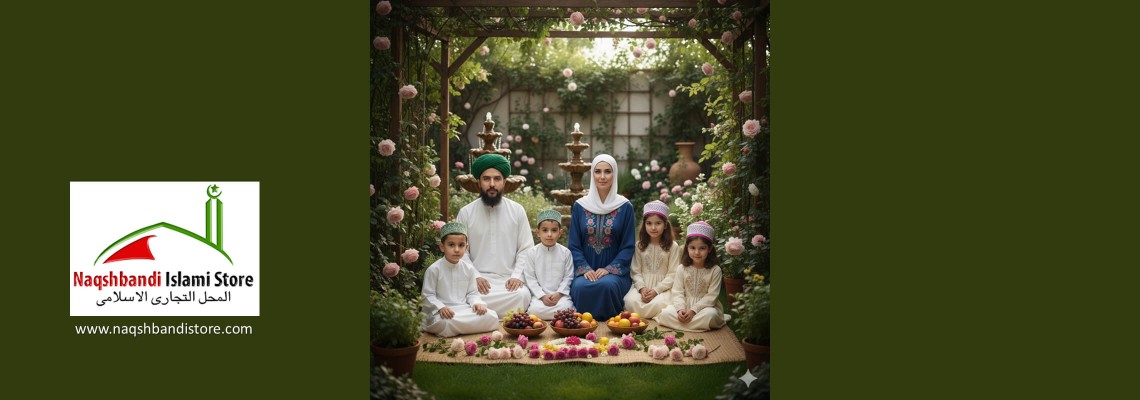
These words carry a timeless truth: the soil of the child’s heart is pure, but it will grow what the gardener plants. If parents fill their homes with anger, gossip, or material talk, then weeds will grow. But if they fill it with love of Allah, dhikr, prayer, kindness, and mercy, then fragrance will rise from that garden forever.
1. The Real Meaning of Upbringing (Tarbiyyah)
Tarbiyyah in Islam does not only mean to educate or discipline; it means to raise the nafs from its animal state toward divine character. Shaykh Nazim taught that parents must see their children as a trust from Allah, not a possession. He said:
“Children are not your property; they are your responsibility. You are gardeners of a soul that belongs to Allah.”
Many parents today focus on external success — grades, degrees, or appearance — while the child’s inner world remains empty, anxious, and lost. A child who prays with a sincere heart is more valuable than a child who earns ten degrees without light inside.
2. The Modern Test: Technology and Emotional Distance
The digital world has changed the very rhythm of family life. Homes are silent, but phones speak loudly. Parents scroll, children scroll — yet hearts remain disconnected. Shaykh Nazim once warned:
“If your home has no remembrance of Allah, shaytan will make it his resting place.”
Today’s generation is drowning in distractions — games, screens, online comparisons — while real emotional warmth is fading. The cure is not to curse technology, but to bring presence back into our homes. Have one hour daily where all screens are off — and hearts are on. Talk, listen, pray, and laugh together. The heart grows not through Wi-Fi, but through warmth.
3. How to Plant Faith in a Modern Child
Planting faith is not about preaching — it’s about living the message. The child learns more from how you treat others than from what you teach with words. Shaykh Nazim (ق) said:
“The best da’wah is your smile. The best teaching is your patience. The best inheritance is your prayer.”
- Let your child see you doing dhikr — not to show off, but to radiate peace. The child absorbs the vibration.
- Tell stories of saints and prophets at night — the heart of a child remembers stories forever.
- Show compassion to animals, poor people, and neighbors — it teaches humility more than lectures can.
- Apologize when you are wrong — this teaches them that dignity and ego are not the same.
A parent’s behavior is the real syllabus of life. A shouting father cannot raise a calm son; a bitter mother cannot raise a grateful daughter. The inner state of parents becomes the outer world of the child.
4. The Naqshbandi Way: Raising Souls with Love
In the Naqshbandi path, love is the foundation of transformation. Shaykh Nazim used to say:
“If you want to open your child’s heart, never use the key of anger. Use the perfume of love.”
Love here doesn’t mean blind indulgence. It means firm mercy — a hand that guides without crushing, a gaze that disciplines without humiliating. When children feel safe in your love, they will open themselves to your advice. But when they fear your tone, they will close their hearts — even if they stay quiet.
The Prophet ﷺ said:
“He is not one of us who does not show mercy to our young and respect to our elders.”
— (Tirmidhi)
Mercy is the spiritual oxygen of parenting. Without it, both parent and child suffocate.
5. Practical Tools for Parents in the Modern Era
Here are simple but powerful tools every parent can begin today:
- Morning Dhikr Together: Start the day with one Surah and collective dhikr — even two minutes can reshape the atmosphere.
- Daily Gratitude: Ask your children, “What was one thing Allah blessed you with today?”
- Time for Service: Assign weekly charity or service tasks — sweeping a mosque, feeding birds, helping neighbors.
- Dhikr Corner at Home: Keep a clean, fragrant space where the family prays and does tasbih together.
- Family Du‘a Nights: End the week with a joint du‘a where each person prays for others. Love grows when hearts intercede for one another.
Shaykh Nazim often said:
“Train your children to remember Allah before they remember their own names.”
Such children will walk on the earth as lights, not burdens.
6. The Golden Message to Every Parent
Parenting in this age is not about control — it is about connection. It’s not about perfection — it’s about presence. You may not always have the right words, but if your heart is sincere, Allah Himself will guide your words.
As Shaykh Nazim (ق) beautifully reminded:
“A heart full of love can guide more than a thousand books.”
So do not despair if your child seems distant, rebellious, or confused. The mercy of Allah can rewrite any destiny. Keep praying for them — with tears, with hope, with patience — and one day that du‘a will bloom in their soul like spring after a long winter.
A Final Whisper from the Heart
When the world becomes noisy, teach your child to listen to silence.
When life becomes hard, teach them to make sujood.
When success blinds them, teach them to remember Who gave it.
And when they forget — teach them that your arms are always open, and Allah’s mercy even more so.
— Written with Love for All Parents and Children, by Naqshbandi Islamic Store