











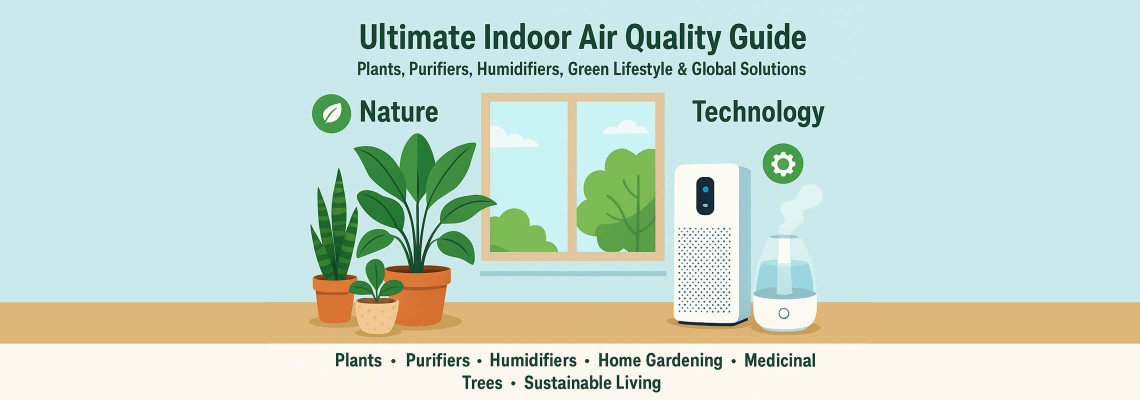
Ultimate Indoor Air Quality Guide — Clean Air at Home, Office & Community
A complete, beginner-friendly, global guide to improving indoor air — with plants, purifiers, humidifiers, ventilation, tree plans, plant-care formulas, costs, and community action plans. This guide is for everyone.
Why Indoor Air Matters?
Air pollution from smog, traffic and industry affects outdoors and easily seeps indoors. Older people, children, and immune-compromised family members are at highest risk. Poor indoor air causes chest infections, headaches, reduced concentration, and long-term health harm. The good news: with practical steps — nature + technology + community — you can build clean indoor havens.
Quick Pollutant Primer (Beginner)
- PM2.5 / PM10: Tiny particles from smoke, traffic, dust — inhaled deep into lungs.
- VOCs: Chemicals from paints, cleaners, plastics (cause headaches, nausea).
- Gases: CO (carbon monoxide), NO₂ (vehicle/industry), SO₂ — dangerous and sometimes invisible.
- Biologicals: Mold, dust mites, pollen, bacteria — worsen allergies and asthma.
Nature’s First Line — Indoor Plants
Plants are helpful: oxygen producers, humidity stabilizers, and they remove certain VOCs and pollutants. Use them with purifiers for best results.
Top Indoor Plant Selection (30+ highest oxygen & purifier plants — regional suitability)
| # | Plant (Common) | Best Regions | Key Benefit | Light | Care Level |
|---|---|---|---|---|---|
| 1 | Snake Plant (Sansevieria) | Global (Asia, Europe, Americas, Africa, Aus) | Oxygen at night, removes VOCs | Low–Medium | Very Easy |
| 2 | Areca Palm | Tropics/Subtropics (Asia, Aus, Americas) | Removes formaldehyde, humidifies | Bright, indirect | Moderate |
| 3 | Peace Lily (Spathiphyllum) | Global (Indoor) | Removes VOCs, improves air | Low–Bright | Easy |
| 4 | Spider Plant (Chlorophytum) | Global | Removes CO, formaldehyde | Bright, indirect | Very Easy |
| 5 | Aloe Vera | Global (dry climates) | Air cleanser, medicinal gel | Bright | Easy |
| 6 | Rubber Plant (Ficus elastica) | Asia, Tropics, Subtropics | Removes VOCs, large leaf surface | Bright | Moderate |
| 7 | Pothos / Money Plant (Epipremnum) | Global | Hardy VOC remover | Low–Bright | Very Easy |
| 8 | Dracaena | Global | Removes benzene, trichloroethylene | Bright, indirect | Moderate |
| 9 | Bamboo Palm | Asia, Americas | Air humidifier, toxin removal | Bright, indirect | Moderate |
| 10 | Boston Fern | Asia, Europe, Americas | Humidity & VOC removal | Indirect | Moderate |
| 11 | ZZ Plant (Zamioculcas) | Global | Low-light tolerant, hardy | Low | Very Easy |
| 12 | Philodendron | Global | Filter airborne toxins | Indirect Bright | Easy |
| 13 | Weeping Fig (Ficus benjamina) | Global (indoors) | Large leaf cleaner | Bright | Moderate |
| 14 | Chinese Evergreen (Aglaonema) | Asia, Global | Low-light purifier | Low–Medium | Easy |
| 15 | Gerbera Daisy | Americas, Europe | Removes benzene, trichloroethylene | Bright | Moderate |
| 16 | Sago Palm (indoors) | Tropics, Subtropics | Decorative; hardy | Bright | Moderate |
| 17 | Lavender (potted) | Mediterranean, Europe, Americas | Fragrance, mild calming | Full sun | Moderate |
| 18 | Herbs (Basil, Mint, Parsley) | Global | Food & fresh scent | Bright | Easy |
| 19 | Cast Iron Plant | Global | Very low maintenance | Low | Very Easy |
| 20 | Hearts-Tongue Fern | Global | Humidity & VOC reduction | Indirect | Moderate |
| 21 | Money Tree (Pachira) | Asia, Americas | Decorative & oxygen producer | Bright | Moderate |
| 22 | English Ivy | Europe, Americas | Removes mold spores | Indirect | Moderate |
| 23 | Citrus (Indoor Lemon/Lime) | Mediterranean, Asia, Americas | Fruit + vitamin scent | Bright | Moderate |
| 24 | Snake Fern | Global | Humidity helper | Indirect | Moderate |
| 25 | Moth Orchid (Phalaenopsis) | Global | Decorative, low allergen | Indirect bright | Moderate |
| 26 | Yucca | Dry climates | Air cleaner, drought tolerant | Bright | Easy |
| 27 | Hoya | Asia, Americas | Low water & air cleaner | Bright | Easy |
| 28 | Jade Plant (Crassula) | Dry climates | Succulent, easy | Bright | Easy |
| 29 | Neem (small potted) | Asia, Africa | Medicinal properties, insect deterrent | Bright | Moderate |
| 30 | Moringa (potted young plants) | Asia, Africa, Americas (tropics) | Nutritious leaves, medicinal | Bright | Moderate |
Replace or reorder plants based on local availability & climate. Toxic plants (e.g., some philodendron parts, sago palm seeds) need careful placement away from children/pets.
How Many Plants Do I Need? — Simple Formula
Practical Examples
| Space | Area (sq.ft) | Suggested Plants |
|---|---|---|
| Small room | 100–150 | 2–3 medium pots (snake plant, aloe, pothos) |
| Bedroom (medium) | 150–250 | 3–5 plants (snake plant + peace lily + spider) |
| Large living room | 300–600 | 6–12 plants (add areca palm + rubber plant) |
| Office (open) | per 300 sq.ft | 4–6 plants + 1 purifier per 300 sq.ft |
NEW — Plant Care: Easy Guide After You Bring Plants Home (Beginner)
Step-by-step: First 30 days after nursery
- Unwrap & Inspect: Remove nursery wrapping. Inspect for pests (white flies, mealybugs) and brown/soft roots.
- Watering (first time): If soil is dry 1 inch below surface → water thoroughly until water drains. If soil is soggy — wait 2–3 days before watering. Tip: Stick finger 1" into soil to check moisture.
- Light placement: Move plant to suitable light (check plant row above). Avoid direct harsh midday sun for shade-lovers (peace lily, snake plant).
- Acclimatize: Keep new plants in partial shade for 3–7 days to recover from nursery stress. Increase light gradually.
- Repotting: Repot if roots look crowded or rootbound — choose pot 1–2 inches larger. Use fresh potting mix (loose, with perlite) and a drainage hole.
- Feeding: Wait 2–4 weeks after repotting, then give a balanced, diluted houseplant fertilizer monthly (spring–summer). Reduce feeding in winter.
- Pest check: Wipe leaves with damp cloth weekly. If pests: use soap-water spray or neem oil (test on one leaf first).
- Cleaning leaves: Dust blocks photosynthesis. Wipe leaves gently with soft damp cloth every 1–2 weeks.
- Humidity: Tropical plants prefer 40–60% humidity. If air is dry use pebble tray or nearby humidifier Humidity Target = 40–60%.
Simple Weekly Plant Routine (for busy homes)
- Monday: Check soil moisture → water those that need water.
- Wednesday: Wipe the leaves & inspect for pests.
- Friday: Rotate pots 1/4 turn for even light exposure.
- Monthly: Feed with diluted fertilizer (growing season) and check pot drainage.
Large Spaces & Tree Plans — Nutrition & Medicinal Trees (Moringa, Hibiscus, Fruit Trees)
If you have roof, courtyard, community plot or park: plant trees that provide shade, oxygen, nutrition and medicinal value. Use a mix: fast-growing natives + fruit/medicinal trees. This both improves air and feeds families.
Recommended Trees & Why
| Tree | Primary Benefit | Region Suitability | Notes |
|---|---|---|---|
| Moringa (Drumstick) | High vitamin A/C, proteins, fast growth, medicinal leaves | Asia, Africa, Tropics, Subtropics | Excellent multipurpose tree; edible leaves & pods |
| Hibiscus (Hibiscus rosa-sinensis) | Medicinal (tea), attractive flowers, pollinators | Asia, Tropics, Subtropics | Plant along walkways & courtyards |
| Neem (Azadirachta indica) | Medicinal, insect repellent, hardy | Asia, Africa | Great protective tree near houses |
| Citrus (Lemon, Orange) | Vitamin C fruits, fragrance, pollinators | Mediterranean, Asia, Americas, Subtropics | Needs bright sun |
| Guava | Vitamin C, fruit for family | Asia, Americas, Africa | Moderate water, easy to maintain |
| Mulberry | Fast fruit production, shade | Global temperate & subtropical | Good for community orchards |
| Ber (Jujube) | Drought tolerant fruit tree | Asia, Africa | Low maintenance |
| Guava | High vitamin C produce | Asia, Americas | Great for small yards |
| Amla (Indian Gooseberry) | High vitamin C, medicinal | Asia (subtropical) | Medicinal & culinary uses |
| Olive | Shade + fruit (Mediterranean) | Mediterranean climates | Long-lived, low water |
Recommended Planting Mix for a Community Plot (per 1000 m²)
- 25% Shade / timber trees (native species)
- 30% Fruit & nutrition trees (moringa, citrus, guava)
- 20% Medicinal & pollinator plants (hibiscus, neem, herbs)
- 25% Understory & vegetable beds (kitchen gardens)
How Much Will It Cost? (Approximate & Practical)
Costs vary hugely by country, quality, and scale. Below are ballpark increments to help planning. These are approximate retail estimates (replace with local market values for exact budgeting).
| Item | Small (Home) | Medium (Home) | Large / Community |
|---|---|---|---|
| Indoor plant (medium pot) | PKR/INR/USD equivalent ~ 800–2,500 | — | Buy in bulk: 600–1,500 each |
| Quality air purifier (medium room) | ~ PKR/INR/USD 18,000–50,000 | One purifier per main room | Multiple units: 50k–200k total |
| Humidifier (small) | ~ PKR/INR/USD 3,000–12,000 | — | Commercial humidifiers much higher |
| Tree sapling (fruit / moringa) | ~ PKR/INR/USD 400–2,000 each | — | Bulk: 200–1,200 each |
| Rooftop/vertical garden setup (per m²) | ~ PKR/INR/USD 1,200–8,000 | — | Large projects vary widely |
| Monthly maintenance (plants & purifier filters) | ~ PKR/INR/USD 500–2,000 | ~ 2,000–6,000 | Community maintenance plan: contracted) |
Technology: Air Purifiers & Humidifiers (Beginner's Guide)
Air Purifiers — Simple Selection Guide
- HEPA (True HEPA) — removes ≥0.3µm particles (dust, pollen, smoke). Prefer HEPA-13 if available.
- CADR — Clean Air Delivery Rate measures purifier effectiveness. Match CADR to room size.
- Carbon filter layered — needed for odors, smoke, VOCs (important in smog areas).
- Pre-filter — extends life of HEPA by capturing large dust.
- Avoid ozone/ionic-only purifiers — these can produce harmful ozone.
Humidifiers — When & How
- Use when indoor air is dry (winter, heating, desert climates).
- Target humidity: 40%–60%.
- Use distilled water if possible; clean tank weekly. Over-humidifying causes mold — monitor with hygrometer.
Community Action & Green Jobs
Green solutions create jobs: plant nurseries, rooftop garden installers, purifier maintenance, compost collection, green educators, and urban micro-farmers. Advocate green welfare societies: shared nurseries, community orchards, and local training programs.
Start Small — Grow Big
- Family challenge: 1 plant per household member per month.
- Neighborhood plan: 10 trees planted per street per year.
- Schools: student-run gardens + IAQ lessons.
Beginner Toolkit — What to Buy
| Tool | Why | Estimate |
|---|---|---|
| Mini humidifier | Maintain comfort & throat health (dry climates) | PKR/INR/USD 3k–12k |
| Hygrometer (humidity meter) | Measure indoor humidity | 1k–5k |
| AQI app on phone (free) | Check outdoor pollution & safe times for ventilation | Free |
| Plant potting mix, perlite | Healthy roots & drainage | 500–2,000 per bag |
| Pruning shears, gloves | Plant maintenance | 500–1,500 |
| Air purifier (medium) | Key for polluted areas | 18k–50k |
Final Checklist — One Page Summary
- Measure room area → use Plant Count Formula = Area/50. Start with at least 3 plants per living space.
- Choose hardy plants (snake plant, pothos, peace lily) for bedrooms and living rooms.
- Use a properly sized air purifier (check CADR & HEPA). Add carbon filter if smoke/smog present.
- Use humidifier only when needed and keep humidity 40–60%.
- Keep windows closed during peak smog hours; ventilate early morning when AQI is low.
- Start a balcony or rooftop garden: plant one fruit or medicinal tree per season (moringa, citrus, hibiscus).
- Clean purifier pre-filters monthly; change HEPA as the manufacturer recommends.
- Rotate plants & check for pests; repot every 12–24 months.
CADR in Air Purifier, which stands for Clean Air Delivery Rate, is a standardized measure of an air purifier's effectiveness. It indicates the volume of filtered air an air purifier can deliver, with separate ratings for different pollutants like dust, pollen, and tobacco smoke. A higher CADR number means the unit can clean more air more quickly.
Written by: Sajjad Ali Shad — practical, global, and beginner-friendly Indoor Air Quality guidance.