





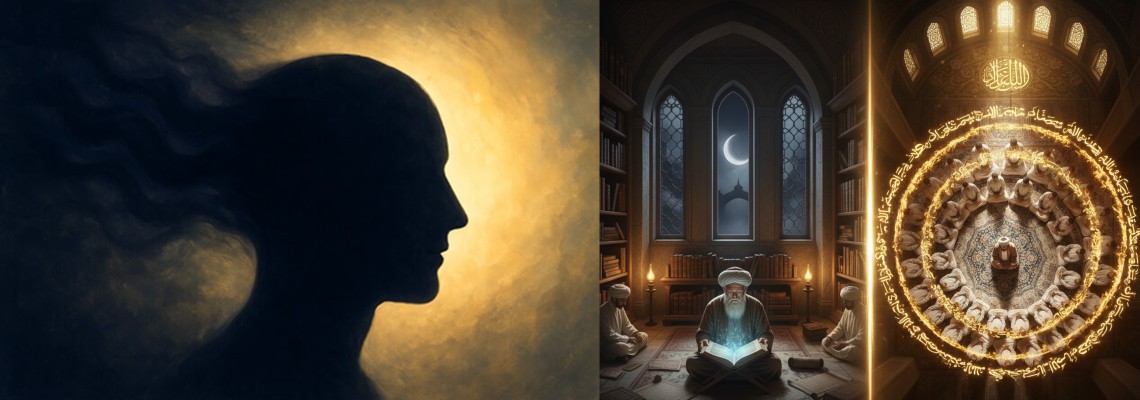
The Unveiling of Black Magic: From Ancient Sorcery to Divine Healing — A Complete Islamic & Sufi Perspective
Part 1: The Veil of Darkness and the Search for Truth

Since the dawn of civilization, humankind has wrestled with unseen powers. Every empire, every tribe, every solitary seeker has looked toward the horizon of the invisible and asked: “What forces rule beyond our sight?” The answer has taken many shapes—sorcery, astrology, omen, blessing, curse—but behind them all lies the same longing: to understand destiny and to control fear.
Black Magic, or sihr in Arabic, has become one of the most debated and misunderstood subjects on earth. Some dismiss it as superstition; others bow before it in terror. Between these extremes stands Islam, which neither denies the existence of unseen realities nor allows them to dominate the believer’s heart. The purpose of this series is to unveil, layer by layer, the truth about black magic—its origins, its psychological roots, its place in revelation, and its ultimate cure through faith, remembrance, and righteous action.
“And they learned from them that by which they cause separation between a man and his wife. But they could not harm anyone except by Allah’s permission.”
— Qur’an, Surah al-Baqarah (2:102)
The Universal Fear of the Unseen
From the sands of Babylon to the streets of modern cities, people have feared the invisible. Fire was once a god, thunder a curse, and illness the work of demons. Even in the twenty-first century, millions still attribute misfortune, illness, or broken relationships to hidden forces. The human mind, when deprived of clear spiritual guidance, fills the void with imagination. The Prophet ﷺ warned against this:
“Seek refuge with Allah from the whispering of the devils, for they circulate within the son of Adam as blood circulates.”
— Sahih al-Bukhari
Islam teaches that the unseen world (al-ghayb) is real, but only Allah controls it. The Qur’an repeatedly draws a line between divine knowledge and human speculation. Recognizing this boundary is the first step toward freedom from fear.
The Chain of Deception Through History
Ancient magicians claimed mastery over elements, spirits, and stars. Kings employed sorcerers; peasants sought charms; temples blended faith with ritual. In every age, impostors exploited fear for profit. The Qur’an reveals how this chain began in Babylon, where two angels, Harut and Marut, tested humanity’s misuse of knowledge (Surah al-Baqarah 2:102). What started as a test became a trade—people selling illusions for gold and obedience.
This corruption traveled through Persia, Egypt, Greece, India, and Arabia. By the time of Prophet Muhammad ﷺ, sorcery had woven itself into daily life: love-charms, curses, and astrology were common. The Prophet’s mission purified belief, separating the true spiritual sciences from false enchantment. His message remains the cure for a world still haunted by the same shadows.
Why We Still Believe
The modern mind, despite science, remains vulnerable. When medicine fails or logic breaks, the old whispers return. Psychologists identify this as a coping mechanism: uncertainty breeds superstition. Yet for believers, the solution is not denial but certainty in Allah. Tawakkul—trust in the Divine—transforms fear into peace.
The Prophet ﷺ taught simple yet profound protection: daily recitation of Ayat al-Kursi (2:255), the last two verses of Surah al-Baqarah, and the chapters of refuge—Al-Falaq and An-Nas. These are not rituals of superstition; they are affirmations of divine sovereignty. A believer who lives within these verses walks beneath the shield of light.
From Fear to Faith
Every human carries a struggle between fear and faith. The fear of unseen harm paralyzes; faith in Allah liberates. To heal the mind from magical thinking, Islam prescribes remembrance (dhikr), charity (sadaqah), good deeds, and avoidance of sin—because sin darkens the heart, attracting whispering forces. Goodness, by contrast, becomes a fortress.
“Indeed, Allah will not change the condition of a people until they change what is within themselves.”
— Qur’an 13:11
The coming chapters will unfold the reality of magic and its many disguises—white and black, envy and evil eye, jinn and possession, omens and dreams—each examined through revelation, psychology, and the guidance of the saints (Awliya Allah).
Summary of Part 1
- Human fear of the unseen is ancient and universal.
- Islam accepts unseen realities but forbids dependence on them.
- Superstition arises when faith weakens.
- Protection lies in remembrance, charity, and righteous living.
→ Continue to Part 2: Origins of Magic Across Civilizations »
2. Origins of Magic Across Civilizations
From the dawn of humanity, before alphabets were shaped and scripts were carved on stone, man gazed toward the heavens, the earth, and the unknown forces in between. When rain fell after drought, when the sun disappeared behind clouds, or when a child was born under a rare celestial alignment, ancient man believed unseen powers were at play. This primal awe — mixed with fear — gave birth to what we later called magic.
The story of magic is not merely a tale of spells or rituals. It is the history of humanity’s search for control over destiny. Every empire, from the temples of Babylon to the palaces of Pharaohs, held their own class of magicians, diviners, and astrologers — the “advisors of the unseen” who whispered to kings about fate and fortune.
The Babylonian and Egyptian Roots
The earliest written record of magic appears in ancient Mesopotamia — the land between the Tigris and Euphrates Rivers. Clay tablets from around 2500 BCE describe priests who practiced incantations known as “Mašmaššu”, rituals meant to appease gods or drive away spirits of disease. They wore amulets and recited verses believed to hold divine power. Their approach was half religious, half manipulative — an attempt to bend divine will to human desires.
Across the Nile, ancient Egypt preserved similar traditions under the name Heka — a word that simultaneously meant “magic” and “divine energy.” Egyptians did not see Heka as evil; it was considered a neutral cosmic power that even the gods used to sustain creation. Pharaohs commissioned priests of Heka to protect the kingdom, heal the sick, and even accompany souls in the afterlife.
“Magic in its origin was not rebellion against God — it was ignorance of God.”
The Qur’an briefly references the Babylonian episode in Surah Al-Baqarah (2:102), where the people of Babylon learned sorcery from two angels, Harut and Marut, but were warned that it was a test, not divine permission. This verse establishes the theological foundation that magic exists — but its practice against others is an act of spiritual corruption.
Greek and Roman Philosophy of Magic
When civilization moved west, Greek philosophers rationalized what earlier cultures had treated as divine. The term magos — derived from Persian “Magus” (a Zoroastrian priest) — entered the Greek language, eventually becoming “magic.” Plato and Pythagoras studied the connection between celestial motion and human behavior, laying the roots of astrology. Later Romans fused these beliefs with their gods and household spirits (Lares and Penates), keeping talismans and inscriptions for protection.
By this time, “magic” had split into two directions: one aimed toward light and healing (which later writers called “white magic”), and another toward manipulation, domination, or destruction (“black magic”). Both stemmed from the same human instinct — to wield power beyond one’s limits.
Persian, Indian, and Chinese Traditions
In ancient Persia, the followers of Zoroaster (Zarathustra) believed in the constant struggle between the god of light, Ahura Mazda, and the spirit of darkness, Ahriman. Every magical act was seen as an alignment with one of these forces. This dualistic vision — light versus dark — later shaped how other cultures viewed white and black magic.
In the Indian subcontinent, references to magical rites appear in the early Vedas. The Atharva Veda describes chants for healing, rain, protection, and even the destruction of enemies. Over centuries, “Tantra” developed — a blend of meditation, ritual, and invocation of hidden energies. Some of these later became associated with what people today call “Bangali Jadoo” or “Kamakhya rites,” which often mix spiritual intention with superstition and commercial exploitation.
China, meanwhile, evolved its own system through Taoism — with beliefs in Qi (life force), talismans, geomancy, and alchemy. Chinese emperors kept official “Fang Shi” (magicians) who blended medicine, astronomy, and invocation to achieve harmony with the cosmos. The goal was not to summon spirits but to balance energies — a concept later mirrored in Islamic teachings on harmony between body, soul, and belief.
Magic and Religion Intertwined
Every ancient civilization had priests or mystics who guarded sacred knowledge. But when religion matured into divine revelation — when Allah sent Prophets with clear messages — the distinction became clear: worship and trust belong to the Creator, not to creation.
Prophets condemned the manipulation of unseen forces for selfish gain. While earlier societies mixed worship with sorcery, divine revelation separated truth from illusion. Magic became not just ignorance but a rebellion — an attempt to imitate divine control.
“Indeed, they knew that whoever purchased the magic would have no share in the Hereafter.” — Surah Al-Baqarah (2:102)
The Transition into the Islamic Era
By the time the final Prophet ﷺ was sent, the world was already filled with magical traditions — from Babylonian talismans to Arabian soothsayers (Kahins). The Qur’an acknowledged their existence but redefined the unseen world. It taught that jinn are real, but they cannot harm believers except by Allah’s permission. It prohibited divination and sorcery while affirming lawful healing through prayer, remembrance (dhikr), and Qur’anic recitation.
Thus Islam did not deny the existence of magic — it restored balance. It recognized that humans had misused knowledge meant for understanding the world, turning it into an instrument of deceit. From then onward, magic became the boundary between faith and rebellion, light and darkness, tawheed and shirk.
Table: Comparative Overview of Ancient Magic Concepts
| Civilization | Core Concept of Magic | Religious Link | Modern Influence |
|---|---|---|---|
| Babylonian | Control of spirits and elements via ritual incantations | Polytheistic priesthood | Astrology, amulets, talismanic writing |
| Egyptian | Heka – divine energy sustaining creation | Temple rites and afterlife texts | Hermetic philosophy, alchemy |
| Greek/Roman | Celestial harmony, fate, and invocation of spirits | Philosophy blended with pagan ritual | Western astrology, occult studies |
| Persian | Battle of light vs. darkness (Ahura Mazda vs. Ahriman) | Zoroastrian dualism | Later Gnostic and mystical dualities |
| Indian | Mantras, tantra, and ritual offerings | Hindu and tribal fusion | Modern spiritualism and superstition |
| Chinese | Harmony of Qi and the five elements | Taoist cosmology | Feng Shui, talismans, herbal alchemy |
Lesson from the Ancients
All ancient civilizations attempted to manipulate the unseen, but none could find lasting peace through it. Every magical empire fell — Babylon, Egypt, Greece, Rome — while truth endured through divine revelation. This pattern reveals a universal message: the moment mankind tries to control the unseen without submission to the Creator, he loses both knowledge and peace.
As we move into the next section, we will uncover what the Qur’an and Hadith clearly say about magic, sorcery, and the unseen world — and how Islam placed an unbreakable boundary between divine healing and forbidden manipulation.
→ Continue to Part 3: The Concept of Magic in Islamic Revelation
Part 3: The Concept of Magic in Islamic Revelation — Truth, Trial, and Divine Wisdom
Among all civilizations, Islam alone stands out as the faith that both acknowledges the reality of magic and clearly defines its boundaries. The Qur’an and Sunnah reveal the truth of sihr (magic), the danger of shirk (association), and the protection of tawheed (pure monotheism). Islam neither denies the unseen nor surrenders to superstition. It teaches balance — belief in the unseen by revelation, not imagination.
“And they followed what the devils had recited during the reign of Solomon. Solomon did not disbelieve, but the devils disbelieved, teaching people magic...”
(Qur’an 2:102)
This single verse opens the entire theological foundation of magic in Islam. It clarifies that the Prophet Sayyiduna Sulayman (Solomon) عليه السلام was accused by some Jews of using sorcery, but Allah Himself exonerated him. The devils, not the Prophet, spread and taught magic. Thus, Islam separated prophetic miracles (mu‘jizat) from satanic illusions (sihr).
1. The Qur’anic Definition of Sihr (Magic)
The Qur’an uses the term sihr in several contexts — each carrying a unique meaning. Sometimes it denotes deception, sometimes psychological influence, and sometimes a literal spiritual act by demonic means.
| Type of Sihr | Qur’anic Reference | Meaning |
|---|---|---|
| Visual Illusion | Surah Taha (20:66) | The magicians of Pharaoh deceived the eyes of people — a hypnotic trick, not a real transformation. |
| Spiritual Harm | Surah al-Baqarah (2:102) | Magic that causes discord between spouses through demonic collaboration. |
| Psychological Impact | Surah al-Furqan (25:8) | People accused Prophets of being “bewitched,” meaning mentally affected — social disbelief, not actual sorcery. |
Hence, the Qur’an distinguishes metaphorical sihr (deception or slander) from actual sihr (demonic act). The purpose of divine revelation is to free mankind from both illusions — mental and spiritual.
2. How and Why Magic Exists — A Divine Test
Allah ﷻ states clearly that He allowed the existence of sihr as a test for faith:
“...But they do not harm anyone through it except by permission of Allah...”
(Qur’an 2:102)
This verse contains two critical truths:
- No magic works independently. It has no power except by Allah’s will.
- Its effect is limited to the divine decree. It can test, but never override, destiny.
Thus, Islam views magic not as an independent force but as a trial of faith. Those who seek it for personal gain fail the test; those who resist it with tawakkul (trust in Allah) succeed spiritually.
3. The Prophetic Guidance on Magic and Its Cure
Rasulullah ﷺ himself was once affected by a form of black magic performed by the Jew Labid ibn al-A‘sam, which caused temporary forgetfulness. Allah revealed Surah al-Falaq and Surah an-Nas to cure him — and to teach the entire Ummah the eternal formula for protection.
“Never were two chapters revealed like them, by which one seeks refuge.”
— Sahih Muslim
This incident proves two essential principles:
- Magic can affect the body or perception — not the Prophetic message or revelation.
- Its cure lies solely in divine remembrance (dhikr) and Qur’anic recitation, not in human charms or paid rituals.
According to authentic Hadith, the Prophet ﷺ recited the last two Surahs, untied eleven knots found on a comb, and was instantly cured. This established the Prophetic model of ruqyah shar‘iyyah — lawful spiritual healing.
4. The Difference Between Mu‘jizah, Karamah, and Sihr
Islamic scholars like Imam al-Qurtubi and Ibn Taymiyyah defined three categories of supernatural phenomena:
| Phenomenon | Source | Purpose |
|---|---|---|
| Mu‘jizah (Miracle) | Prophets | To confirm Prophethood and divine message. |
| Karamah (Saintly Gift) | Awliya Allah (Friends of Allah) | To strengthen faith and serve the creation. |
| Sihr (Magic) | Shayateen (Evil Jinn) | To mislead, harm, and corrupt faith. |
This distinction is vital: both miracles and magic appear supernatural, but their source and intention are opposite. A miracle uplifts the soul; magic enslaves it.
5. The Jinn and Their Role in Sihr
Jinn are real, intelligent beings created from smokeless fire (Qur’an 55:15). They live in parallel realms, with their own believers and disbelievers. When magicians perform sihr, they often make pacts with disbelieving jinn by acts of shirk — reciting words of disbelief, sacrificing to them, or obeying their commands. In return, the jinn perform tasks such as delivering objects, whispering, or creating illusions.
But this alliance always comes at the price of spiritual destruction. The magician loses his protection and becomes enslaved to the jinn he commands. Allah ﷻ says:
“And on the Day He will gather them all together and say, ‘O assembly of jinn! You have misled many of mankind.’”
(Qur’an 6:128)
Thus, sihr is not merely “energy manipulation” or “psychic force” — it is an alliance between disobedient humans and rebellious jinn, built on disbelief and corruption.
6. The True Protection — Qur’an, Dhikr, and Tawheed
Islam teaches that no spell, talisman, or human method offers guaranteed safety. Real protection comes through three divine shields:
- Regular recitation of Ayat al-Kursi (2:255) in the morning and evening.
- Reciting Surah al-Ikhlas, al-Falaq, and an-Nas three times each, every morning and night.
- Maintaining wudhu (ablution) and avoiding sin, which weakens divine protection.
According to Hadith, whoever recites Ayat al-Kursi after each prayer will always remain under the protection of Allah until the next prayer (Sunan an-Nasa’i). True ruqyah depends not on the healer’s fame but on the heart’s sincerity.
The Prophet ﷺ said: “Whoever hangs a charm has committed shirk.” (Musnad Ahmad)
Therefore, any physical charm or paid amulet used without understanding its lawful source may lead to hidden shirk. Yet, when an amulet is made entirely of Qur’anic verses, and the intention is purely remembrance of Allah — scholars differ but many allow it as ruqyah shar‘iyyah, not as sihr.
➡️ Next: Part 4 — Psychological and Spiritual Effects of Black Magic on Human Mind
Part 4: Psychological and Spiritual Effects of Black Magic on the Human Mind
When the Qur’an speaks of sihr (black magic), it does not limit its meaning to mystical harm alone. It includes the psychological impact that dark intentions and negative energies impose upon the human soul. Modern science often calls this psychological suggestion or psychosomatic disturbance, yet Islam describes it as the soul’s vibration being clouded by fear, envy, and unseen whispers.
“Indeed, the plots of Shaytan are weak.”
(Qur’an 4:76)
Yet the human heart, when deprived of remembrance of Allah, becomes vulnerable to even the weakest of these whispers. The Prophet ﷺ said:
“Verily, there is a piece of flesh in the body which, if it is sound, the whole body is sound; and if it is corrupt, the whole body is corrupt. Truly, it is the heart.”
— Sahih Bukhari
Thus, when sihr takes effect, it first targets the heart and perception before it harms the body. Below we explore the psychological mechanisms that mirror the spiritual experiences described in the Qur’an.
1. Fear, Suggestion, and Loss of Self-Control
Psychologists identify a phenomenon known as cognitive suggestion—when a person believes a force is controlling them, their brain begins to respond as if that force is real. Black magic exploits this vulnerability. A fearful mind magnifies minor coincidences into signs of spiritual attack, and this feedback loop deepens anxiety, insomnia, and irrational panic.
The Qur’an acknowledges this pattern when it says the magicians of Pharaoh “bewitched the eyes of the people and struck terror into them” (Qur’an 7:116). The eyes were not changed physically; the perception was manipulated through suggestion and fear.
2. The Whisper of Shaytan and Mental Obsession
Sihr often begins with the waswasa—the whisper of Shaytan. It plants doubt: “Someone has cursed me… someone has harmed me…” These thoughts become obsessions, forming a psychological prison. Islam teaches that repeated remembrance (dhikr) cleanses these whispers before they grow into delusion.
Clinical psychology parallels this with rumination disorder, in which repetitive intrusive thoughts create emotional paralysis. Both perspectives affirm that mental focus shapes reality; thus, remembrance of Allah rewires the mind toward stability and hope.
3. Psychosomatic Symptoms of Black Magic
When the spiritual body is afflicted, the physical body often reacts. Common symptoms reported across cultures include:
- Unexplained fatigue, headaches, or weight loss.
- Sudden aversion to prayer, Qur’an, or loved ones.
- Recurring nightmares or seeing frightening shadows.
- Hearing internal voices that insult the divine or oneself.
- Sudden anger, tears, or isolation without clear reason.
These symptoms mirror anxiety, PTSD, and depressive states. Yet when medical treatment fails, many turn to false healers who exploit their fear. Islam warns against this trap—real ruqyah is free, simple, and rooted in the Qur’an.
4. The Energy of Envy (Hasad) and the Evil Eye
Hasad—envy—is considered a silent form of sihr. It transmits through gaze and intention, not ritual. When the Prophet ﷺ said, “The evil eye is real” (Sahih Muslim), he recognized the psychosocial power of envy. Modern science links this to mirror-neuron empathy—people subconsciously absorb others’ emotions, including jealousy and resentment.
Islam teaches simple protection:
- Reciting Surah al-Falaq and an-Nas daily.
- Concealing blessings until they mature.
- Making du‘ā for those who envy you, not revenge.
“When you see something that pleases you, say ‘Mā shā’ Allāh’.”
— Sunan Ibn Majah
This prophetic formula neutralizes envy before it converts to destructive energy. Psychologically, gratitude replaces comparison; spiritually, it restores divine balance.
5. Collective Fear and Cultural Contagion
In many societies, fear of black magic spreads through families and communities. This collective panic mirrors what psychologists call mass psychogenic illness—when a group unconsciously imitates symptoms of distress. In spiritual terms, this is a weakening of tawakkul (trust in Allah).
The Qur’an breaks this cycle by refocusing faith on divine decree: “Nothing will befall us except what Allah has written for us.” (Qur’an 9:51)
True belief replaces fear with calm resilience. Communities grounded in daily Qur’an recitation and charity develop natural immunity against collective anxiety.
6. Healing the Mind and Heart — Islamic Cognitive Therapy
Scholars like Imam al-Ghazali and Ibn Qayyim al-Jawziyyah described the heart as the “mirror of the soul.” They taught that healing must occur on three levels:
| Level | Treatment | Purpose |
|---|---|---|
| Body | Nutrition, sleep, cleanliness, charity, fasting. | Balance hormones, purify toxins, restore energy. |
| Mind | Dhikr, Qur’an study, reflection, therapy. | Reframe fear into divine awareness. |
| Soul | Salah, muraqabah (spiritual watchfulness), repentance. | Reconnect directly with the Creator. |
Modern neuroscience now validates this holistic model: mindfulness and prayer reduce cortisol, increase serotonin, and rewire neural pathways of fear. Islam established this therapy 1400 years before psychology named it.
7. When Jinn Possession and Mental Illness Overlap
Some cases of “possession” may be genuine spiritual afflictions, while others are psychiatric disorders. The Prophet ﷺ taught that both realities exist and must be treated with wisdom. He allowed medical treatment for the sick and ruqyah for the spiritually afflicted, establishing an integrated model of care.
In practice, the healer (rāqi) should always evaluate three stages:
- If the patient reacts violently to Qur’an, it may indicate jinn presence.
- If the patient shows trauma or anxiety patterns, therapy is required.
- If both appear, combine medical care with lawful ruqyah and dhikr.
This balanced approach prevents extremism on both sides—denying the unseen or exaggerating it into obsession. True tawheed accepts both the spiritual and scientific dimensions as parts of Allah’s wisdom.
8. Restoring Emotional Stability through Dhikr
The Prophet ﷺ said: “Hearts find rest only in the remembrance of Allah.” (Qur’an 13:28)
Regular dhikr activates the brain’s prefrontal cortex, associated with calmness and self-control. Neuroscientists confirm that rhythmic recitation—like repeating Subhān Allāh, Al-ḥamdu li llāh, and Allāhu Akbar—synchronizes heart rate and breathing, lowering anxiety naturally. Spiritually, it builds a luminous shield that repels the whispers of sihr and envy.
When combined with Qur’anic listening and sincere repentance, dhikr transforms fear into gratitude, turning darkness into inner light.
➡️ Next: Part 5 — Historical Evidence of Magic and Its Refutation through Revelation
Part 5 – The Evil Eye (Nazar-e-Bad) and Envy
Among all invisible afflictions, none is as quietly destructive as the evil eye (Nazar-e-Bad). It is not a myth nor an exaggerated superstition; rather, it is an affliction affirmed by the Qur’an, explained by the Prophet ﷺ, and recognized by the Awliya-Allah throughout centuries. The evil eye operates through envy, admiration without remembrance of Allah, and spiritual imbalance. It is the unseen arrow of jealousy that pierces hearts, health, success, and tranquility.
“The evil eye is real; if anything could overtake destiny, it would be the evil eye.”
— Prophet Muhammad ﷺ (Sahih Muslim, Hadith 2188)
Understanding Envy in Islam
In Islamic revelation, envy (Hasad) is considered the first sin in heaven and the first sin on earth. Iblis envied Adam (عليه السلام) for his closeness to Allah and refused to bow; likewise, Qabil envied Habil and murdered him. Thus, envy is the spark of spiritual corruption. The Qur’an teaches believers to seek refuge from those who harbor jealousy:
“And from the evil of the envier when he envies.”
— Surah Al-Falaq 113 : 5
When a person admires another’s beauty, wealth, or success without invoking Allah’s Name — by saying “Masha’Allah La Quwwata Illa Billah” — the soul’s gaze may project imbalance that harms. This harm is not through physical energy but through spiritual resonance; hearts emit what they contain. A jealous heart becomes a dark mirror reflecting harm rather than light.
Difference Between Nazar, Hasad, and Ain
| Term | Meaning | Nature | Islamic Reference |
|---|---|---|---|
| Nazar | A harmful gaze cast intentionally or unintentionally due to admiration or jealousy. | Psychic-spiritual effect | Surah Al-Falaq 113 |
| Hasad | Burning envy wishing for the removal of another’s blessing. | Moral disease of the heart | Hadith – Abu Dawud 4903 |
| ʿAin | The spiritual “eye” that channels envy into real harm, often leading to sickness or loss. | Invisible metaphysical effect | Sahih Muslim 2188 |
Signs of Evil Eye Affliction
- Sudden fatigue, dizziness, or loss of appetite after being praised.
- Children crying continuously without reason, refusing milk, or constantly ill.
- Business loss or household conflict appearing after success or visitors’ admiration.
- Fading of beauty or brightness from the face without medical cause.
Sufi masters explain that the evil eye disturbs the subtle balance (Mizān) of energy and serenity around the person. The Prophet ﷺ instructed remedies not of fear but of remembrance:
“When you see something that pleases you, invoke blessings upon it, for the evil eye is real.”
— Musnad Ahmad 15449
Islamic Treatment and Protection
- Recitation of Surah Al-Falaq and An-Nas – Prophetic Shields (Muʿawwidhatayn) is recited three times, morning and evening.
- Ayat al-Kursi (2 : 255) and the last two Ayahs of Surah Al-Baqarah – daily night recitations for divine guard.
- Drinking water is recited upon by Ruqyah – verses such as Al-Ikhlas, Falaq, Nas are recited and blown into water to wash the face and body.
- Charity (Sadaqah) – envy is burned by generosity and acts of kindness.
- Gratitude and Contentment – to disarm jealous vibrations, fill the heart with shukr.
According to Imam Ghazali رحمه الله, the cure for envy is to act opposite to it — love those you envy, pray for their increase, and recognize that blessings are divinely distributed, not man-made.
“Whoever envies another destroys his own peace before touching the other.”
— Imam Ghazali, Ihya ʿUlum al-Din, Book of Heart Diseases
Naqshbandi Perspective and Shaykh Nazim’s Guidance
Mawlana Shaykh Nazim al-Haqqani ق explained that the evil eye and envy are not removed by fear but by the purification of the heart. He taught that the spiritual radiation of a person filled with zikr reflects back any negative gaze like a mirror of light. He would often recite:
“Ya Hafeez, Ya Qawiyy, Ya Allah – Protect Your servants from jealous hearts and dark eyes.”
— Mawlana Shaykh Nazim, Sohbat on Protection and Envy, Lefke 1996
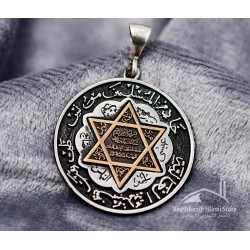
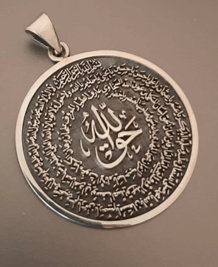
According to Naqshbandi tradition, regular recitation of Salawat Sharif and the Naqshbandi Wird al-Sharif cleanses spiritual circuits so no envy can enter. For those seeking physical means of remembrance, the use of a Naqshbandi Taweez engraved with the Name of Allah and the Prophet ﷺ is a recognized protective tradition derived from earlier Sufi orders. It is not a magical object but a symbol of dhikr and trust in Divine Protection.
Psychological Angle of Envy and Fear
Modern psychology affirms that obsession with others’ lives creates chronic stress, an inferiority complex, and neurotic envy. Those who believe they are constantly victims of the evil eye may develop anxiety and self-doubt. The Prophetic method balances this by faith in Allah’s Will and active gratitude.
Summary – Spiritual Immunity
- Remembrance is armor; forgetfulness is vulnerability.
- Generosity melts envy like ice under sunlight.
- Salawat and Zikr Allah create a divine aura around believers.
“Whoever keeps the heart open to Allah, no eye can close his light.”
— Shaykh Abdul Qadir Jilani رحمه الله
Thus, the evil eye loses its power not by counter-rituals but by illumination of faith, gratitude, and charity. When Allah is remembered, darkness fades.
Part 6 – Jinn, Spirits, and Possession
Among the most misunderstood subjects in the entire world is the reality of Jinn — beings created by Allah from smokeless fire. From ancient myths to modern fear, humanity has spoken of invisible creatures that share the earth yet dwell in a dimension unseen by human eyes. Islam confirmed their existence but placed them under Divine Law, removing fear and superstition.
“And He created the jinn from a smokeless flame of fire.”
— Surah Ar-Rahman 55 : 15
In every culture, from Babylon to Greece, from India to the Arabian Peninsula, people spoke of shadowy spirits — fairies, demons, ghosts, or deities. Yet the Qur’an brought clarity: Jinn are not gods or demons but a separate creation, accountable to Allah like humans, divided between believers (mu’min jinn) and disbelievers (shayateen).
The Nature of Jinn
- They are intelligent beings created from fire (Qur’an 15:27).
- They live in parallel dimensions unseen by the human eye (Qur’an 7:27).
- They eat, drink, marry, reproduce, and will be judged on the Day of Resurrection (Qur’an 6:130).
- They can travel swiftly and influence thoughts but cannot overpower divine protection.
“Indeed, he (Satan) and his tribe see you from where you do not see them.”
— Surah Al-A‘raf 7 : 27
According to the Prophet ﷺ, Jinn inhabit desolate places — ruins, deserts, wastelands, bathrooms, and impure locations. Their interaction with humans occurs mostly through whispers (waswasah) — subtle psychological influence, or rare forms of possession when spiritual barriers are broken.
Possession and Influence
Islam acknowledges that some forms of possession (mass) may occur, not as punishment but as spiritual imbalance. The Qur’an refers to it when describing those afflicted by madness:
“Those who consume interest cannot stand except as one whom Satan has confounded with his touch.”
— Surah Al-Baqarah 2 : 275
The scholars interpret this as evidence that jinn can disturb the mental equilibrium of a person, but only by Allah’s permission. True possession is extremely rare — what most people experience are psychological traumas, fear projections, or hypnagogic hallucinations. Islam teaches that the spiritually strong heart cannot be overtaken.
Distinguishing Between Psychological and Spiritual Afflictions
| Symptom | Psychological Origin | Spiritual/Jinn Influence | Islamic Guidance |
|---|---|---|---|
| Sudden mood swings, anxiety, panic | Depression, trauma, hormonal imbalance | Possible whispering (waswasah) | Ruqyah, dhikr, professional therapy |
| Speaking in altered voices, fainting during Qur’an | Dissociative identity or PTSD | Possible partial jinn disturbance | Ruqyah with Surah Baqarah, Falaq, Nas |
| Night paralysis, seeing shadows, pressure on chest | Sleep paralysis (scientifically explained) | Illusion of Shaytanic interference | Sleep with wudu, Ayat al-Kursi, last two Surahs |
| Persistent whispers about faith or doubt | Obsessive-compulsive thoughts | Waswasah (Qur’an 114) | Ignore whispers, increase dhikr |
Qur’anic Protection Against Jinn
- Recite Surah Al-Baqarah in the home regularly — Prophet ﷺ said, “The Shaytan flees from a house where Surah Al-Baqarah is recited.” (Sahih Muslim 780).
- Say Bismillah before entering home, bathroom, or eating — this seals the door against unseen entities.
- Maintain Wudu — spiritual purity repels impurity and darkness.
- Night recitations: Surah Al-Mulk, Ayat al-Kursi, and the last two verses of Al-Baqarah.
- Charity (Sadaqah) and forgiveness — these break the chain of negative attachments.
Naqshbandi and Sufi Understanding of Jinn
In the Naqshbandi spiritual science, the presence of jinn is neither denied nor feared. Shaykh Abdul Khaliq al-Ghujdawani, founder of the Naqshbandi Path, emphasized spiritual silence and control over breath (Hosh dar Dam) as a way to purify the energy field of a person. Jinn thrive in emotional turbulence and fear; therefore, serenity and constant remembrance (Zikr Allah) render them powerless.
“When the light of remembrance enters the heart, shadows flee.”
— Shaykh Bahā’uddin Naqshband (qaddasAllahu sirrah)
Mawlana Shaykh Nazim al-Haqqani taught that jinn attach themselves to weak hearts — those filled with anger, lust, or constant complaint. He would advise murids to sleep on wudu, keep the recitation of HasbunAllahu wa ni‘ma al-Wakeel 100 times daily, and to wear a Naqshbandi Taweez engraved with Qur’anic verses for constant dhikr vibration.
“When the servant keeps his tongue wet with remembrance, no jinn can share his body; the light burns them before they approach.”
— Mawlana Shaykh Nazim, Sohbat on Jinn and Fear, Lefke 1993
When Jinn Locks into the Body
In rare cases where a jinn refuses to leave, Sufi healers never use violence or torture. The Prophet ﷺ taught mercy, even toward unseen beings. The correct method is through calm ruqyah, gentle dialogue, Qur’anic recitation, and continuous dhikr gatherings. In Naqshbandi tradition, the healer begins with Fatiha, Baqarah 2:255, Al-Ikhlas, Falaq, Nas, and prays two rakats seeking Allah’s permission for relief. The possessed must renew tawbah, perform ghusl, and recite La ilaha illallah until exhaustion — light replaces shadow gradually.
Scientific Correlation
Modern science identifies phenomena like schizophrenia, dissociation, and trauma-induced hallucinations that mimic possession. True Islamic healing combines both spiritual and medical care. Prophet ﷺ said, “Seek treatment, for Allah has created no disease without creating its cure.” (Sunan Ibn Majah 3438).
Self-Treatment Steps (Guided Healing)
- Morning: Recite Surah Falaq, Nas, Ikhlas (3x each) and blow on body.
- Evening: Recite Ayat al-Kursi, Falaq, Nas before sleep.
- Weekly: Read Surah Yasin and Surah Al-Baqarah aloud in home.
- Daily: Dhikr “HasbiyAllahu la ilaha illa Huwa” 100 times.
- Monthly: Give Sadaqah or feed orphans — charity purifies energy.
Shaykh Nazim’s Healing Tradition
Mawlana Shaykh Nazim advised not to over-obsess with jinn or fear them. He said, “They fear the zikr of Allah more than you fear them.” He emphasized Salawat upon the Prophet ﷺ as the greatest purifier and protector. In his spiritual sessions, he would tell murids to live clean, speak little, forgive everyone, and eat halal — these acts close the doors through which jinn approach.
“A pure heart is an unbreakable fortress; shaytan cannot enter except through complaint.”
— Mawlana Shaykh Nazim al-Haqqani
True freedom from unseen affliction lies in belief, patience, and continuous purification. When Allah’s remembrance dominates the soul, the unseen becomes powerless. Fear is replaced with peace, anxiety with tawakkul, and darkness with nur.
Conclusion
The world of jinn remains unseen, yet its truth is plain: only Allah commands all. To fear creation is ignorance; to rely on the Creator is light. Protection lies not in charms or fear, but in constant remembrance, moral purity, and trust in Allah’s decree.
4.1 – Understanding the World of Jinn: Their Creation, Nature, and Presence Among Us

“And He created the jinn from a smokeless flame of fire.” (Qur’an 55:15)
The topic of Jinn (جن) is one of the most misunderstood subjects in both Islamic theology and public imagination. The Qur’an presents the Jinn as real, conscious beings created before humankind — made from a subtle form of energy described as a “smokeless flame of fire.” While humans are composed of clay and spirit, Jinn are composed of fire and spirit, allowing them to exist in realms unseen to the human eye but close enough to interact within our environment. They share certain human qualities: intellect, free will, community, language, and accountability before Allah.
Qur’anic and Prophetic Foundations
The Qur’an dedicates an entire chapter, Surah al-Jinn (72), revealing their acknowledgment of Prophet Muhammad ﷺ and their ability to accept Islam: “Say (O Muhammad): It has been revealed to me that a group of Jinn listened, and they said, ‘Indeed, we have heard a wondrous Qur’an, guiding to the right course, and we have believed in it.’” This establishes their moral agency and distinction between believing and disbelieving Jinn, just like humans.
The Realms They Inhabit
According to classical scholars like Imam al-Qurtubi and Imam al-Suyuti, Jinn inhabit a subtle realm called the ‘ʿĀlam al-Jinn’ — a layer of existence between the visible material world (ʿĀlam al-Shahāda) and the purely spiritual world (ʿĀlam al-Malakūt). Their dimension overlaps with ours, which explains occasional unexplained phenomena — sounds, shadows, movements, or intuitions — in spiritually charged or neglected spaces.
How Jinn Manifest in Physical Space
- Through Energy Shifts: Sudden changes in temperature or atmosphere can occur in spaces where Jinn reside, especially where dhikr is absent.
- Through Animal Forms: The Prophet ﷺ warned not to kill snakes immediately in the house, as some Jinn take snake or animal shapes (Hadith, Sahih Muslim).
- Through Whisperings (Waswasa): Jinn, especially the Shayatin among them, influence human thought and emotion subtly, causing anxiety, anger, or sin.
- Through Possession: In rare cases, hostile Jinn may enter or attach to human bodies, especially those spiritually weakened by sin, trauma, or occult exposure.
Identification of Their Presence in a Place
Scholars of the Naqshbandi, Qadiri, and Shadhili paths emphasize that one must not panic or imagine every disturbance as Jinn. However, their subtle presence may be discerned through consistent, unexplained disturbances. The table below summarizes classical and Naqshbandi observations:
| Indicator | Possible Spiritual Explanation | Traditional Naqshbandi Remedy |
|---|---|---|
| Sudden bad odor or heaviness without physical source | Presence of low-level jinn or neglected dhikr in area | Recite Ayat al-Kursi & keep fragrance (oud, bukhoor) burning |
| Recurring nightmares, shadowy visions | Psychic interference or Jinn influence in subconscious | Before sleep: 3 Quls, blow over self, use Naqshbandi wird protection |
| Inexplicable quarrels or heaviness among family | Jinn or Shayatin stirring discord | Daily Surah al-Baqarah recitation or audio in home |
| Sudden chill or emotional disturbance during prayer | Energy conflict between human and unseen beings | Perform wudu, keep inner peace, continue dhikr softly |
The Nature of Their Communities
Just as humans have nations and tribes, the Jinn possess complex societies with their own hierarchies, laws, and even spiritual guides. Sufi masters like Shaykh ʿAbd al-Qadir al-Jilani (qaddasAllahu sirrah) and Shaykh Ahmad al-Tijani have documented encounters where believing Jinn sought spiritual guidance and initiated into Sufi orders. The Naqshbandi tradition also holds that certain awliya are designated as Shuyukh of Jinn, tasked with their tarbiyyah (spiritual training) in parallel to human disciples.
When Jinn Attach or “Lock” into a Human Body
This occurs rarely but can become serious when dark forces or sinful environments allow them to bind within human energy centers. Classical ruqyah and Naqshbandi awrad emphasize purification of the heart, repentance, and continuous dhikr until the intrusive energy loses grip. No violent exorcism is ever recommended — rather, the path of light, prayer, and divine remembrance gradually drives them away.
“The Jinn flee from the heart wherein Allah’s Name is alive. Keep your tongue wet with dhikr, and your space will remain protected.” — Shaykh Nazim al-Haqqani (q)
Summary of Key Truths
- Jinn are real creations of Allah with free will.
- They exist parallel to humans but in a lighter vibrational realm.
- They can influence thoughts and environments but not destiny.
- Protection lies in remembrance, purity, and constant salawat.
This understanding dispels superstition and leads the seeker toward mature awareness, humility, and spiritual self-defense.
Part 5 – The Psychology of Fear, Delusion and Belief in Magic

Human beings are deeply imaginative and spiritual. Our mind, soul, and body form an interconnected system that reacts to unseen influences as well as psychological triggers. Belief in black magic or unseen harm often emerges from a mixture of genuine spiritual sensitivity and psychological vulnerability. Islam acknowledges the reality of Jinn and sorcery (siḥr), yet also warns that excessive fear of them can itself become a trap through which Shayṭān weakens faith.
The Islamic Psychology of Fear
The Qur’an defines fear (khawf) as a natural response placed by Allah ﷻ for protection and awareness, not paralysis. The Prophet ﷺ taught that “Fear only Allah; for He who fears Allah, nothing else can harm him.” Excessive fear of created beings—witches, spirits, or omens—converts into waswasa (satanic whisperings). Such fear tightens the heart, producing anxiety, obsessive thoughts, and self-doubt.
“When fear takes hold of the heart, it becomes an opening for the enemy.”
— Imam al-Ghazali (r.a.)
Neuroscience and Cognitive Factors
Modern psychology explains that intense stress or trauma activates the brain’s amygdala – the fear-response center – which can exaggerate perceived threats. When a person experiences unexplained misfortune, sleep paralysis, or physical illness, the mind searches for cause. In cultures where magic is a known concept, the explanation of “black magic” or “evil eye” quickly fills that gap. This is called a cultural attribution loop in psychology.
Studies in cognitive behavioral therapy (CBT) show that constant rumination about being cursed increases cortisol, weakens immunity, and creates the very fatigue, headaches, and anxiety that are then mistaken for proof of the curse. The cycle continues until broken by knowledge, faith, and calm.
The Thin Line – Psychological vs Spiritual Symptoms
True Islamic guidance never denies medical or psychological realities. Below is a balanced comparison often used by Naqshbandi counselors to help families distinguish between purely mental stress and authentic spiritual affliction.
| Indicator | Psychological Origin | Possible Spiritual Origin |
|---|---|---|
| Sudden anxiety without reason | Stress, caffeine, hormonal imbalance | Presence of waswasa or negative energy |
| Hearing internal voices or whispers | Auditory hallucination, trauma response | Jinn influence or siḥr whispering |
| Nightmares of falling, choking | Sleep paralysis, REM disturbance | Attack during weak spiritual state |
| Sudden hatred between spouses | Marital stress, poor communication | Black magic aimed to divide hearts (siḥr tafriq) |
Proper diagnosis requires humility — consulting both qualified physicians and sincere spiritual guides. The Prophet ﷺ said, “Tie your camel and trust in Allah.” Balance worldly and spiritual action.
How Fear Becomes Delusion
When unchecked, fear transforms into obsession. People begin connecting every small event—a broken glass, missed call, or illness—to an unseen enemy. Shayṭān amplifies this by whispering that one is hopeless or doomed. Imam Ibn al-Qayyim (r.a.) described this state as “the captivity of imagination, where illusion becomes one’s qibla.”
Healing Through Islamic Mindfulness ( Muraqabah )
The Naqshbandi path emphasizes silent dhikr and muraqabah – observing one’s inner thoughts as clouds that pass without attachment. This gradually dissolves panic and reconnects the heart with the Divine Presence.
- Step 1 – Grounding and Breathing: Sit calmly, breathe the Name “Allah” into the heart, exhale “Hu”. Repeat for 5 minutes daily.
- Step 2 – Awareness: Observe fearful thoughts as external; they are not you.
- Step 3 – Dhikr: Recite “Hasbunallahu wa ni‘mal wakeel” 7 times whenever panic arises.
“When your breath remembers Allah, the devils suffocate.”
— Shaykh Nazim al-Haqqani (q)
Scientific Support for Dhikr
Recent neuroimaging studies on repetitive prayer and dhikr demonstrate activation of the parasympathetic nervous system – the body’s natural relaxation response. Heart rate, blood pressure, and cortisol all decrease during rhythmic remembrance of Allah. Thus, spiritual healing through Qur’anic recitation is also biologically healing.
Practical Self-Treatment Routine
- Begin day with Surah al-Fātiḥah + Ayat al-Kursi + 3 Quls.
- Burn a pleasant fragrance (e.g., oud, frankincense) – Jinn dislike impurities and foul odors.
- Keep home bright; sunlight weakens dark energies.
- Offer two rak‘ah nafl for protection daily; intend reliance only upon Allah.
- Perform charity weekly – it dissolves unseen harm, as taught by the Prophet ﷺ: “Charity extinguishes calamity.”
- Use a Naqshbandi taweez only with verified chain and Qur’anic inscription, as a symbol of trust, not superstition. (Refer to this guide for authentic forms.)
Faith and Neural Resilience
Neuroscientists call it the “belief-buffer”: sincere faith builds a neurological shield against anxiety. Muslims call it yaqīn. When the heart anchors itself in La ilaha illallah, the neural pathways of fear dissolve. This union of mind and faith is the real exorcism.
The cure of fear is knowledge, remembrance, and compassion — not panic. The one who knows Allah cannot be enslaved by illusion.
Part 6 — Treatment and Healing in Islam: From Ruqyah to Modern Therapy
Islam approaches healing as a journey of both body and soul. When a person is affected by black magic, jinn possession, or psychological disturbance, the treatment must integrate faith-based remedies with rational understanding. Healing begins with conviction: There is no disease that Allah has created, except that He also has created its treatment.
(Sahih al-Bukhari)
1. The Foundation of Healing in Islam
The Prophet ﷺ taught that true healing lies in remembrance (dhikr), Qur’anic recitation, prayer, and seeking lawful treatment. Early Muslims never separated physical health from spiritual balance. Imam al-Ghazali in Ihya’ ‘Ulum al-Din explains that the heart becomes ill by sins, envy, pride, and anger — just as the body becomes ill by toxins or disease. Thus, every treatment must start by purifying the heart.
“If the hearts are purified, the bodies will be cured.” — Imam Ibn Qayyim al-Jawziyyah
2. The Three Levels of Islamic Healing
| Level | Focus | Methods | Examples |
|---|---|---|---|
| 1. Basic Healing | Faith, purification | Recitation of Surah Al-Falaq, An-Naas, Ayat al-Kursi, daily Adhkar | Morning and evening adhkar, sincere repentance, clean environment |
| 2. Intermediate Healing | Ruqyah and supplication | Authorized ruqyah reciters, zamzam water, olive oil, honey, sidr (lote tree) | Applying ruqyah oil on chest/head, reciting Qur’an near water, maintaining patience |
| 3. Advanced Healing | Spiritual mastery and purification | Guided Naqshbandi awrad, muraqabah, taweez for divine protection | Shaykh’s supervision, balanced dhikr, lifelong spiritual discipline |
3. The Science of Ruqyah (Qur’anic Healing)
Ruqyah literally means “spiritual recitation.” It is the practice of reciting Qur’anic verses, Prophetic supplications, and Names of Allah to drive away harmful entities and cure ailments. The Messenger of Allah ﷺ approved ruqyah that contains no shirk and is based on revelation.
Common surahs used for ruqyah include:
- Surah Al-Fatihah (The Opening) — for physical and spiritual healing
- Ayat al-Kursi (2:255) — for divine protection
- Surah Al-Ikhlas, Al-Falaq, and An-Naas — against envy and sorcery
- Surah Al-Baqarah — to repel shayatin (devils) from the home
“Recite Surah Al-Baqarah in your houses, for the shaytan does not enter a house in which Surah Al-Baqarah is recited.” — (Sahih Muslim)
4. Modern Psychological Therapy and Its Place
In our times, mental health and spiritual health intersect. Some symptoms thought to be “jinn possession” may be trauma, depression, or anxiety. Islam does not reject professional help; it embraces balance. A believer should consult qualified therapists while maintaining daily adhkar and salah.
| Aspect | Islamic Ruqyah | Modern Therapy | Energy Healing / Reiki |
|---|---|---|---|
| Source of Healing | Divine (Allah’s permission) | Human mind, science | Universal “energy” (non-Islamic) |
| Method | Recitation, dhikr, water/oil treatment | Counseling, medication | Hand energy movement |
| Islamic Validity | Fully approved | Conditionally valid | Not valid if shirk-based |
5. Naqshbandi Taweez and Spiritual Protection
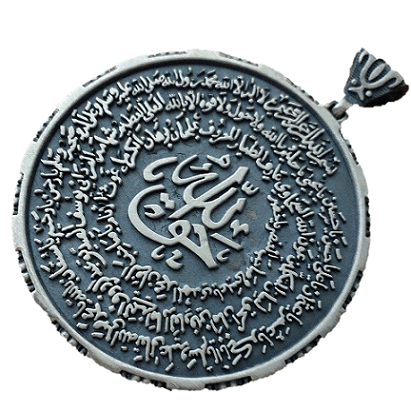
Within the Naqshbandi Sufi tradition, spiritual masters prepared taweez (amulets) that contained Qur’anic verses, Divine Names, and authorized prayers. These were not “charms” but sacred reminders and shields of divine mercy — rooted in centuries of Islamic practice.
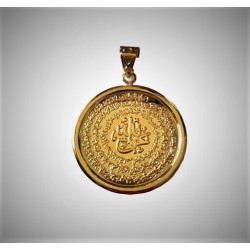
You can explore authentic Naqshbandi Taweez and pendants crafted in the traditional way here:
Part 7 – Authentic Guidance from Shaykh Nazim al-Haqqani and the Naqshbandi Tradition
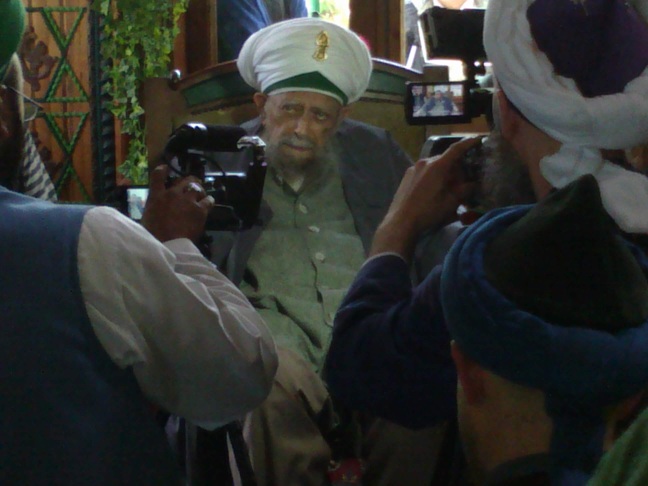
Among all Sufi paths, the Naqshbandi Order is famed for its silent remembrance, discipline, and direct connection to the heart of the Prophet ﷺ. In the 20th and 21st centuries, Mawlana Shaykh Nazim al-Haqqani al-Qubrusi (1922–2014) became the shining lamp of this path, guiding thousands through darkness—both the visible and the unseen.
1. The Essence of Healing – Returning the Heart to Allah
Shaykh Nazim often said that every illness, whether physical, emotional, or spiritual, begins when the heart turns away from its Creator. Black magic, fear, anxiety, and misfortune lose their power when the servant renews his link to Allah. The first healing, therefore, is not found in herbs, charms, or even water—it is found in tawbah (repentance) and zikr Allah (remembrance of God).
“When you remember your Lord, the darkness around you collapses; even the shayṭān cannot stand before a heart that is awake.”
He explained that true protection from the unseen comes through constant remembrance and obedience. When the tongue moves with La ilaha ill Allah, no other force can occupy the body or the mind.
2. Recognizing the Real Enemy
According to Shaykh Nazim, people waste their lives blaming sorcery or jealous eyes, while the true enemy is their own nafs (ego). The nafs opens the door for shayṭān and jinn. By controlling the ego, a person closes those gateways forever. Therefore, every healing begins with self-discipline—controlling anger, greed, pride, and excessive fear.
“Do not run after magicians; run after your own purification. When your mirror is clean, you will see no shadow on it.”
3. Daily Awrad (Prescribed Zikr)
Shaykh Nazim assigned simple yet powerful daily formulas for protection. These awrad are not meant only for Sufi initiates but for every Muslim who seeks peace of heart and safety from harm.
| Practice | Purpose | Recommended Frequency | Spiritual Effect |
|---|---|---|---|
| Recitation of Ayat al-Kursi | Protection from jinn and evil whispers | After each farḍ prayer & before sleep | Creates a spiritual shield around the believer |
| Last two verses of Surah al-Baqarah | Repels black magic & grants angelic protection | Every night before sleep | Restores faith and security within the home |
| Salawat upon the Prophet ﷺ | Attracts mercy and light to the heart | At least 100 times daily | Washes away sadness and fear |
| Silent La ilaha ill Allah | Destroys inner darkness and ego attachments | Whenever the heart is free | Brings constant awareness of Divine Presence |
4. The Naqshbandi Way of Muraqabah (Spiritual Observation)
Muraqabah means watching over the heart. Shaykh Nazim taught disciples to sit silently, breathe gently, and focus their awareness upon the light of Allah’s Name within the chest. This concentration dissolves negative thoughts, weakens the influence of jinn, and restores inner peace. He warned that distraction and constant fear feed the very entities people wish to avoid.
“Keep your connection with your Shaykh as you keep breath in your body. That connection is your fortress.”
5. The Role of Taweez and Sacred Symbols
The Shaykh permitted the use of authentic taweez—amulets containing Qur’anic verses or holy names—only when written by a trustworthy scholar and accompanied by faith in Allah alone. He emphasized that a taweez is not an independent power but a reminder of Divine Protection.
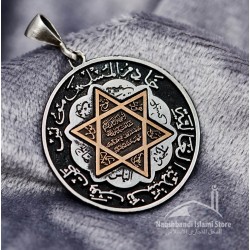
Genuine Naqshbandi taweez and protective designs can be found through verified sources such as the Naqshbandi Store, where the focus remains on prayer, dhikr, and charity alongside its use.
6. The Balance Between Trust and Action
Shaykh Nazim taught that healing is a marriage of tawakkul (trust in Allah) and ʿamal (action). One must pray, seek medicine, and give charity—all without placing ultimate faith in material means. Every cure comes from the One Healer, ash-Shāfī. When the heart knows this truth, even the worst affliction turns into a doorway of nearness.
7. Signs of Healing and Inner Transformation
Disciples under Shaykh Nazim’s care often reported that true recovery did not begin when the pain stopped, but when gratitude appeared. Tears in prayer, spontaneous forgiveness, or deep calm after years of anxiety were considered stronger proofs of healing than any external change. The Shaykh called this the Divine Gaze – when Allah looks toward a servant with mercy, the veils of fear and illusion vanish instantly.
8. Legacy and Continuing Guidance
After Shaykh Nazim’s passing, his spiritual chain continues through his deputies, notably Shaykh Muhammad Adil al-Haqqani and Shaykh Hisham Kabbani, who preserve the same emphasis on humility, love, and authentic knowledge. Followers are reminded that true healing requires obedience, prayer, charity, service to others, and constant remembrance. The Naqshbandi path remains a living prescription for humanity’s deepest wounds.
“The one who walks remembering Allah in every breath will never be caught by the darkness of magic or jinn. Light and darkness cannot live together.”
9. Practical Routine for Seekers of Healing
- Wake up for Tahajjud and recite Surah Yasin.
- After Fajr, read Ayat al-Kursi and make 100 times La ilaha ill Allah.
- Give small charity daily, even if one coin, with the intention of healing.
- Avoid argument, anger, and backbiting throughout the day.
- Keep fresh wudu and recite salawat often.
- Before sleep, read Surah Al-Ikhlas, Al-Falaq, and An-Nas three times each, blowing over the body.
Consistency in these simple acts builds a wall of light around the heart. Shaykh Nazim often reminded: “If you keep your daily zikr, no darkness can touch you, and no fear will remain inside you.”
— End of Part 7 —
Part 8 – The Role of the Heart and Mind in Healing from Spiritual Afflictions
In the sacred architecture of the human being, the heart (qalb) and the intellect (‘aql) form the two radiant poles through which divine light flows into human consciousness. When both are aligned in remembrance of Allah, the person becomes spiritually luminous. But when either is corrupted—through sin, arrogance, black magic, or trauma—the whole inner world collapses into chaos.
“Truly, it is not the eyes that are blind, but the hearts within the breasts that become blind.”
— Qur’an, Surah Al-Hajj (22:46)
1. Understanding the Qalb: The Spiritual Heart
In the Qur’an and Sufi psychology, the qalb is not merely a physical organ but the subtle center where divine awareness manifests. The Prophet ﷺ said, “In the body there is a piece of flesh which, if it is sound, the whole body is sound; if it is corrupt, the whole body is corrupt — and that is the heart.” (Bukhari & Muslim)
The qalb receives two types of influences:
- Divine inspiration (Ilham) – light descending from the spiritual world, through the angels and purified souls.
- Dark whisperings (Waswasa) – shadow currents from jinn, shayateen, and inner nafs (ego), leading to confusion and imbalance.
The state of the heart determines whether one experiences sakinah (divine tranquility) or fitnah (spiritual turbulence). Modern psychology identifies similar states — peace and anxiety — but often ignores their spiritual causation.
2. The Aql: Intellect as a Divine Instrument
The ‘aql is the tool of discernment, the faculty that distinguishes right from wrong. But in Islam, intellect is not independent of revelation — it is nourished by the heart’s purity. Imam al-Ghazali writes in Ihya Ulum al-Din that the intellect is like a lamp, and the oil that fuels it is faith and remembrance. Without faith, reasoning becomes dry, producing only skepticism and fear.
“When the heart is illuminated, the intellect sees truth clearly. When the heart is darkened, the intellect becomes its slave.”
— Shaykh Ahmad Sirhindi (Mujaddid Alf Thani)
Black magic, trauma, or sin often attacks the ‘aql through the qalb, leading to obsession, panic, or compulsive fear. A person begins to imagine harm where there is none, or denies harm where it clearly exists — both extremes showing imbalance.
3. How Black Magic and Trauma Disrupt the Heart-Mind Circuit
In Naqshbandi understanding, dark energy first seeks entry through emotional wounds. It whispers to the heart, causing confusion, resentment, or despair, and then spreads to the intellect, clouding judgment. This is why many victims of black magic or jinn affliction experience irrational fear, anger, or detachment.
| Stage | Spiritual Effect | Psychological Manifestation |
|---|---|---|
| 1. Infiltration | Negative energy finds entry through sin, envy, or trauma. | Restlessness, intrusive thoughts, disturbed sleep. |
| 2. Distortion | Heart loses clarity and balance; divine inspiration is blocked. | Irrational fear, paranoia, obsessive thinking. |
| 3. Inversion | Mind begins to justify darkness; loss of discernment. | Cynicism, emotional numbness, disconnection from reality. |
| 4. Possession or Shadowing | Entity or negative current takes residence in energetic field. | Sudden mood shifts, memory gaps, violent impulses. |
4. Purification Through Dhikr and Breath
The Naqshbandi masters teach that remembrance of Allah, when synchronized with the breath, purifies both the heart and intellect. Shaykh Nazim al-Haqqani emphasized:
“Every breath should be taken in Dhikrullah. Inhale with the Name of Allah, exhale with the surrender of the ego. That breath will burn away every hidden sickness in the heart.”
This is not mere metaphor. Breath is the carrier of ruh — life-force. When one’s breath is aligned with remembrance, divine light circulates through the chest, strengthening the energetic field and expelling negative entities. Psychologically, it rebalances the nervous system, calming the amygdala (seat of fear) and restoring rational clarity.
5. Healing the Heart-Mind Connection: Practical Routine
Below is a structured healing practice derived from Naqshbandi and classical Sufi prescriptions, safe for anyone to perform:
- Morning Wudu and Fajr Dhikr: After Fajr, sit quietly facing Qiblah. Perform slow breathing: inhale “Allah”, exhale “Hu”. Continue for 7 minutes. Visualize light entering the heart.
- Silent Muraqabah (Meditative Presence): Focus between your eyebrows, then the heart center. Observe your thoughts like clouds; do not engage them. This cleanses the mind of intrusive energies.
- Daily Istighfar: Recite Astaghfirullah al-‘Azim wa atubu ilayh 100 times, feeling regret for every moment of heedlessness.
- Night Reflection (Muhasabah): Before sleep, recall your actions. Ask: “Was my heart soft today? Did I think with light?” This strengthens self-awareness.
- Charity and Kindness: Giving sadaqah breaks the energetic hold of darkness on the heart and shifts your vibration toward mercy.
6. Modern Psychology Meets Sufi Healing
Modern therapists acknowledge that trauma resides not just in memory but in the body — especially in the heart rate, breath, and neural pathways. Sufi healing reaches the same conclusion centuries earlier: every sin or fear leaves a “mark” on the latifah qalbiyyah (subtle heart center). Dhikr, breath regulation, and spiritual companionship (suhbah) cleanse those marks.
This is why Sufi practice is not escapism — it is psychotherapy through divine remembrance. Shaykh Bahauddin Naqshband said:
“The heart is the throne of Allah. Do not allow Shaytan to sit upon it.”
7. Signs of a Healed Heart and Sound Mind
- Deep inner calm even amidst external chaos.
- Instant awareness of sin and quick repentance.
- Clarity in decision-making; no overthinking.
- Natural attraction toward Quranic recitation and dhikr.
- Dreams filled with light, peace, or guidance.
Healing does not mean absence of struggle; it means being connected to Allah through the struggle. When the heart is clean, even pain becomes a means of elevation.
Conclusion of Part 8
The true battlefield of black magic and jinn affliction lies not outside but within the heart and mind. When the qalb is illuminated by dhikr and the ‘aql guided by divine remembrance, no darkness can take hold. The Naqshbandi path teaches that spiritual immunity is not built through fear or argument, but through continuous awareness of Allah in every breath.
“Keep your heart with Allah, and your mind will find peace in His remembrance.”
— Shaykh Nazim al-Haqqani
7. Bad Omens, Good Omens, and Superstitions
“Nothing can harm or benefit except by Allah’s Will.” — (Hadith, Sahih Muslim)
Throughout human history, people have searched for signs — birds flying in certain directions, numbers, dreams, or the sudden fall of a household object. These were often taken as “omens” — either good or bad. In ancient civilizations, omens governed war decisions, journeys, and marriages. But in Islam, such beliefs are purified and given a divine framework: nothing holds independent power except Allah.
The Origin of Omens and Human Fear
Omens arise from human anxiety and uncertainty. When the human mind encounters situations beyond understanding, it seeks patterns — imagining a hidden message behind every event. This natural curiosity becomes superstition when detached from divine knowledge.
The Arabs before Islam were deeply superstitious. If a bird flew left, it was a bad sign; if right, a good one. They would cancel journeys, marriages, or trades based on such coincidences. This practice was called ṭiyarah — taking omens from birds. Islam came to cleanse this misunderstanding and restore tawḥīd (oneness of Allah) to human perception.
Prophet Muhammad ﷺ said: “There is no contagion, no omens, no Hama (superstitious bird), and no bad luck in the month of Safar.” (Sahih Bukhari, 5707)
This Hadith doesn’t deny that events occur — it denies that they have independent power. Everything happens by Allah’s command. Omens, when stripped of faith, become a doorway to shirk (associating partners with Allah).
Islamic View of Bad Omens (Tiyarah)
A bad omen in Islamic terms is when one believes something — a sign, a time, a person — can bring harm without Allah’s decree. Such belief weakens the heart and breaks spiritual balance. The Prophet ﷺ repeatedly warned against it:
“If any of you sees something he dislikes, let him say: ‘O Allah, none brings good except You, and none wards off evil except You, and there is no power or might except in You.’” — (Sunan Abu Dawud, 3919)
The true Muslim heart replaces superstition with trust (tawakkul). When a believer trusts Allah fully, even fear transforms into calm acceptance.
| Type of Belief | Description | Islamic Ruling |
|---|---|---|
| Belief in unlucky days (e.g., Friday the 13th) | Imported from pagan and Western myths | Prohibited — false belief in independent harm |
| Belief that black cats or crows bring bad luck | Ancient superstition linked to witchcraft | Harām — irrational, contradicts tawḥīd |
| Fear of “evil months” like Safar | Jāhiliyyah custom abolished by the Prophet ﷺ | Prohibited — every time belongs to Allah |
| Belief that an event was “bad luck” | Subtle form of shirk — attributing harm to creation | Forbidden; believer says “QaddarAllāhu wa mā shā’a fa‘al” |
Good Omens (Fa’l) in Islam
Interestingly, Islam doesn’t reject all omens. It encourages optimistic interpretations called fa’l. The Prophet ﷺ loved good omens because they strengthened faith and positivity. When he heard good names or hopeful words, he took them as signs of Allah’s mercy — not power, but encouragement.
The Prophet ﷺ said: “I like good omens.” They asked, “What is a good omen?” He said, “A good word.” — (Sahih Bukhari, 5754)
For example, when the Prophet ﷺ heard the name “Yasir” (meaning “ease”), he took it as a sign that Allah will bring ease. This reflects spiritual optimism (ḥusn al-ẓann biLlāh) — having good expectations from Allah.
| Example | Interpretation | Spiritual Meaning |
|---|---|---|
| Hearing the name “Salim” (safe) | A reminder that Allah grants safety | Encourages gratitude and trust |
| Starting journey after Fajr prayer | Symbol of light and guidance | Positive timing under divine blessing |
| Smiling or hearing good news before a task | Optimistic reflection of barakah | Boosts morale and aligns with faith |
Thus, Islam allows good omens as inspiration, not causation. They remind believers of Allah’s mercy, reinforcing hope instead of fear.
Superstitions in Modern Times
Modern society is filled with disguised superstitions: horoscopes, “lucky” numbers, zodiac compatibility, breaking mirrors, knocking on wood, or wearing talismans for luck. Despite technological progress, the same psychological mechanism persists — fear of uncertainty.
When Muslims adopt these habits, they replace divine reliance with illusion. Instead of “Bismillah,” they say “hopefully luck helps.” Instead of prayer, they consult stars. This weakens the soul’s axis of tawḥīd.
“Say: Nothing will happen to us except what Allah has decreed for us; He is our Protector.” — (Qur’an, 9:51)
The remedy is not to destroy signs or symbols — it is to restore meaning. A believer can appreciate creation but must never worship it through fear or dependence. Allah alone holds the strings of every event.
Sufi Understanding of Omens
In tasawwuf (Sufi wisdom), omens are not external signs but reflections of the soul’s state. A dark omen mirrors inner darkness; a bright omen mirrors purity. Hazrat Baba Fariduddin Ganj Shakar said:
“When the heart is bright, every face becomes a good sign. When the heart is rusted, even light appears dark.”
Hence, purification of the heart (tazkiyah) transforms perception. The Awliya Allah (friends of Allah) see beauty in everything because they see Allah’s will in everything. To them, every sign — good or bad — is a door to divine remembrance.
Hazrat Lal Shahbaz Qalandar once remarked, “The dove and the crow are equal for the one whose soul is in the flight of Love.” Meaning: when the heart is immersed in Allah, no sign can frighten it.
How to Protect Yourself from Superstition
- Recite daily Adhkar (morning & evening supplications) — especially Surah Al-Ikhlas, Al-Falaq, and An-Naas.
- Say ‘Bismillah’ before every action — it breaks psychological fear and builds divine awareness.
- Do not interpret coincidences as divine signs — instead, pray Istikhara and seek clarity through Qur’an and guidance of scholars.
- Stay in the company of dhikr (remembrance) — gatherings of dhikr strengthen your heart’s focus on Allah, erasing superstition.
- Remember: Allah decides, not chance — your success and protection come only by His will.
Conclusion: From Fear to Faith
Superstition thrives where faith weakens. The believer who fills his day with remembrance and gratitude sees no omen — only opportunities for patience and reward. Islam doesn’t reject signs; it redirects them. It transforms human anxiety into spiritual surrender.
A wise saying of the Naqshbandi masters states:
“When you see darkness, say: ‘This too is from Allah — and He does not create except with wisdom.’ Then, the darkness will light your path.”
To conquer superstition is to restore pure tawḥīd — believing that every sound, every wind, every sign in creation bows to the will of its Creator. When this truth settles in the heart, no “bad omen” can ever touch the believer again.
Part 8: Curses, Bad Luck, and Destiny
In every age, humanity has feared the idea of unseen harm — the whisper of a curse, a string of misfortunes, or the shadow of “bad luck.” Islam corrects this confusion with clarity: nothing moves, harms, or heals except by the command of Allah. Every curse, every fate, every trial is under His perfect authority.
“And never will we be struck except by what Allah has decreed for us; He is our Protector.”
— Surah At-Tawbah 9:51
1. Understanding the Nature of Curses (La‘nah)
La‘nah in Arabic means the removal of divine mercy. When Allah curses, it is justice. When humans curse, it is emotion — and powerless unless Allah allows it to test the soul.
| Type of Curse | Meaning | Effect |
|---|---|---|
| Divine Curse | Withdrawal of Allah’s mercy due to sin. | Lasts until repentance. |
| Human Curse | Words of anger or jealousy. | Ineffective unless Allah permits as a test. |
2. The Myth of Bad Luck
Islam rejects “luck.” Fortune and misfortune are both from Allah — designed to reveal our state of faith. The Prophet ﷺ said, “There is no bad omen and no contagion.” (Muslim). Belief in random bad luck undermines tawḥīd, for it attributes power to creation instead of the Creator.
Examples of False “Bad Luck” Myths
- Fear of certain days (Friday the 13th, or the month of Safar).
- Assuming new ventures fail due to “jinxed timing.”
- Linking falling objects or shadows with misfortune.
Every second is sacred — destiny has no accidents in the eyes of faith.
3. Qadar: The Design of Destiny
Qadar means Divine Measurement — everything precisely written in the Preserved Tablet. Destiny is not blind fate; it is Divine Wisdom wearing the mask of time. Nothing happens randomly. Every “curse” is actually a coded invitation to spiritual awakening.
As the Sufi masters say, “When a curse reaches you, it carries a lesson wrapped in hardship.” If one faces adversity with faith, the curse becomes a ladder toward purification.
4. Cures and Divine Protections
- Recite Surah Al-Falaq and Surah An-Naas thrice daily.
- Read Ayat al-Kursi before sleep and after every prayer.
- Offer sadaqah frequently to repel unseen harm.
- Maintain regular istighfar (seeking forgiveness).
- Keep company with the righteous and those who remember Allah.
“No curse endures where the name of Allah is remembered.”
— Naqshbandi Saying
“A believer never fears curses, for he lives under the protection of the Most Merciful.”
Part 9: Dreams, Astrology, and Horoscopes
Dreams are among the most mysterious and profound aspects of human existence. Every night, the soul journeys into unseen realms—sometimes receiving divine messages, sometimes wandering in reflections of the mind, and at other times being tested by whisperings of darkness. The Qur’an, Prophetic traditions, and the wisdom of Awliya Allah (saints) all unveil the deep reality of dreams and their purpose in the spiritual evolution of mankind.
1. The Divine Gift of Sleep and Dreams
The Qur’an calls sleep (النوم) one of Allah’s greatest signs of mercy and power:
“And among His signs is your sleep by night and by day, and your seeking of His bounty. Surely in that are signs for those who listen.”
(Surah Ar-Rum, 30:23)
Sleep is not merely a biological rest; it is a spiritual retreat of the soul. During sleep, the nafs (lower self) is subdued, and the ruh (spirit) ascends partially towards the unseen realm. This is why the Qur’an refers to sleep as a minor death:
“It is Allah Who takes away the souls (at death), and those that die not during their sleep; He keeps those for which He has ordained death and sends back the others till an appointed term.”
(Surah Az-Zumar, 39:42)
Thus, every dream is a glimpse through the veil between the worlds — a reminder of our mortality and a reflection of the divine world that awaits the believer.
2. Dreams in the Light of Prophets
The prophets were masters of true vision (ru’yā ṣāliḥa). Prophet Yusuf (عليه السلام) interpreted dreams as divine messages revealing the unseen. His dream of eleven stars, the sun, and the moon bowing to him was fulfilled exactly as prophesied.
“O my father! I saw eleven stars and the sun and the moon; I saw them prostrating to me.”
(Surah Yusuf, 12:4)
Similarly, Prophet Ibrahim (عليه السلام) saw in a dream that he must sacrifice his son, a vision that carried divine command. Prophet Muhammad ﷺ said:
“The good dream of a believer is one of the forty-six parts of Prophethood.”
(Sahih Bukhari)
Therefore, true dreams are not random. They are reflections of divine communication and a sign that the believer’s heart is connected to truth.
3. Dreams in Sufi Understanding
The Sufis describe the dream world as a spiritual mirror. Imam al-Ghazali wrote that dreams are “a bridge between the unseen (ghayb) and the manifest world (shahadah).” Ibn Arabi explained that all existence is a divine dream, and our nightly dreams are echoes of that universal vision.
Shaykh Nazim al-Haqqani often advised disciples that a pure dream is born from a pure heart. He said:
“Keep your heart clean, and your dreams will become clear. Sleep with wudu, recite Shahadah, and ask Allah to show you what benefits you. Do not chase dreams; let dreams chase your sincerity.”
The Awliya explain that the clarity of one’s dream depends on the clarity of one’s heart. If the heart is rusted by sin, the dream becomes distorted; if it is polished by dhikr, the dream becomes luminous.
4. The Three Types of Dreams
| Type | Source | Nature | Result |
|---|---|---|---|
| 1. Divine Dream (Ru’yā Ṣāliḥa) | From Allah | Guiding, peaceful, symbolic | Brings comfort and truth |
| 2. Psychological Dream (Hadīth an-Nafs) | From the self | Reflects thoughts, fears, daily events | Neutral, needs no interpretation |
| 3. Demonic Dream (Takhwīf min ash-Shayṭān) | From Shaytan or Jinn | Frightening, confusing, or immoral | Seek refuge, do not tell others |
Prophet Muhammad ﷺ said: “A good dream is from Allah, and a bad dream is from Shaytan. So if anyone sees a bad dream, let him spit lightly to his left three times and seek refuge in Allah.”
5. When Dreams Mislead – The Dark Side of Interpretations
Many people become obsessed with interpreting every dream. This can open the door to delusion or exploitation. Shaykh Abdul Qadir Jilani warned: “Not every light is from Allah; some lights are from your ego.” Similarly, Shaykh Ahmad al-Chishti said: “A man who follows every dream becomes lost between his imagination and his destiny.”
In modern times, false dream interpreters and online horoscopes have confused people into believing that every image holds a cosmic message. Islam teaches balance: seek truth through sincerity, not superstition.
6. Understanding Astrology and Horoscopes in Islam
Astrology claims to predict life events through stars and planetary positions. Islam distinguishes between observing creation as a sign of Allah and believing creation controls destiny, which is shirk (association).
“And He is the One who made the stars for you, so that you may be guided by them in the darkness of the land and the sea.”
(Surah Al-An’am, 6:97)
Stars guide direction, not destiny. True guidance lies in prayer, not prediction.
7. Dream Interpretation and Reflection – A Practical Guide
- Always sleep in a state of wudu and recite Ayat al-Kursi.
- Before sleeping, ask Allah: “O Allah, show me truth as truth.”
- Record dreams immediately upon waking.
- Do not share dreams except with a wise person or shaykh.
- If a dream frightens you, recite Surah Al-Falaq and Surah An-Nas.
8. Comparison Table: Divine vs. False Dreams
| Aspect | Divine Dream | False/Demonic Dream |
|---|---|---|
| Feeling Upon Waking | Peaceful, uplifted, calm | Fearful, disturbed, anxious |
| Content | Symbolic, moral, spiritually uplifting | Confusing, dark, sinful, chaotic |
| Origin | From Allah’s Mercy | From Shaytan or ego |
| Result | Leads to goodness and reflection | Leads to doubt and fear |
9. How to Protect from Deceptive Dreams
Shaykh Nazim al-Haqqani advised:
“Keep your tongue in dhikr before you sleep. Your last word must be Allah’s Name, and angels will guard your soul through the night.”
- Recite Surah Al-Mulk before sleeping.
- Keep a clean heart; forgive all people.
- Avoid heavy food and negative talk before bed.
- Sleep facing Qiblah if possible, in peace and trust.
Dreams are not to be feared, but understood as mirrors of our inner states. Through dhikr, prayer, and self-purification, every dream becomes a step closer to divine understanding.
“The dream is a message from your soul, but only the heart illuminated by faith can read it.”
Part 10: Psychological Dimensions of Magic and Fear
In every age, humans have feared unseen forces. While some fears stem from genuine spiritual realities, many others arise from the complex psychology of the human mind. Islam, unlike any other system, unites the understanding of both worlds—the visible and invisible, the rational and spiritual—guiding the believer to recognize when affliction is from external metaphysical harm and when it arises from internal psychological imbalance.
1. The Interplay Between Mind, Spirit, and the Unseen
The human being is a composite of body, mind, and soul. Each part affects the others. The Qur’an acknowledges psychological distress as a real and serious condition, saying:
“Indeed, man was created in hardship.”
(Surah Al-Balad, 90:4)
When a person faces emotional trauma, loss, or fear, the mind can create sensations similar to those described in black magic or possession—voices, paralysis, depression, or uncontrollable anxiety. This overlap often leads to confusion: is it magic, jinn, or mental illness? The answer requires both spiritual insight and psychological wisdom.
2. Fear – The Doorway to Darkness
Fear is a natural emotion, but excessive fear becomes a tool for Shaytan. The Qur’an warns:
“It is only Shaytan who frightens his supporters. So fear them not, but fear Me if you are indeed believers.”
(Surah Al-Imran, 3:175)
The moment fear dominates faith, the believer’s heart opens a crack for spiritual weakness. Shaytan magnifies anxiety, whispering thoughts that one is cursed, bewitched, or doomed. Psychologically, this manifests as:
- Repetitive intrusive thoughts (“I am cursed!”)
- Loss of sleep or chronic nightmares
- Physical tension and panic attacks
- Dependence on fake healers or fortune-tellers
The Prophet ﷺ advised: “If you feel fear, say: ‘Hasbiyallāhu lā ilāha illā Huwa, ‘alayhi tawakkaltu, wa Huwa Rabb al-‘Arsh al-‘Aẓīm.’” This short remembrance realigns the heart to divine control.
3. Black Magic and Psychological Symptoms – A Comparative View
The overlap between spiritual affliction and mental distress often leads to misdiagnosis. Below is a comparison showing how these two states may resemble yet differ in cause and treatment:
| Aspect | Spiritual Affliction (Sihr, Jinn) | Psychological/Medical Condition |
|---|---|---|
| Cause | External energy, sihr, jinn interference | Trauma, anxiety, chemical imbalance |
| Symptoms | Sudden aversion to Qur’an, nightmares, unexplained sickness | Persistent sadness, fatigue, fear, depression |
| Duration | Can fluctuate with spiritual activity | Often constant unless medically treated |
| Treatment | Ruqyah, Qur’an recitation, sincere repentance, dhikr | Therapy, counseling, lifestyle changes, medication |
| Outcome | Relief through faith and purification | Relief through discipline and support |
Both forms of healing are complementary, not contradictory. Islam encourages the believer to seek both spiritual and medical cures: “O servants of Allah, seek treatment, for Allah has not made a disease without making for it a cure.” (Sunan Ibn Majah)
4. Psychological Impact of Believing in Magic
Belief in magic—real or imagined—has profound psychological consequences. Repeatedly being told that one is “bewitched” can produce self-sabotage, anxiety, or delusional guilt. This phenomenon is known as the “nocebo effect”, the opposite of the placebo: one becomes ill simply by believing one is ill.
Islam teaches empowerment, not helplessness. True tawakkul (trust in Allah) dismantles the nocebo chain and restores dignity to the soul.
“Say: Nothing shall ever happen to us except what Allah has decreed for us. He is our Protector.”
(Surah At-Tawbah, 9:51)
5. The Neuroscience of Fear and Faith
Modern neuroscience reveals that faith can rewire the brain. The prefrontal cortex (responsible for reasoning) can override fear responses in the amygdala when a person maintains spiritual focus through dhikr or prayer. This validates centuries of Sufi psychology, which emphasized muraqabah (conscious awareness of Allah) as a form of inner healing.
| Practice | Psychological Effect | Spiritual Effect |
|---|---|---|
| Dhikr (Remembrance) | Reduces anxiety and stabilizes breathing | Strengthens connection with Allah |
| Charity (Sadaqah) | Increases serotonin and social bonding | Deflects calamities and envy |
| Forgiveness | Releases emotional trauma | Invites divine mercy |
Thus, healing begins by reuniting the fragmented self—the body through care, the mind through patience, and the soul through remembrance.
6. When Jinn Are Locked Within – The Inner Conflict
In rare cases, people experience severe possession where a jinn becomes attached and refuses to leave. Islam prescribes a balanced path: ruqyah (spiritual treatment) by pious scholars, combined with medical and psychological support.
Shaykh Nazim al-Haqqani taught that such cases are not punishment but purification:
“When darkness enters a body, it is by divine wisdom—to awaken the sleeper, not to destroy him. The jinn flees when the heart becomes a lighted lamp of dhikr.”
Therefore, the treatment is not aggression toward the jinn but expansion of divine light within the person through Qur’an recitation, Naqshbandi awrad, fasting, and moral purification.
7. Healing the Mind Through Faith and Science
The most successful healing programs combine Islamic spirituality with modern psychology. Below is a progressive self-treatment model:
- Faith Foundation: Renew intention, perform five daily prayers, and recite Ayat al-Kursi morning and night.
- Mental Awareness: Observe your thoughts without judging them. Replace fear-based thoughts with La ilaha illallah.
- Charity & Kindness: Acts of giving purify the mind from selfish pain.
- Professional Care: If anxiety or hallucinations persist, consult both a psychiatrist and a trusted spiritual guide.
- Community & Connection: Isolation feeds delusion. Gather with the righteous; attend dhikr circles or community prayers.
8. The Real Enemy: Ignorance and Despair
Shaytan’s greatest trick is not magic—it is despair. He convinces believers that they are doomed or powerless. But Allah reminds:
“Do not despair of the mercy of Allah. Indeed, Allah forgives all sins.”
(Surah Az-Zumar, 39:53)
A person who believes this verse deeply can never be enslaved by black magic, superstition, or fear again. His heart becomes an unbreakable fortress guarded by divine remembrance.
“No shadow of darkness can harm a soul that walks with the light of certainty.”
Part 11: The Spiritual Defense System – Immunity Against Black Magic, Jinn & Evil Eye
Just as the body develops immunity against disease through nourishment and strength, the soul develops immunity against black magic, envy, and jinn through faith, purity, and remembrance. The Prophet ﷺ and the great Awliya taught that spiritual protection is not an emergency measure—it is a lifelong discipline, a “defense system of the heart.”
1. The Divine Shield – Qur’anic Foundations of Protection
Allah ﷻ has revealed in the Qur’an a complete framework of spiritual immunity. Every verse of protection forms a barrier between the believer and unseen harm:
- Surah Al-Falaq – shields from external evil, envy, and black magic.
- Surah An-Naas – guards against whisperings of Shaytan and jinn.
- Ayat al-Kursi (2:255) – creates a divine armor of light; even Shaytan flees when it is recited.
- Surah Al-Baqarah (2:1–286) – recitation expels jinn and nullifies sihr.
- Last two verses of Al-Baqarah – declared by the Prophet ﷺ as sufficient for protection for one night.
“Whoever recites Ayat al-Kursi after every prayer, nothing stands between him and Paradise except death.”
(Sunan An-Nasa’i)
2. Sufi Concept of Spiritual Immunity (Ismat al-Ruh)
In Sufi tradition, protection is more than reciting words—it is the illumination of the heart. Shaykh Ahmad Sirhindi (Mujaddid Alf Thani) wrote that true safety lies not in the fortress of the tongue but in the fortress of Yaqeen (Certainty).
When a heart becomes luminous through dhikr and muraqabah, it radiates divine energy that repels dark forces automatically. This is what Naqshbandi masters call:
“Qalb al-Mu’min Hisnun min Nurillah” — *“The believer’s heart is a fortress made of the Light of Allah.”*
The higher the purity, the stronger the immunity. Such hearts do not require defensive rituals—they become living talismans themselves.
3. Seven Layers of Spiritual Defense
The Naqshbandi tradition outlines seven ascending layers of protection, each connected to an aspect of spiritual discipline:
| Layer | Spiritual Practice | Protection Type |
|---|---|---|
| 1. Faith (Iman) | Recite Shahadah with awareness daily | Shields from disbelief and despair |
| 2. Prayer (Salah) | Five daily prayers with focus | Prevents intrusion of Shaytan |
| 3. Qur’anic Recitation | Ayat al-Kursi, Surah Falaq & Naas morning and night | Repels unseen harm |
| 4. Dhikr (Remembrance) | Recite “La ilaha illallah” 100x, “Hasbunallahu wa ni’mal wakeel” 7x | Builds internal light barrier |
| 5. Charity (Sadaqah) | Daily small giving, even one date | Deflects calamities and envy |
| 6. Cleanliness & Taharah | Wudu before sleep, perfume, clean clothes | Angels of mercy dwell around purity |
| 7. Company of the Righteous | Keep suhbah (companionship) of pious and dhikr circles | Reinforces collective spiritual immunity |
These layers work like an immune system — when all are active, darkness cannot penetrate.
4. The Role of Intention and Sincerity
Even the most powerful recitation loses effect if the heart lacks sincerity. Intention (Niyyah) is the seed of divine protection. Imam Ghazali stated:
“The tongue may speak the Qur’an while the heart is absent. The key to power is not sound, but presence.”
Therefore, while reciting protective verses, one must consciously submit to Allah’s will and feel His guardianship within the heart.
5. Prophetic Daily Routine for Protection
The following daily routine, derived from authentic hadith, ensures complete coverage throughout the day and night:
- After Fajr: Recite Surah Yaseen once, followed by Ayat al-Kursi.
- Morning Adhkar: Say “Bismillahi alladhi la yadurru ma‘a ismihi shay’un...” three times.
- Before Maghrib: Recite Surah Falaq and Surah Naas three times each.
- Before Sleep: Perform Wudu, recite Ayat al-Kursi, Surah Sajdah, and blow over your body after reading Falaq & Naas.
- Throughout the day: Maintain “La hawla wa la quwwata illa billah.”
The Prophet ﷺ assured that whoever keeps this regimen “will be guarded by angels till dawn.”
6. Naqshbandi Formula for Continuous Protection
The Naqshbandi order provides a practical formula known as the Four Qalaids (Necklaces) of Light—daily recitations that form a complete armor:
- Qalaid al-Iman: La ilaha illallah – 500 times daily.
- Qalaid al-Tawakkul: Hasbiyallahu la ilaha illa Huwa – 70 times.
- Qalaid al-Nur: Salawat upon the Prophet ﷺ – 300 times.
- Qalaid al-Hifz: Recite Surah Al-Falaq and An-Naas seven times morning and evening.
Practiced with sincerity, these dhikr chains seal the aura of a believer with divine tranquility.
7. Signs of a Spiritually Immune Person
- Peace under pressure
- Clarity of dream and thought
- Lack of envy and resentment
- Immediate return to dhikr when distressed
- Absence of superstition or fear
Such a soul becomes like a mirror—pure, clear, and untouchable by shadow.
8. Final Reflection – Fortress of Faith
Allah created no force stronger than the heart of a believer filled with yaqeen. When faith shines, no sihr, no eye, and no whisper can pierce its light.
“Whoever relies upon Allah – He is sufficient for him.”
(Surah At-Talaq, 65:3)
“Let the heart be your fortress, and remembrance your sword — no darkness can conquer you.”
Part 12 — Naqshbandi Teachings & Shaykh Nazim al-Haqqani’s Healing Guidance
“He who keeps the remembrance of Allah alive in his heart will never be touched by the darkness of fear or sickness.” — Shaykh Nazim al-Haqqani (ق)
The Naqshbandi Sufi Order, tracing its golden chain to the Blessed Prophet ﷺ through Sayyiduna Abu Bakr as-Siddiq (رضي الله عنه), is renowned for silent remembrance (dhikr-e-khafi) and purification of the heart. Among the great guides of our age, Shaykh Muhammad Nazim Adil al-Haqqani an-Naqshbandi al-Qubrusi (qaddas Allahu sirrahu) stood as a beacon of divine mercy, reviving the ancient way of healing through love, dhikr, adab, and divine connection.
1. The Foundation of Naqshbandi Healing
In the Naqshbandi path, healing does not begin with the body but with the heart. Shaykh Nazim often said, “The illness of the heart is more dangerous than any disease of the body.” Every anxiety, fear, or dark influence — be it envy, black magic, or depression — begins when the heart forgets its connection to Allah ﷻ.
Healing thus means returning the heart to its Creator. The Naqshbandi masters use zikr Allah, muraqabah (meditation), sadaqah (charity), and service to others as spiritual medicines that purify the soul and restore balance to mind and body.
2. Shaykh Nazim’s Teachings on Illness, Fear & Magic
During his sohbahs in Lefke, Cyprus, Shaykh Nazim repeatedly warned that fear and doubt are the entry-doors of darkness. He said: “If shayṭān cannot harm you by action, he will harm you by fear.” The true protection is certainty (yaqīn) in Allah ﷻ.
“Don’t look for black magic in every problem. Look into your own heedlessness. A single ‘Astaghfirullah’ said with tears burns seventy veils of darkness.”
For those afflicted with unseen attacks, he advised the daily recitation of Ayat al-Kursi (Q 2:255), the three Quls (Surah al-Ikhlas, al-Falaq, an-Nas), and to keep constant wuduʾ. He also stressed regular sadaqah as the shield that extinguishes hidden fires of envy and sihr.
3. The Healing Routine of a Naqshbandi Murīd
| Step | Practice | Purpose & Effect |
|---|---|---|
| 1 | Morning & Evening Dhikr (Lā ilāha illā Allāh) | Cleanses heart; aligns spiritual energy. |
| 2 | Silent Muraqabah after Fajr & ʿIsha | Brings calm; reconnects to Divine Light. |
| 3 | Charity (Sadaqah) before sleep | Destroys invisible envy and dark barriers. |
| 4 | Service to the poor & parents | Attracts mercy; expiates unseen sins. |
| 5 | Breathing Zikr (“Hū”) 7× before sleep | Expels negative energy & restores peace. |
4. Adab — The Hidden Key to Healing
According to Shaykh Nazim, every murīd must guard the tongue, eyes, and heart. He said: “A tongue that speaks ill will never heal the heart.” Adab with Allah, the Shaykh, and people opens the gate of barakah; its loss invites chaos.
5. The Role of Divine Light (Nūr)
Naqshbandi teachings describe nūr (divine light) as the subtle energy that flows through remembrance. When the heart glows with nūr, no jinn or curse can penetrate it. Shaykh Nazim said, “Light and darkness cannot stay together. Increase your light.”
6. Naqshbandi Healing vs Modern Self-Healing Myths
| Naqshbandi Path | Modern Self-Help | Core Difference |
|---|---|---|
| Begins with remembrance of Allah | Begins with self-affirmation | Divine center vs ego center |
| Seeks purification of heart | Seeks boost of confidence | Purity vs illusion of power |
| Focus on servanthood (<em>ʿubūdiyyah</em>) | Focus on personal mastery | Submission vs control |
| Healing by love and mercy | Healing by will and mind | Grace vs force |
7. Naqshbandi Taweez — A Symbol of Divine Remembrance
In this sacred tradition, a Taweez is not a charm of superstition but a written remembrance of Allah ﷻ containing Qurʾanic verses or sacred names. Shaykh Nazim permitted Taweez for protection and healing when written by authorized ʿulamā and Awliya, explaining:
“It is not the paper that heals you, but the Light of Allah carried by His words.”
For seekers looking for authentic Naqshbandi Taweez and traditional amulets prepared with Qurʾanic ethics and supervision, visit: Naqshbandi Store – Taweez Amulet Talisman . These Taweez are made with full adab, no commercial manipulation, and under traditional duʿā for the bearer.
8. Words of Shaykh Nazim for the Age of Fear
“Run to the zikr of Allah when the world becomes heavy. Say ‘Allah, Allah,’ until your fear turns into fragrance.”
This simple formula — remembrance with love — was his lifelong mission. He taught that every illness of the modern age, from anxiety to spiritual possession, comes from forgetfulness (ghaflah). The cure is zikr Allah with humility, consistency, and love for the Prophet ﷺ.
9. Closing Wisdom — The Healed Heart
The ultimate goal of Naqshbandi healing is not merely relief from pain but union with Divine Peace. When the heart remembers its Lord, disease becomes prayer, and fear becomes light. As Shaykh Nazim (q) said:
“A healed heart is a mirror of Allah’s Mercy. Keep it clean, keep it soft, and it will reflect Paradise.”
Part 13: The Truth About Fake Healers & Real Happiness
“And when I am ill, it is He Who cures me.” — Surah Ash-Shu‘ara (26:80)
In every era, the world has witnessed people who claim to possess supernatural powers — healers, magicians, energy workers, “spiritual masters,” and fortune tellers. They promise instant relief, eternal luck, and quick escape from black magic, Jinn possession, or bad omens. But the truth is: most of them are frauds feeding on human fear and desperation.
The Business of Fear
From the palaces of ancient kings to the poorest homes in modern times, people have been manipulated by so-called healers. They demand money, gold, or obedience, claiming to “reverse black magic” or “unlock destiny.” Their traps often begin with a few correct guesses — psychological tricks that hook the believer into dependence.
“Beware of soothsayers. Whoever approaches a fortune teller and believes what he says has disbelieved in what was revealed to Muhammad ﷺ.”
— Hadith (Musnad Ahmad)
Real Healing vs. Fake Healing
| Aspect | Fake Healers | True Islamic Healers |
|---|---|---|
| Foundation | Based on superstition, greed, and manipulation | Based on Qur’an, Sunnah, and Dhikr of Allah |
| Method | Charms, symbols, false rituals, and money traps | Recitation of Qur’anic verses, charity, repentance, and remembrance |
| Result | Temporary illusion, increased dependency, spiritual loss | Gradual purification, trust in Allah, long-term peace |
The Trap of the “Quick Fix”
Human beings naturally want instant solutions. But spiritual healing is a process — not a magic switch. Even the Prophets endured long periods of trial before relief came. Shaykh Nazim al-Haqqani (رحمه الله) often said:
“Don’t run after miracles, run after the One Who sends them.”
True faith teaches us to cleanse the heart through repentance (Tawbah), charity (Sadaqah), constant Dhikr, and trust (Tawakkul) in Allah. No taweez or ruqyah can replace sincerity of belief.
How Fake Healers Spread
- They prey on grief — especially in families facing unexplained illness or loss.
- They use Arabic letters or fake Qur’anic verses to appear authentic.
- They perform strange rituals that “look powerful” but hold no Shari‘ah basis.
- They may even work with Jinn, gaining limited control but destroying their own soul.
Each time a person believes a false healer over Allah’s decree, his faith weakens. The cure turns into another trap.
Shaykh Nazim’s Golden Words on True Healing
“Your sickness is your distance from Allah. When your heart remembers Him, everything else is healed.”
— Shaykh Nazim al-Haqqani (qaddasAllahu sirrah)
Shaykh Nazim taught that the root of all suffering is ghaflah — forgetfulness of Allah. Every act of remembrance shortens the distance between the heart and the Divine Presence. This remembrance transforms fear into trust, darkness into light, and illness into purification.
Real Happiness: The Divine Gaze
Real happiness is not comfort, money, or power — it is the Divine Gaze (Nazar-e-Rahmah). When Allah looks upon you with mercy, everything in your life becomes balanced. Even difficulties become blessings because they push you toward Him.
“Whoever finds Allah, what has he lost? And whoever loses Allah, what has he found?” — Imam Ibn ‘Ata Allah al-Iskandari
Real healing is not escaping problems — it is seeing them as paths to Allah. And real happiness is not found in the marketplace of fake healers, but in the silent remembrance that connects your soul to its Lord.
Signs of Real Healers (Ahlullah)
- They never ask for money or reward.
- Their healing is through Qur’an, prayer, and remembrance only.
- They teach humility, not pride.
- They connect you directly with Allah — not with themselves.
- Their hearts radiate peace, not fear.
Therefore: The difference between a fake healer and a true friend of Allah is like night and day. One takes your light; the other gives you his own to find your way back to Allah.
The Path to Lasting Peace
- Renew your Shahadah daily and affirm your trust in Allah alone.
- Pray regularly and recite Ayat-ul-Kursi and Surah Al-Falaq and An-Naas.
- Give charity in secret — it burns away spiritual disease.
- Seek forgiveness often — Allah’s mercy erases unseen harm.
- Keep the company of the righteous; their light protects your soul.
“The real miracle is a heart that never loses hope in Allah.”
The Global Mirage: False Saviors and Spiritual Deceivers
Across every age, false healers and self-declared messiahs have preyed on the wounds of the desperate. They wear turbans, robes, or modern suits — but beneath every disguise lies the same disease: greed, arrogance, and lust for control. These are not servants of Allah, but hunters of souls, trading divine trust for worldly gain. Beware of the pious mask that hides a serpent’s heart.
“And among mankind are those who say, ‘We believe in Allah and the Last Day,’ yet they are not believers. They seek to deceive Allah and those who believe, but they deceive none except themselves.”
— (Surah Al-Baqarah 2:8–9)
The holy saints (Awliya Allah) have long warned that false spirituality is more dangerous than black magic. For while black magic harms the body and mind, false spirituality poisons the heart and soul. A person trapped by a fake healer forgets Allah, stops praying, and begins worshipping the so-called “sheikh” or “master.” This is not healing — it is hidden shirk (association with Allah).
How to Identify a Fake Healer or False Savior
- They promise instant results — “wealth in 3 days,” “marriage in 7 days,” “jinn removed overnight.”
- They claim divine rank — calling themselves “Mehdi,” “Isa,” or “God’s chosen one.”
- They demand money or gifts before “helping.” Real Awliya never charge for du‘a or ruqyah.
- They advertise miracles online, post fake “possessions,” or flaunt their “power.”
- They isolate followers, forbid them from consulting Qur’an and Sunnah directly.
- They mix Qur’anic verses with unknown symbols, numbers, or mantras — a sign of corruption.
“The one who sells faith for money is not a saint — he is a thief of light.”
— Hazrat Mian Muhammad Bakhsh (R.A.)
Global Patterns of Spiritual Deception
False healers adapt like parasites to every region, wearing the dress of faith that people trust most. Their “miracles” are scripted, their “visions” rehearsed, and their “power” a marketable lie. The table below reveals how this deception manifests across the world:
| Region / Belief System | Common Names / Types | Appearance & Method | Where They Lurk |
|---|---|---|---|
| South Asia (Muslim / Hindu / Buddhist) |
Bangali Baba, Peer Sahab, Tantric Gurus | Robes, talismans, animal sacrifices, online “miracles” | Instagram, shrines, fairs, YouTube, WhatsApp |
| Middle East (Muslim / Christian) |
Samiri Baba, Fake Sheikhs, Miracle Prophets | White robes, misused Quranic verses, paid consultations | Local gatherings, TikTok, mosques without scholars |
| Western World (Christian / New Age) |
Energy Healers, “Life Coaches”, Self-proclaimed Christs | Workshops, retreats, online followers, fake testimonials | Instagram, YouTube, paid podcasts, “healing centers” |
| Far East (Buddhist / Hindu / Shamanic) |
Tantric Masters, Mystic Gurus, Reiki Teachers | Hybrid faith rituals, spiritual “energy” sessions | Yoga studios, wellness fairs, social media |
| Jewish & Christian Communities | Fake Rabbis, False Prophets, Miracle Pastors | Online miracle videos, “holy water,” crowd-funded healing | Church-like centers, YouTube, WhatsApp groups |
| Atheist / Secular Audiences | Self-help Gurus, Motivational Psychics | Workshops, coaching sessions, emotional manipulation | LinkedIn, YouTube, corporate retreats |
The Spiritual Disease They Spread
Fake healers feed upon fear and loneliness. Their followers slowly lose tawakkul (trust in Allah) and become addicted to the “power” of the charlatan. They forget that only Allah is Ash-Shafi (The Healer), not any man, woman, or amulet.
“Say: None can bring harm or benefit except what Allah wills.”
— (Surah Yunus 10:107)
The Path of True Healing — Naqshbandi Guidance
Real healing begins with istighfar (repentance), zikrullah (remembrance of Allah), and service to creation. The Naqshbandi masters teach that one must first heal the ego (nafs) — only then does Allah open the heart. A Shaykh who demands money or fame is no Shaykh. A true guide hides himself from the world and glorifies only the Light of Muhammad ﷺ.
If you are searching for healing — go to the mosque, pray two rak‘ahs of need, recite Surah Al-Fatihah, and cry before Allah. That tear will heal you faster than a thousand “spiritual masters.” Healing is not bought. Healing is granted by Allah.
May Allah expose the deceivers, awaken the deceived, and return every seeker to the truth of His Light. Ameen.
Glossary & References
Quick Navigation
- 1. Introduction – The Veil of Darkness and the Search for Truth
- 2. Origins of Magic Across Civilizations
- 3. The Concept of Magic in Islamic Revelation
- 4. White Magic vs. Black Magic – Myth or Reality?
- 5. The Evil Eye (Nazar-e-Bad) and Envy
- 6. Jinn, Spirits, and Possession
- 7. Bad Omens, Good Omens, and Superstitions
- 8. Curses, Bad Luck, and Destiny
- 9. Dreams, Astrology, and Horoscopes
- 10. Psychological Dimensions of Magic and Fear
- 11. Healing and Protection in Islam
- 12. Naqshbandi Teachings & Shaykh Nazim al-Haqqani’s Healing Guidance
- 13. The Truth About Fake Healers & Real Happiness
Glossary of Terms
| Term | Meaning / Explanation |
|---|---|
| Allah (الله) | The One and Only God, Creator of all worlds. |
| Ayat al-Kursi | Verse 255 of Surah Al-Baqarah; a powerful verse of protection. |
| Awliya Allah | Friends of Allah; spiritually elevated saints known for piety and miracles. |
| Black Magic (Sihr) | Forbidden act of invoking evil powers or Jinn to cause harm or illusion. |
| Dhikr (ذكر) | Remembrance of Allah through specific recitations, names, or phrases. |
| Evil Eye (Nazar-e-Bad) | Harmful energy caused by jealousy or envy, often cured through supplications. |
| Jinn | Invisible beings created from smokeless fire; capable of good or evil acts. |
| Karamah | A miracle granted to a saint by Allah, distinct from prophetic miracles. |
| Naqshbandi Tariqah | A major Sufi order emphasizing silent remembrance and heart purification. |
| Ruqyah | Islamic spiritual healing using Qur’anic verses and prophetic supplications. |
| Shaykh Nazim al-Haqqani | Prominent Naqshbandi saint (1922–2014) who spread teachings of Divine love and healing. |
| Sufi | One who pursues spiritual closeness to Allah through purification of the heart. |
| Taweez (Amulet) | A written prayer or Qur’anic verse kept for protection; permissible if purely Islamic. |
| Tawakkul | Complete trust and reliance upon Allah for all affairs. |
| Waswasah | Whisper of Shaytan causing doubt or anxiety in the believer’s heart. |
Primary Qur’anic References
- Surah Al-Baqarah (2:102): The story of Harut and Marut and the teaching of magic in Babylon.
- Surah Al-Falaq & An-Naas: Protection from evil magic, envy, and hidden forces.
- Surah Al-Jinn (72): Describes the existence and nature of Jinn and their listening to revelation.
- Surah Ash-Shu‘ara (26:80): “And when I am ill, it is He who cures me.”
- Surah Yunus (10:81–82): Allah’s truth destroys the falsehood of sorcery.
Authentic Hadith Sources
- Sahih al-Bukhari — Narrations on the Prophet ﷺ being affected by sihr and cured through Surah Al-Falaq and An-Naas.
- Sahih Muslim — On the evil eye and the Prophet’s recommendation of Ruqyah.
- Musnad Ahmad — Warnings against soothsayers and fortune tellers.
- Jami‘ al-Tirmidhi — Supplications for protection and healing.
Teachings of Awliya Allah and Classical Scholars
- Imam al-Ghazali: Ihya ‘Ulum ad-Din — The inner diseases of the soul and purification through sincerity.
- Shaykh Abdul Qadir Jilani: Al-Fath ar-Rabbani — On divine protection through repentance and truthfulness.
- Shaykh Muhyiddin Ibn Arabi: Futuhat al-Makkiyyah — The metaphysical realities of Jinn, dreams, and divine will.
- Shaykh Nazim al-Haqqani: Collected Discourses (Sohbats) — On healing through remembrance and divine love.
- Hazrat Khwaja Moinuddin Chishti: Dalil al-Arifin — On service, humility, and healing hearts through compassion.
Further Reading & Authentic Sources
- Naqshbandi Taweez & Spiritual Protection Resources
- Islamic Castle – Islamic Wisdom, Sufi Insights, and Modern Guidance
“May Allah protect the Ummah from deception, enlighten the seekers of truth, and fill our hearts with light.”
— End of Blog —
Related Products


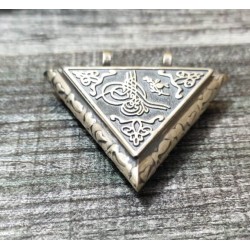
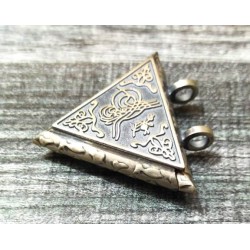
-250x250h.jpg "Taweez Gold Pendant")